• Recent Posts

  • Archives

  • Categories

  • Meta

From Our House to Son’s

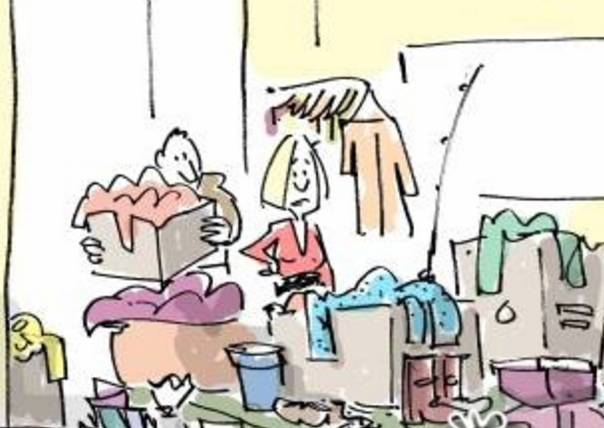
screen-shot-2016-09-29-at-6-17-54-amWhen Son said, “This is the house our children will grow up in,” it was time to take him all his stuff. Son moved away from home more that twenty years ago. Went off to college and then moved into a 900 square foot house when he took his first real job. He married, he and Daughter-in-Law had three children, and they moved three times. And everything collected and saved from Son’s birth through college years has been safely stored at Husband’s and my house.

Now, Son’s family has settled into their forever home. So Husband and I started gathering stuff and making plans to drive 1295 miles to deliver treasures. We’d take the back seats out of my van and fill it full.

Would Son want everything that has been saved? Some things were going for sure: a cedar chest and a toy chest and toddler-size rocking chair that my dad made for him many years ago. High school yearbooks and a letter jacket. College fraternity scrapbooks. All the picture albums with his name on the spine. A purple and gold basketball from Tennessee Tech basketball camp. Quilts that he and his family had chosen from those my granny made.

I was surprised when we opened Son’s cedar chest. Forgotten treasures lay inside. A never used quilt, pillowcases cross-stitched by another great-grandmother, three stuffed Benjis – one so loved that its fur was flattened and matted. A cookbook, including Husband’s grandmother’s recipes, published by her Home Demonstration Club. Small treasures from his grandparents’ homes. Things that Son chose when he was young. A vintage white chicken candy dish. A small wooden black bear with a note tied to it. My mom had written, “Papa and I got this when we went to the Smokies for our honeymoon in 1939.” Would these things mean anything to Son at this stage of his life?

Then there was a pile of questionable stuff. Should we take a leather belt with a big western buckle? A guitar that Son strummed for a few weeks when he was 14 and bored and snow storms closed school for a month? Cassette tapes? A blanket he bought at a flea market when he went to camp one summer? A collection of twenty-year-old Sports Illustrated magazines? Rifles – the 22 he learned to shoot as his grandfather stood over his shoulder? A Civil War rifle passed down through generations? His first B B gun? A Santa Claus cookie jar? And so much more.

Son and I talked using Face Time. I held my phone camera in front of items. Yes, the belt. Yes, the guitar. “Does it still play?” he asked. No, cassette tapes. Yes, to everything else, including all three Benjis. “Unless you don’t have room and I’ll get some stuff another time.” There’d be room. Husband and I were determined.

Daughter-in-Law’s parents brought treasures. Her great-grandmother’s desk with fragile curved legs and a mirror and jars of her grandmother’s homemade blackberry jelly.

Loading the van was like putting together a jigsaw puzzle with pieces that didn’t fit. Husband measured and wrapped and taped. We wedged and padded and filled every possible space. After three hours, we declared that everything would travel securely and not rattle during our journey. Husband drove around the block just to make sure.

How would Son and Daughter-in-Law and their three young children react when they see all this stuff? Stuff that’s theirs. Mostly stuff that has been in the house where Son grew up.

Laugh – It’s Good for You

screen-shot-2016-09-22-at-2-38-11-pmJune wiped her wet eyes and took a deep breath. “Oh,” she said, “I feel so much healthier.” I, too, wiped my eyes, as did my college girlfriends while we celebrated a milestone birthday. We’d laughed so hard, we cried. So hard that we emptied a box of Kleenex to wipe our faces. June took another deep breath and said, “I love being with you all because we laugh. Long and loud.”

What was so funny? We reminisced about a time when we were together and got caught in a downpour of rain at a shopping mall. We made a plan to get to our van without any of us getting our hair wet. Holding the only small umbrella we had over her head, Blondie walked to her van and parked it closer, two parking spaces away. The other six of us huddled under a store awning. Carrying the umbrella, Blondie jumped a puddle of water and walked toward us. She and June walked back to the van. Blondie got in the van and June carried the umbrella and walked Kathy to the van. Then it was Kathy’s turn to walk one person to the van. A few trips later, and after we’d all jumped over the same puddle of water, all seven of us were in the van. No one’s hair was wet, but we poured water out of our shoes and our clothes were damp.

We laughed then, almost twenty years ago, about how silly we must have looked walking two by two under a small umbrella and we laughed when we were together recently. Hysterical, uncontrolled laughter.

According to medical authorities, there’s evidence that we were healthier after laughing. I read an article in Reader’s Digest that quotes from a book, Heal Your Heart, by Dr. Michael Miller, MD. He states that deep belly laughter triggers the release of endorphins, which activates nitric oxide. This chemical causes blood vessels to dilate and increases blood flow, reduces the buildup of cholesterol plaque, and lowers the risk of blood clots. After fifteen minutes laughing, volunteers in Dr. Miller’s study got the same vascular benefit as if they had spent 15-30 minutes at the gym or take a daily statin. No treadmill. No meds. Just laughter.

Even watching a funny movie improves health. In another study, the blood vessels of those who watched There’s Something About Mary dilated, and the blood vessels of participants who watched Saving Private Ryan narrowed. And it’s been proven that people with heart disease were less likely to use humor in an uncomfortable situation, such as when a waiter spilled water on them, than people with healthy hearts.

Now I know why my friend, Jo, is super healthy. She shared that one morning while walking for exercise, she fell, rolled, and got right up. Because she rolled with such good form, she laughed. “I’d rather be sore from laughing than from a fall! I laugh out loud every time I can,” Jo said. Most often at herself.

So maybe a couple of old sayings are true. Maybe laughter really is the best medicine and maybe laughter is a tranquilizer with no side effects. No negative side effects – only positive ones.

Good reasons to laugh hysterically and keep a sense of humor. And good reasons to get together with friends who laugh with you.

Peanut Butter Sandwich – Anyone?


images       The grape jelly jar was empty so I searched the pantry for something to make a sandwich. Peanut butter and raspberry jam? Orange marmalade? Molasses, thick and grainy? Perfect. Peanut butter and molasses on whole wheat bread may have been the best sandwich I’ve ever eaten.

Peanut butter is a staple at my house. A spoonful of peanut butter and a cup of coffee, with a little cream, and I’m good to go for a few hours. I first reached for the peanut butter jar those early mornings when I was teaching and in a rush to get out the door and needed protein. I licked the spoon clean as I drove across town to school.

Have peanuts and peanut butter been around forever? According to National Peanut Board, the peanut plant probably originated in South America; pottery was shaped in the form of peanuts as far back as 3,500 years ago. Africans introduced peanuts to North America beginning in the 1700s and they were a commercial crop in the 1800s, first in Virginia. During the Civil War, both armies subsisted on peanuts as a high source of protein, and after the war Union soldiers took them home. In the 1900s, peanuts and cotton were the South’s commercial crops.

There’s evidence that ancient South American Inca Indians were the first to ground peanuts into peanut butter. In 1895, Dr. John Harvey Kellogg (of cereal fame) invented a version of peanut butter and later a St. Louis physician developed a smooth peanut mixture as a protein substitute for his patients who had poor teeth and couldn’t chew meat. In 1904, peanut butter was introduced at the St. Louis World’s Fair. So who came up with the famous peanut butter and jelly sandwich? It’s believed that the U. S. army made the peanut butter and jelly sandwich poplar during World War II.

And a pb & j sandwich is a favorite with young and old. The basic sandwich is classic, but peanut butter combines with almost anything to make a sandwich. Honey. Marshmallow cream. Apple slices. Banana. Brown sugar. Some people even make a peanut butter sandwich with pickles and lettuce. Husband’s choice is peanut butter, Miracle Whip, tomato, and a thin slice of onion.

Peanut butter shows up in many things we eat. Celery stuffed with peanut butter and decorated with raisins. Cookies. Candy. (Reece’s peanut butter cups are my favorite.) Cakes. Pies. Ice cream. Pancakes. Granola bars. Pretzels. Doughnuts. Spread on bagels and English muffins. The list extends to peanut butter sauce for chicken and Asian stir-fry, which sounds as unappetizing as Husband’s sandwich.

I grew up eating the traditional sandwich: grape jelly and smooth peanut butter on white bread, cut into two triangles. I’d wager that most every kid, except for those who have nut allergies, eats at least one pb & j sandwich every week. And for those with allergies, there’s sun butter, a sunflower seed spread that’s tastes like peanut butter. Most of us, 94% of Americans, have at least one jar of peanut butter at home the Peanut Board says. Americans eat three pounds of peanut butter per person every year. (If you don’t eat your share, I eat enough for several people.)

There are recipes for deep-fried and oven-roasted and grilled pb & j sandwiches. Seems like a perfect lunch on a cold winter day. For now, I’m sticking with my new favorite: pb and thick, grainy molasses. And when I run out of it, I’ll try fresh molasses or whatever is in my pantry.


Tribute to Our Town

IMG_1292 (1)I love living in Cookeville. Love the small town atmosphere. The downtown places for children to play and the chance meetings with friends at the Heart of the City Playground and Dogwood Park. One morning last week I went with Daughter and her children to play, and I ran into three friends and their grandchildren. Friends with whom I enjoyed visiting and I loved seeing their grandchildren. But if weren’t for places for children to play, we wouldn’t have gotten together.

There was no time I appreciated our town more than when Son and family visited recently. What do you do with three young children, ages 1, 3, and 5, after they’ve been strapped in car seats for 2 ½ hours while riding from their other grandparents’ home? Take them to the playground. It was hot that late Sunday afternoon and many families had the same idea. Let kids play somewhere safe and fun and free.

A child swung in almost every swing. The four seats on the seesaw were filled. Children darted from a climbing tripod to the Tennessee Tech tower to the Burgess Falls climbing wall. My eight Grands, including the five who live here and are ages 2-11, roamed from one activity to another and then the two youngest rested in their parents’ laps. The others congregated on the merry-go-round. Around and around they went. Some pushing, some hanging by legs upside down, some sitting, some standing. All laughing and smiling. There was room for them and others. We adults watched and my heart swelled with pride as I remembered that about a year ago many people spent days and days and days from sunrise to past sunset, often in pouring rain, to build Heart of the City Playground.

Two days later, I convinced my Grands’ parents to get everyone ready for a family picture at 9:30 a.m. (That’s a whole long story!) As soon as the photographer put his camera down, my 11-year-old Grand said, “Okay, Gran. Remember you promised a treat after the picture?” So everyone put on play clothes, loaded in two vans, and off we went to eat ice cream. Where do you take eight kids who have licked ice cream cones with their tongues and noses and the ice cream melted and dripped down their arms and two Grands dropped their cones onto their laps? To Dogwood Park Fountain.

“Does this run all the time?” Son asked. Everyday, weather permitting, from 6 a.m.-10 p.m. “It’s free?” Yes. “We didn’t have anything like this when I was a kid.” Three decades ago.

My Grands stood under the giant waterfalls. Some with heads tilted face up, one pretending to wash her hair, one with hands reaching for the sky, another dancing. Or maybe he was swinging his arms and kicking his feet in pure joy and freedom. They all ran zigzag among the many fountains spewing from the concrete ground. They stood over fountains to shower from feet to head and they tried to stop the water flow with their hands and they karate-chopped forceful streams. Three Grands held hands to form a circle and skipped around a spewing fountain.

The toddlers wore out quickly and nestled with their mothers and me on park benches. The older Grands chased each other along the sidewalks and through the grass. I wondered if those who planned Dogwood Park knew how much fun children could have on a muggy August morning.

Cookeville. I’m ever so thankful to live here.


First Lake Trip: Part 2

imgres“Can I catch a fish now?” my five-year-old Grand asked for the third time during a recent Center Hill Lake outing. Dean had laughed and enjoyed his first pontoon boat ride. Now, he splashed in the water with his parents and me. His siblings, Neil, age 3, and 16-month-old Annie, floated beside us. Husband sat on the boat and readied two cane-fishing poles.

Neil echoed Dean. “Fish, now!”

Son, Dean and Neil’s dad, said, “We’re going to get back on the boat, eat lunch, and then we’ll fish.”

Dean quickly ate a peanut butter and jelly sandwich and a peach. “Pop, can I catch a fish now, please?” Dean asked. Husband moved the boat near a downed tree, and then handed Son a tube of crickets. Both Dean and Neil held fishing poles. Cane poles, with hooks and orange bobbers.

A cricket escaped Son’s hand and landed on the boat deck. Neil squealed. Dean jumped. The cricket got away. We women – Annie, Daughter-in-law, and I – moved to the shaded boat seats. After a few more escaping crickets, two were threaded onto hooks.

Dean dropped his line into the water and stood as a statue. “Watch the bobber,” Son said. “When it goes underwater, there’s a fish on your hook. Lift the pole and pull the fish out of the water.” If a fish wanted the cricket on Neil’s line, it would have had to swim to and fro because Neil waved his fishing pole along the boat’s railing. The bobbers bobbed. Not a fish in sight. Neil’s pole crossed Dean’s and the lines tangled. Son untangled the line and again both Grands held their poles. Dean asked, “Am I going to catch a fish now?” Neil chanted, “Fish, oh, fish.”

After fifteen minutes, Son and Husband decided the boys would more likely catch fish near the boat dock, where we saw many small ones before we boarded the boat. A ride across water and again both Grands held fishing poles. Dean lowered his baited hook into the water and a minute later, the bobber disappeared. He lifted his pole. No fish. No cricket. That happened two more times and then Dean jerked the pole and a small brim, about five inches long, wiggled on the fishing line.

“I caught a fish! I caught a fish!” Dean screamed and jumped on the wooden dock. “Look Momma! Look Pop! I caught a fish!” Son held the fishing line and Dean examined the fish closely, not touching it. Son tossed the fish into the water and baited the hook again.

Husband baited Neil’s hook with a worm. The bobber floated only a few seconds before it went underwater. Husband helped Neil lift a small brim out of the water. Neil screamed, “A fish! A fish! I caught a fish!” He crouched low and eyed the fish when Husband dangled it from the line, but Neil didn’t get within touching distance. When Husband said the fish was going back into the water, Neil waved and said, “Bye, bye fishy.”

The next fifteen minutes, Dean and Neil caught fish as fast as Son and Husband baited the hooks. Both Grands squealed and laughed every time one came out of the water. And Neil told every fish bye before it was released into the water.

I took pictures and watched. “Do you know what kind of fish those are?” I asked my Grands.

Neil answered quickly. “Really big little fishes.” Just the kind kids should catch on their first fishing trip ever.

###

First Lake Trip: Part One

family-in-a-boat“How about a lake trip?   The boys will love that. Maybe a little fishing with Pop?” This was Son’s email response to my inquiry of what his family would like to do during their three-day visit with Husband and me.
A lake trip. On a pontoon boat at Center Hill Lake.

The boys. Dean, age 5 and Neil, 3. Neither had ever been on a boat.

Fishing with Pop. Pop, aka Husband, last took someone fishing more than thirty years ago.

Yes, of course, a day at the lake and fishing would be a perfect outing for Son’s family: Dean, Neil, fifteen-month-old Ann, and Daughter-in-Law. Husband and I would make it happen. We made our list. Borrow toddler size life jackets. Make sure the pontoon boat was ready. Buy groceries for a picnic lunch. Fishing license. Fishing poles. Bait.

When Son and family arrived on Sunday, he and Husband shopped. Two adult fishing licenses: $25. (Husband’s senior license was only $5) Two cane fishing poles, crickets and nightcrawlers: $13. Right after breakfast Monday morning, we loaded up everybody, life jackets, lunches, water bottles, towels, diapers, changes of clothes, sunhats, sunscreen, sunglasses, fishing poles, and fishing bait, and we headed for the lake.

I could leave out a major glitch, but it’s typical of a lake outing. The day before our lake trip, Husband and I had vacuumed the boat floor and scrubbed insect droppings off the seats. And then we discovered the boat battery was dead. So the morning of our lake trip, Husband drove alone to the lake to install a charged battery.

Son’s family and I arrived at the boat dock parking lot thirty minutes after Husband and he greeted us with these words, “The boat still won’t start.” I’m not sure if Son or I was more disappointed. I kept smiling and helped zip and fasten lifejackets on the Grands. “We can fish from the boat dock. We’ll swim somewhere else. It’ll work out,” I said with forced enthusiasm.

Husband made a phone call to a friend who has a boat at the same dock and it did work out. As we pulled away from the dock with three smiling Grands, I was thankful for our friend who loaned his boat on a minute’s notice.

“Can I catch a fish now?” Dean asked.

“Later,” Son said. “We’ll ride on the boat and then stop and swim. Then we’ll get back on the boat and eat lunch. And then fish. Look at the blue heron.” We adults were more awed than the Grands by the heron. That Monday morning, we had the lake to ourselves. Not another boat in sight.  Our Grands sat still and wide-eyed. They laughed as the breeze blew in their faces.

The water was perfect for swimming, warm and calm. Dean and Neil jumped from the boat into the water to their parents’ outstretched arms. Ann wasn’t happy when it was her naptime and she was encased in a tight life jacket and hot. Husband and I took turns trying to entertain her, and she, too, was finally happy when she got in the water with her mother.

“Get in, Gran!” Dean shouted. As Dean and Neil and I lay in the water like starfish (on our backs, arms and legs stretched out) I felt that all over joyful feeling. When all is right with the world. When heart and body and soul are one. The best life offers.

“Gran, can I catch a fish now?” Dean asked.

To be continued: first lake trip, part two and fishing.

Wedding Anniversary Reflections

searchAfter all these years, I still love him. Husband and I recently celebrated our wedding anniversary. Forty-seven years of marital bliss. Well, mostly bliss – there have been times when joy and happiness were pushed aside, just like in all relationships. Marriages, friendships, business partnerships – all suffer trials and disagreements. But during the past 47 years Husband has been my best friend, my constant companion, and my number one cheerleader. I’m thankful he’s mine.

            We’ve raised two children, moved six times, buried parents, welcomed eight grandchildren, built one house, signed three home mortgages and a few business loans, travelled to foreign countries, straddled the Continental Divide, flown around Denali, wiped each other’s brow, celebrated birthdays and job promotions and retirements.

Now, I realize that in three years we’ll celebrate a golden anniversary. Fifty years! And my first thought is that old people are married for fifty years, and we’re not old.  We’ve all heard and read advice for long marriages. Never go to bed angry. Keep a sense of humor. Communicate. Admit when you’re wrong. Agree to disagree. Continue to date. Overlook mistakes. Cultivate the same interests. Have the same basic values – religion and morals. It’s impossible to always uphold these.

Many sleepless nights I’ve a replayed a conversation when I wished I’d said something or wished I’d kept my mouth shut and I’m still angry. There are times I find something funny and he doesn’t. I laughed when Husband was frustrated because we dropped a wooden paddle into the water from a pontoon boat and he couldn’t get the boat close enough to pick it up. I didn’t think it was funny when I spilled pickle juice on my just mopped kitchen floor. Our senses of humor don’t always match.

Communicate. Sometimes, yes. Sometimes, no. Sometimes with words. Sometimes silently. I don’t tell Husband all my secrets. I don’t always tell him when I’m frustrated about something and then I’ve spoken harshly to him for no good reason. I do tell him joys and my day’s schedule.

Every marriage, every relationship, is different. Yes, basic values and common interests and communicating build strong marriages.   But isn’t commitment the backbone of a long-lasting relationship? The commitment when we said, “I do.” The devotion we promised no matter the circumstances: rich, poor, better, worse, sick, healthy. A vow to love and cherish.

I’ll never forget what a minister said after a couple had made these promises. “Turn and face your family and friends,” he told the bride and groom. “Now, you have just promised, in front of all these people who love you, to stay together forever. Don’t break that promise to each other or them or God. No matter what happens, stay together.” I reached for Husband’s hand – the one I’d pledged to stay with forever.

Marriage ceremonies often end with a kiss. The first kiss as a married couple. I believe in hugging and kissing. When our children were young teenagers, Husband and I wrapped our arms around each other one night after supper and kissed, as we often did, and they closed their eyes and turned their heads. I laughed and said, “Aren’t you glad your parents love each other?”

And we always will. Even though we don’t follow all the advice of a long marriage. We promised. And besides, there’s no one I’d rather grow old with than Husband. We have a few more mountains to climb.

###

Red Dirt and White Shorts

imagesLast week when I wrote suggestions for how parents can partner with their children’s teachers, I alluded to letting children suffer natural consequences. Ramifications of behavior and choices.

Mom and Dad parented by allowing my poor choices, my mistakes, to be followed by natural consequences. Like the Saturday I spent all my money on comic books and then wanted to see a movie, probably a Gene Autry western. Because I didn’t have money, I didn’t see the movie.

One time, when I was about 6 years old and Mom and I visited her parents, I wore a new pair of white shorts and a red and white stripe top that Mom had made. After greeting Papa and Grandma and playing a few notes on their pump organ, I went outside to play. The dirt bank between my grandparent’s house and the road was red clay. On that hot summer day, the dirt was dry and hard. Papa and Grandma’s yard was several feet higher, maybe about eight feet, than the road and although I knew to stay away from the road, I drew pictures with sticks on the hard-packed dirt.

Rain had washed gullies in the red clay because there wasn’t any vegetation –none, no grass, no weeds. I walked barefoot on the soft dirt down the gullies; the slope was steep and I crawled up to the yard.

Then I discovered I could sit on the dirt bank, push myself, and slide. I’m sure the more I scooted down the slope, the slicker it became. By the time Mom discovered how much fun I was having, my white shorts matched the red in my top. I had wiped my dirty hands on my clothes, my hair, my whole body.

I wonder what I would have done if I’d been the mother. I can see myself, a little kid, covered with red dirt, wearing a new outfit, and as the mother I would have been angry – really mad! And probably Mom was, but I don’t remember that. I do remember sitting in our white enamel bathtub for a long time and Mom scrubbed my skin so hard it hurt – especially my feet and knees. She scrubbed with a washcloth and a small brush, probably the one she used to scrub the bathtub. And she must have dug into my head with her fingernails. It wasn’t a gentle hair washing like most times.

Mom’s scrubbing on my body was something I never wanted to endure again. And it was a natural consequence that the new shorts I had really liked, I could only wear at home. The red dirt became pink stains that never came out, and I didn’t get a new pair of white shorts. I don’t remember, but I bet Mom made me scrub those dirty shorts, with an old toothbrush.

I wasn’t forbidden from Grandma and Papa’s bank. In fact, after that day I slid down the slope many times, but I’d wear my oldest clothes, sometimes sitting on a piece of cardboard, and I didn’t rub dirt in my hair or on my body. Then I’d wash myself using Papa and Grandma’s outside water faucet.

At my elementary school, Byrdstown Elementary, there was also a red bank – much longer and steeper than Papa and Grandma’s, and many kids played on it, but I didn’t, not while wearing my good school clothes. Being scrubbed hard and not having a favorite pair of shorts to wear taught me a lesson.

###

Dear Parents of School Age Children

searchIt’s back to school time. During my 25 years as a teacher, I was thankful for parents who were partners. Parents who worked with me to help their children learn and be successful and happy. Now, as a retired teacher and a grandmother, I remember how those parents helped and I’m 99% sure your children’s teachers would appreciate your help in these same ways.

  1. Get children to school on time. School begins at 8:00. Those students who walk into their classrooms by 7:55 have a few minutes to greet their friends and teacher, empty their backpacks, and get ready for the day. Students who walk into the school building at 8:00 are late. Their day begins with them trying to catch up.
  2. Read and respond to communication from school. Especially school work and field trip notices. Teachers send home student work for parents to see. Take five minutes, sit with your children, and listen as they explain the math problems that were easy and the spelling words that were difficult. If you have concerns, notify the teacher, before you call the school principal or your best friend. Return field trip notices ASAP. I always felt sorry for the children who hung their heads and said, “Mom saw the note, but she didn’t sign it.”
  3. Tell teachers what’s happening at your house. Any event that changes the home routine affects children’s feelings and attitudes and they bring those to school. Did Mom start a new job and she leaves home before everyone else gets out of bed? Is Grandma coming to stay while the parents take a vacation? Did a pet – a goldfish, a dog – die? Is there going to be a new baby in the family? Send a brief email or note. Help teachers understand why students are upset or sad or excited.
  4. Let your children fail and make mistakes. Yes, fail. Not a major failure, like 3rd grade. Small failures. If children hide homework and don’t do it, let them suffer the consequences: a bad grade or missing a fun activity to complete the assignment. Let them learn how failure feels. If they forget to take lunches to school and eat a school lunch that isn’t their favorite pizza, they’ll learn to be responsible and carry their lunch bags. (Yes, I’ve taken the first forgotten lunch to school. Second time, no.)

It’s okay to not master a task immediately. Long division isn’t easy. Neither is borrowing to subtract. Nor latitude and longitude. Let children learn that it’s okay to make mistakes and to fail and try again.

Don’t we learn perseverance from failures and mistakes? Isn’t determination built on failure and eventual success?

  1. Ask questions at the end of a school day. Questions that begin with what or who. What did you learn in Math? What did you do in music or physical education class? What book or story did you hear or read? What was the best thing that happened today? What did you bring home for me to see? Who sat beside you during lunchtime?

Don’t ask, “How was your day?” You’ll hear, “Fine.” End. Of. Conversation.

6 -10.    Read. Read. Read. Read. Read. To your children and listen to them read. School work, books, poems, comics, sport pages, backs of cereal boxes. Anything. Everything. There’s no need to expound on reading. Just read.

Both you and your children’s teachers want your children to learn and be happy. May this be the best school year ever!

I did it! WATCH ME!

imgresElaine, age 5, didn’t like water in her face when she took swimming lessons last month. Thirty-minute lessons. Ten days. The teacher encouraged her students to play. Her philosophy is that after children have fun and feel safe in water, they learn to swim. No pressure. No blowing water bubbles. No hold the poolside and kick. My Grand was excited to go to every lesson and at the end of two weeks she didn’t mind water splashing on her face, but she wasn’t a swimmer. Did this method work?

A week later, Elaine and I went to the YMCA pool. I’d hoped she’d blow water bubbles and lie prone in the water, and we’d play. Elaine had a different plan. She adjusted her goggles over her eyes and the inflated water wings on her arms and walked down the steps into the pool. “I can touch!” she said. Then she sat on the pool steps and dipped her chin in the water. When I moved toward her, Elaine held up both hands as if she were stopping traffic. I stepped back. She put her face in the water and blew bubbles. Again and again and again.

“Good, Elaine! When you want to swim, the next thing is to lie on your stomach with your arms straight out in front and kick,” I said. She held to the side of the pool, face in the water, and kicked.

“Like that?” she asked.

Yes, and she could do the same thing away from the wall and I’d hold my hand under her belly. Elaine shook her head to say she didn’t want my help. She walked two steps from the wall, stuck her face in the water, kicked her feet, and immediately grabbed the wall.

Elaine watched a man, carrying a long pool noodle, enter the water. He lay on his stomach with the noodle under his chest and swam. “Can I have a noodle?” Elaine asked. We took off her water wings and adjusted the noodle so it lay under Elaine’s chest and the noodle’s long ends tucked under her armpits.

My Grand stuck her face in the water, her arms straight, and kicked her feet against the pool wall. She didn’t stop kicking. She glided about eight feet, raised her head, and looked back. “I did it! Did you see me!” she shouted. We hugged tightly to celebrate.

“Next, when you want to, you can move your arms. Together in the front and then out,” I said and showed her. Like a breaststroke. Elaine planted her feet on the bottom of the pool and moved her arms. And then, she swam. Kicking, breast stoke, face in water. She stopped, took a breath, and said, “Take my picture! Send it to Mommy and Daddy.”

She swam. I texted a picture from my phone, and Elaine swam the ten feet back and forth from the pool wall to me.

“I don’t want this noodle,” my Grand said.   She threw it onto the side of the pool and stood on the pool steps. “Back up, Gran, I’m swimming to you. Watch me!” And she did. Over and over and over.

Did my Grand learn to swim in that one hour at the YMCA? No, all those times through the years of playing and watching others gave her confidence and the desire to swim. Elaine swam when she was ready. Her swimming teacher was right.

And that’s exactly the way children learn best. When they want to learn.