• Recent Posts

  • Archives

  • Categories

  • Meta

Liar, Fiddler, and Storytellers

What if two of the nation’s best entertainers performed right here in Cookeville and you could get a ticket for only $25? 

One has performed in all 50 states, throughout Europe, Asia, Australia, at the Grand Ole Opry, the Lincoln Center and Carnegie Hall.  Josh Goforth is a highly accomplished storyteller and acoustic musician who plays close to twenty different instruments.  

Goforth has won awards as a Master Fiddler and one of his albums was nominated for a Grammy.  He is currently a faculty member at the Academy for the Arts in Asheville and continues to perform all over the world.  

Another entertainer has won awards on stages reserved for only the best storytellers.  Bil Lepp is a storyteller, an author and a recording artist. 

            Maybe you’ve seen Lepp as the host of the History Channel’s Man Vs. History series or maybe you’ve read or listened to one of his 28 books, some that have won the Parents’ Choice Gold Award and the Public Library Association Award.  You may have even seen Lepp as the host of NPR’s internationally syndicated Mountain Stage. 

You might not be willing to pay $25 to hear both Goforth and Lepp perform, but how about $10? 

Lepp performs at corporate events and at every major storytelling festival around the country, including the Smithsonian Folklife Festival.   For those of us who yearn to attend the National Storytelling Festival held in Jonesborough, TN, in October each year, we can stay home to see and hear Lepp, a festival participant for the past nineteen years.

Did you know there’s a liar’s contest?  Lepp has won the West Virginia Liar’s Contest five times; some say it’s not easy to know when he’s telling the truth since he blends tall-tales and stories with nuggets of truth. 

Both Goforth and Lepp will be on the Cookeville Storyfest stage and you can easily get a ticket.  Just show up and bring your sense of humor and your appreciation for entertainment.  The cost is $0.

Yes, Storyfest is FREE!  It’s an all-day event on Saturday, May 6, 10:00 a.m. – 5:00 p.m. and is presented by the City of Cookeville Leisure Services Department.  Look for the big tent in Dogwood Park behind the Cookeville History Museum on East Broad Street.

Storyfest begins with two local storytellers: Dwight Henry, followed by Peggy Fragopoulos.   Along with these two seasoned storytellers, and professionals GoForth and Lepp, you’ll want to catch the Amateur Storytelling Competition.  Your friends and neighbors might be onstage.

Storyfest is a come-and-go event; stay as long as you want, which will probably be all day.  A detailed schedule is available at https://www.facebook.com/CookevilleStoryfest or call Beth Thompson at (931)528-8580 for information.

It’s said that Lepp is one of the funniest men ever heard and he’ll make you believe the wild stories he tells.  Josh Goforth mixes storytelling and fiddling.

 Storyfest is for all ages – anyone old enough to listen and young enough to laugh. Don’t miss it.  After all, it’s FREE and right here in our town.

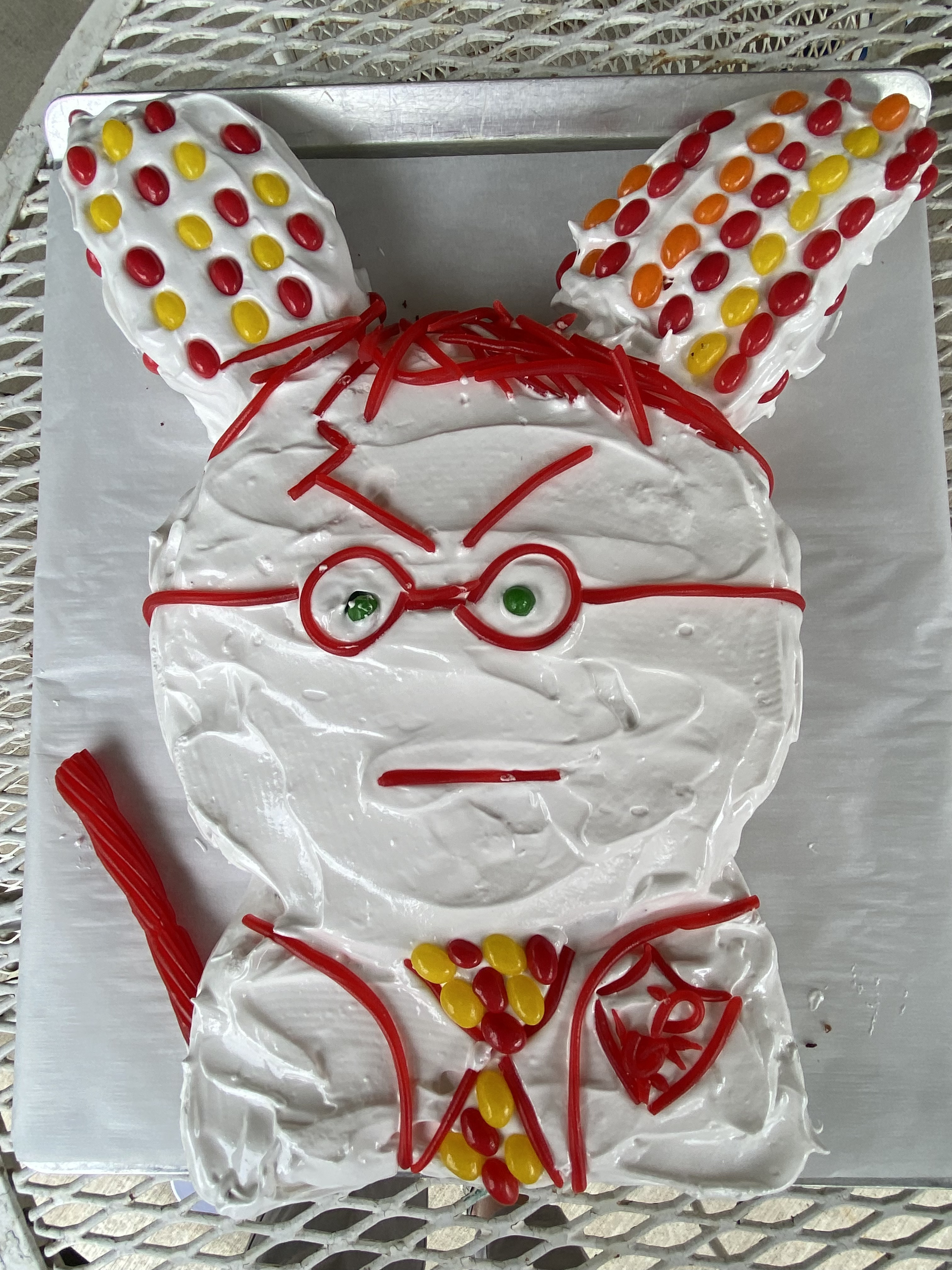
Bunny Cake Tradition

“Gran, is it my turn to do the bunny cake face?” eight-year-old Micah asked. 

My first thought was that I’m happy my young Grand wants to continue the tradition of decorating an Easter cake. My oldest Grand, Samuel, now almost 18, first stood on a stool to reach the kitchen counter to decorate a bunny cake.

             The cake recipe and a picture come from my mom’s recipe collection, and a hand-written note read, “Easter – ‘78.”  My Grands’ mother was a toddler then so a bunny cake has been a long-time family tradition.

Imagine an 8” round cake layer as the bunny’s face and another cake layer cut to make the ears and a bow tie.  The picture shows jelly beans for the eyes and nose, threads of red licorice for whiskers and the mouth, gumdrops on the bow tie, and pink colored coconut on the ears.  

We gave up the coconut years ago because no child likes coconut – at least none I know. Through the years, jelly beans have replaced gum drops and no two cakes have looked the same.  One or two Grands can easily share decorating, but when three or four want to help, we determine which part of the cake each person decorates.

When I told Micah that I wasn’t sure who would decorate the bunny’s face, he said, “I did an ear last year and haven’t done the face in a long time.” Then his three older sisters chimed in.

“I think I did the other ear,” said Annabel.

“Annabel, didn’t you do the bow tie last year?  It was completely covered with jelly beans,” said Lucy.

“Was last year when Elsie made a Harry Potter face?”  Micah asked.

“Remember when someone made one eye high and the other one crying?  Who did that?”

“Do you think Samuel will help this year?”

“Did you get that red stuff for the whiskers?” I did. Finally, a question I could answer.

It was determined that no one knew for sure whose turn it is to decorate the face, the most important part of the cake, and that all four thought they might have done an ear, the least favorite, last year.  Someone ended the discussion when she said, “It’s okay, Gran, we’ll figure it out.”  (This year I’ll make a note of ears, bow tie, and face.)

Years ago, I didn’t know that Samuel and I were staring a tradition for his family.  I do know that the bunny cake has never looked exactly like the picture and each year’s cake depends on the whims of the decorators and how many jelly beans are available.

And I know this tradition is important. Traditions connect generations.  Traditions comfort.  Traditions offer stability.  Traditions make memories. Traditions create a sense of belonging.  

Decorating an Easter bunny cake is much more than fun and to have dessert for Easter Sunday dinner, it’s tradition.  I agree with a quote I recently read: Tradition is a very powerful force. 

March Madness

If watching television was limited, I’d use my year’s allotment from March to the first of April.  I might be addicted to March Madness; I’ve checked and rechecked the times and stations for both men’s and women’s NCAA games and for NIT games, while Vanderbilt University was playing.

            Like most basketball fans, my brackets have been busted – actually my men’s bracket is shattered and destroyed.  I’m disappointed my favorite teams lost (TTU women, Vandy men, and Tennessee men and women), but I pick a team for each and every game.

And I applaud good plays. “Wow, that was a great assist!” I said.  Husband responded, “I thought you were for the other team.”  A no-look pass between two defenders to an inside post player deserves praise. 

             Now, March Madness is down to the Final Four and I’m cheering for FAU men’s team and two women’s SEC teams: LSU and SC.  (I’m counting on SC to win Monday night, but my submission deadline for this column is before the game)

 It’s easy to pick FAU to win the championship. Not only is Florida Atlantic University the team that knocked out Tennessee, but it’s the underdog, a #9 team. And their mascot is Owlsley – a huge, blue-eyed, orange-eyebrowed owl.

While keeping up with March Madness, I’m also entertained by players’ pictures and coaches.

            Favorite player picture:  University of Tennessee player, Jonas Aidoo leaving Knoxville to travel to Orlando, Florida.  In his hands, he held things that should never be packed in a suitcase:  a tangerine, yellow Goldfish crackers, a bed pillow and a stuffed animal.  When I showed the picture to my 8-year-old Grand, he said, “Look, he has his stuffie, a giraffe!”  I nodded and Micah said, “I guess you’re never too old to have a stuffie.” 

Best-dressed:  Jerry Stackhouse, Vanderbilt University men’s coach.  He wore a coat, a tie, and a pocket handkerchief, that coordinated with his tie, at every game. “Stack” is an impeccable dresser.  The last Vandy game, his blue dress shirt featured front pleats and a white collar with rounded points.  A gold collar pin held his collar perfectly.   Sidenote: Vandy should have been included in the NCAA tournament.

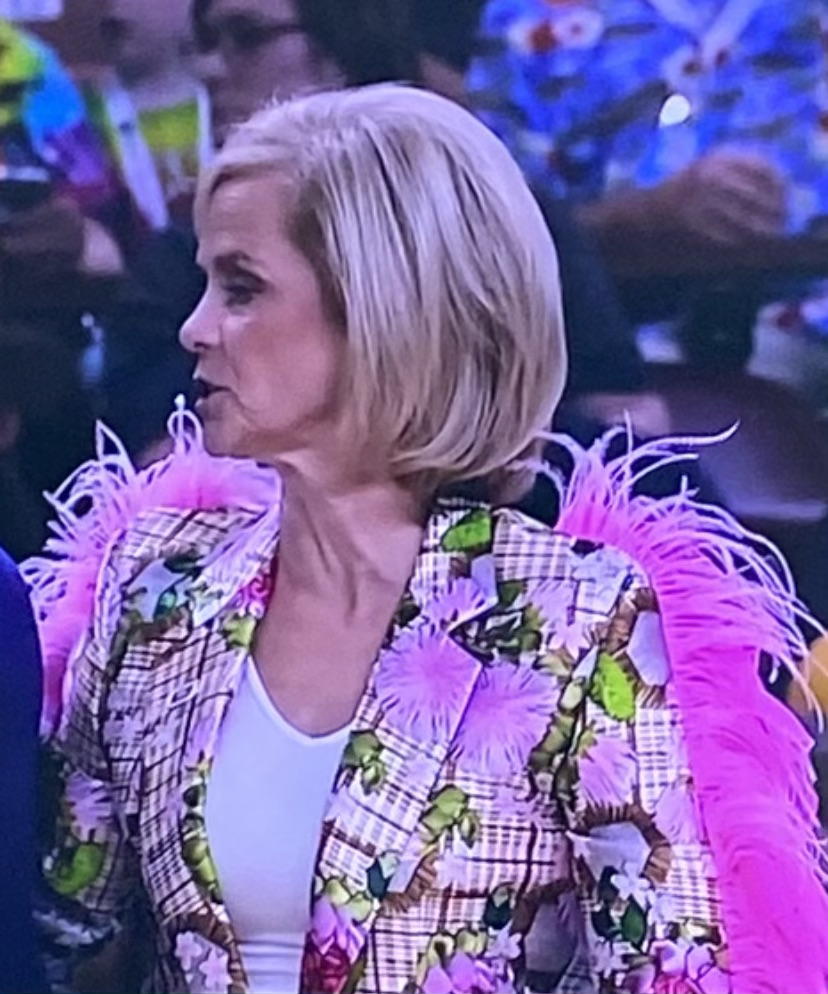
Most flamboyantly dressed:  LSU coach, Kim Mulkey.  Coach Mulkey is known for wearing clothes that catch the eye, and the jackets she worn in the Sweet Sixteen and Elite Eight games were two of her best.  Who else would wear a pink and white floral blazer with bright pink ostrich feather fringe running from shoulder to wrist on the jacket’s sleeves?  And I wondered if her silver glittery blazer distracted the opposing team players? 

This time next week, March Madness will be over.  Done. Finished.  But I’ll watch ‘til the end, even One Shining Moment.

NCAA – National Collegiate Athletic Association

NIT – National Invitational Tournament

March Madness – the annual NCAA college basketball tournament

SEC – South Eastern Conference

LSU – Louisiana State University

SC – South Carolina

For Children’s Sake, Drive Slowly


As I drove past Capshaw Elementary School, I glanced at the clock in my van:  2:14.  It wasn’t near 3:00, school dismissal time, so I wasn’t concerned about the lower speed limit that is enforced immediately before and the end of school days.

Children played on the playground and teachers gathered near a wooden bench.  As a former teacher, I have happy memories of those teacher conversations; recess is one of the few times during a school day that teachers can visit.  Four teachers stood in a circle, facing different directions to see the whole playground and monitor students, to be sure children were safe.  I recognized two friends.

            A city police car was parked in a street parking place, ready, I thought, for school dismissal. During my teacher days, I appreciated when police officers were present at the times when students were dropped off and picked up.  Just seeing a police car reminded drivers to slow down.  I waved to the policeman as I drove past.

            He waved back and turned on the blue lights on top of his car. I slowed for him to pass me, but he didn’t.  His car was on my bumper. 

            As I stopped in a parking place off the road, I wondered if there was something wrong with my van.  The policeman greeted me kindly, “Good afternoon, Ma’am. May I see your driver’s license?” 

            “Sure,” I said and handed it to him. “I hope your day is going well.”  He nodded and, holding my license, walked to his car.    

            I was surprised by his next words: “Mrs. Ray, you were going 28 in a school zone.  The posted limit is 15 MPH.”

            And then my experience as a teacher hit me.  Kindergarten students are dismissed at 2:00 p.m. so the school speed limit is enforced beginning at 1:45 p.m. My words rushed out.  “I’m so sorry.  I looked at my clock and because it wasn’t near 3:00, I didn’t think about the speed limit being lower now.  It’s because kindergarten students get out at 2:00, isn’t it?”

            The policemen repeated the posted speed limit, noted on a sign by a flashing yellow light, and he didn’t know about kindergarten students.  He looked stern.

             I knew exactly where that light was and I didn’t see it that day because I’d turned onto the street a half block after it. I wanted to whine, but I knew that wouldn’t help.  I said. “You know what makes this really embarrassing?  I taught at this school for more than twenty years.  I should’ve remembered.  I drive past here almost every day.  I’m so sorry I was going too fast and promise to be more careful.”

            I got no pity for being a teacher, but maybe it was my repeated regrets and promise that warranted only a verbal warning.  “Ma’am, you do that.  Be careful and slow down.”   

             Let my experience be you warning:  obey the speed limit and drive carefully. Especially near schools.

In the Middle

 Recently, a friend said that she has an older sister and younger brother and as a middle child she struggled to find her place in her family.  I thought of one of my Grands.  Annabel is one of five and she’s smack dab in the middle:  boy, girl, girl, girl, boy.  My friend shook her head and said, “And I thought I had it tough!”           

Those who study family dynamics acknowledge that birth order can affect a person’s personality and I saw some of the stereotypical traits while teaching elementary age students.  First-borns tended to be perfectionists and had three sharpened pencils; the youngest felt entitled and searched for a pencil.  Middle-born children were usually flexible, sociable, peacemakers, creative, and liked to try something new or different, even colored pencils.

             Middle Child Day is August 12, but I can’t wait until August to celebrate middles because Annabel is celebrating her birthday this week.  She showed her middleness when she and I talked about her birthday gift. I suggested that Husband and I give her an experience – not a wrapped-in-a-box gift – and offered two things I knew she liked to do.  She didn’t smile or show a positive response. “Tell me why those aren’t good ideas,” I said.

            “Because I’ve already done both of those,” my Grand said.  So, we have talked about a day at a museum and lunch at a restaurant where she’s never eaten.  But we might, in her words, “do something we haven’t thought of yet.”   

            If you have a middle in your life – friend or family member – you know that they made life a bit more fun.  Maybe you’ve accompanied a group of children on a field trip. While most walk calmly on the sidewalk, the middles likely dance, hop and twirl.  An older middle is often the life of the party, the one who tells jokes and pries the wallflowers from the wall.

            Middles are peacemakers and pleasers.  When a group can’t agree on a restaurant, a middle suggests somewhere that everyone will like.  Middles survey the situation and offer ideas for a decision that all can accept. 

            Middles’ need for independence and to fit in can be strengths, but are sometimes seen as problems. Young middles might misbehave and demand their way to get their parents’ attention.  Yet, as they get older, they are sociable and have a need for friends, often labeled as the family’s ‘Social Butterfly.’ 

            Being a middle child can be tough. Middles are younger siblings, but also older ones, and they can be overshadowed by their siblings.  Dr. Kevin Leman wrote in his book, The Birth Order Book, that middle children are tenacious adults because they learn that life isn’t fair so they are more adaptable and value compromise.

            Obviously, birth order is only one possible factor that determines a person’s personality, but most adult middle children say being stuck in the middle wasn’t easy.  And that’s all the more reason to celebrate my Grand’s birthday.

Searching and Hoping

“Well,” I said to Husband, “at least I got column fodder out of our lost stuff.”  We shook our heads and laughed at ourselves.           

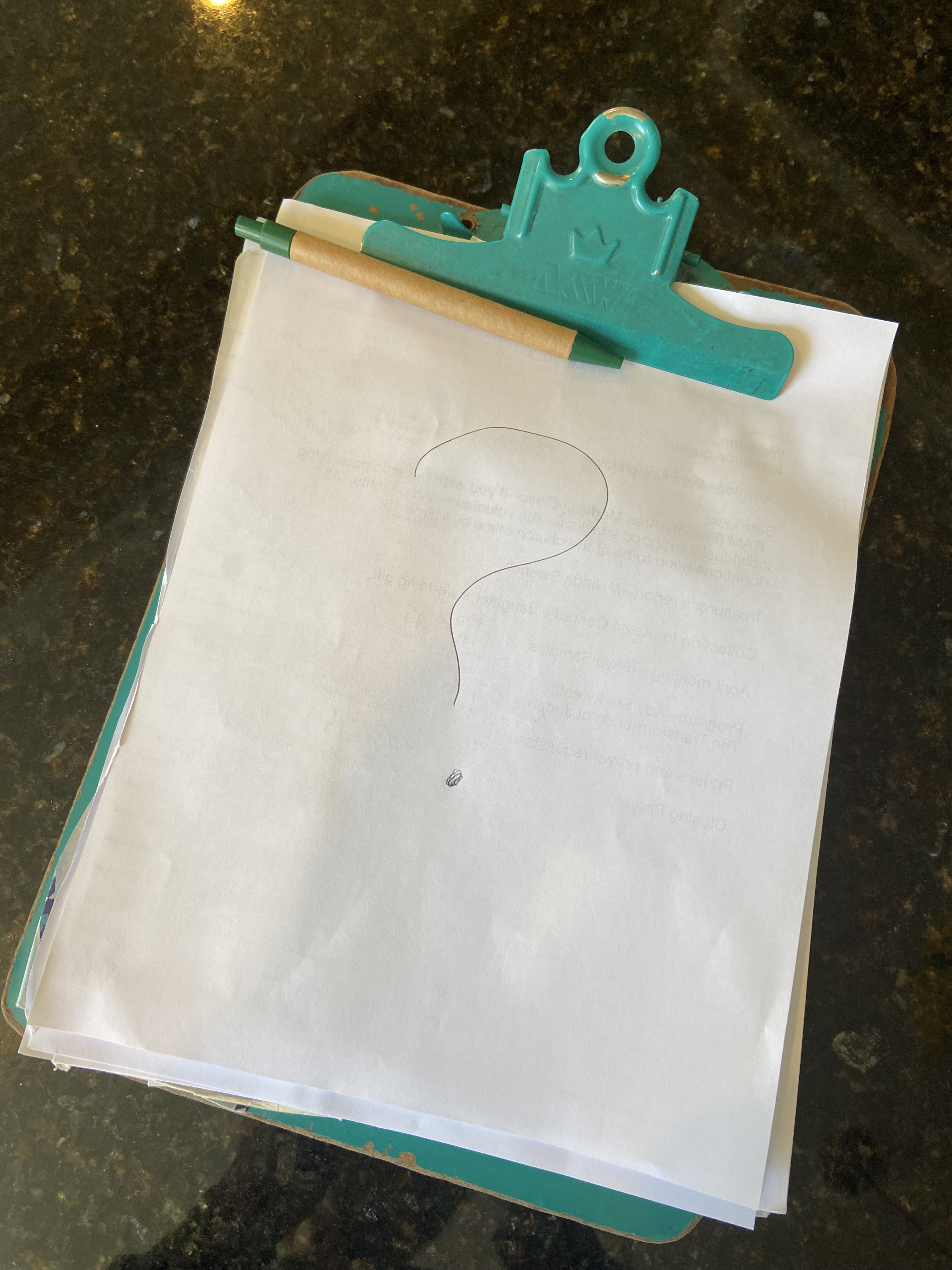
It’s just a clipboard, an aqua-colored clipboard that I’ve carried to grocery stores for at least 30 years.  I’m old school and I write shopping lists on paper – 8½” x 11” paper that could be trashed.  When I taught school, it was usually a piece of notebook paper that might have had a student’s first draft of writing.  Now, it’s most often the back of a document I didn’t print correctly or a junk mailing.

            But I digress, it’s the clipboard that’s important.  When not used, its place is in the kitchen drawer under the oven with baking pans, but one day it wasn’t there. Remembering that I’d use it a few days earlier, I searched my van, even the third row back seat thinking one of my Grands probably moved it out the way. 

            “Maybe you left it in the grocery cart,” Husband said so I called the grocery store and was happy to know that they often find and always keep items left in carts.  I listened to pleasant instrumental music while the store employee searched Lost and Found and I thought of what was on my clipboard besides blank pages:  an inspirational writing by Rick Bragg, a keepsake drawing by one of my Grands, a list of heart-healthy foods.  

            “I’m sorry.  I didn’t find a clipboard.”  That wasn’t what I wanted to hear.  My next stop that shopping day was at the Dollar General Store so I called and a pleasant, cheerful sounding employee searched Lost and Found, but didn’t find a clipboard. 

            Two days later, I searched that drawer again.  I took out everything and at the bottom of the drawer, under three cookie sheets and two pizza pans, I found that old, much used clipboard.

            While on a weekend trip to watch our oldest Grand play basketball, Husband couldn’t find his favorite black cap and I was sure I’d packed it in the corner of our suitcase.  Two Grands thought he’d worn it to Chick-fil-A the night before so on the way to the next game, we stopped there. The employees searched in all the places they put lost items, but didn’t find it. 

            Back at the Hampton Inn, we went through all the drawers, although both of us were certain we hadn’t put anything in them.  We searched our stack of dirty clothes on the top closet shelf.  Thinking he might have worn it to breakfast and left it at a table or in a chair, we asked the hotel clerk if anyone had turned in a black cap.  No one had.

            When we began packing to come home, Husband found his cap.  Tucked tightly in the corner of the black-lined suitcase – right where I put it and where neither of us saw black against black.

            That’s how we sometimes spend our days.  Searching and hoping.

Let Children Play

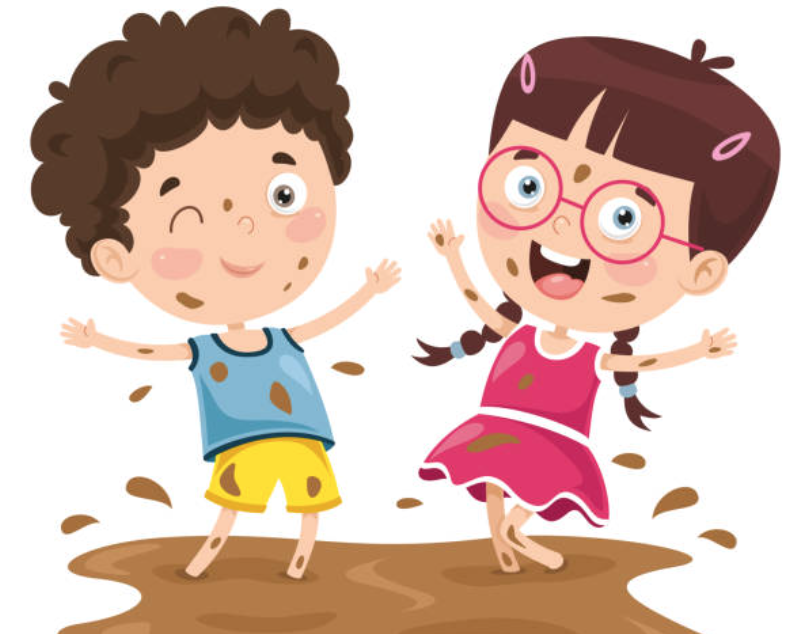
         A FaceBook picture shows Capshaw Elementary School’s Pre-K students playing in mud puddles.  I applaud their teacher!  It wasn’t just an activity to improve tactile fine motor development – it was a learning experience.           

I’ve searched online and through my hand-written collection of quotes, but I haven’t found three simple words: let children play. I did discover many quotes about children and play.

         Maria Montessori, an educator and physician who was a leader in identifying how children learn, wrote that play is the work of the child.

         The beloved Fred Rogers, host of the educational television program Mister Rogers’ Neighborhood for 33 years, said, “Play is often talked about as if it was a relief from serious learning, but for children, play is serious learning. Play is really the work of childhood.” 

            Dr. Benjamin Spock, the child expert of my parents’ generation wrote, “A child loves his play, not because it’s easy, but because it’s hard.”

         Play is work?  Yes, play is to engage in an activity, to pretend, to create, and work is performing a task that requires effort. 

         I’m reminded of what my Grand said when he was about six years old and sat under a forsythia brush while I trimmed it.  He used a small garden shovel to level roads for his Matchbox cars.  When I stepped near him, he said, “Watch out, Gran! I’m working under here.” Working, not playing.

         Oftentimes, we adults think we’re giving children freedom to play when we’re actually in control.  The play that Ms. Montessori, Mr. Rogers, and Dr. Spock encouraged is child-led play.  Not an organized team sport.  Not helping to build a tree house.  Not playing cards or board and tile games, which I invite my Grands to play with me.

         Children need unstructured, unplanned, undirected play. Digging in the dirt. Pretending to be a dragon.  Drawing purple sunflowers. Building a fortress with fallen branches.  Climbing trees. Watching an anthill. Throwing a ball against a wall.  Preparing a meal of mud and grass and twigs. Play that children think of and carry out independently.

         It’s the responsible of adults to provide children a safe place to play and supervise them, maybe from afar.  Let toddlers play within sight and give older children privacy.  Provide time, without distractions and directions. 

            Let children make a mess and be responsible for cleaning up.  Let children make mistakes and solve problems.  Through trial and error, lessons are remembered.

            Children need to learn to entertain themselves.  Provide supplies and tools that they request and have safe materials available, but don’t expect finished products. Expect experiences. Expect learning.

         The picture of children playing in mud puddles reminds me of the parents who decided their son wouldn’t begin Kindergarten even though he was old enough, according to school policy.  “He’s going to stay home and dig in the dirt another year,” the mother said. 

          Since I never found the simple quote I searched for, I’ll claim these words:  Let children play.  Give them the gifts of independence and confidence.

The Power of Warm Cookies

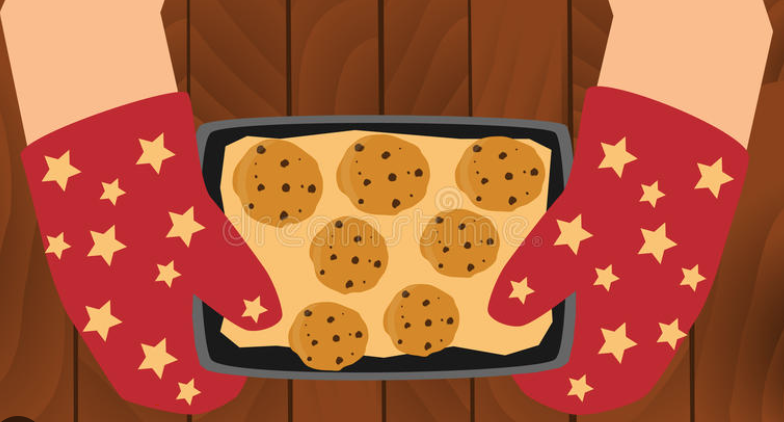
Not only is February Girl Scout Cookie month, it’s also homemade cookie time.  It’s okay to heat up the kitchen with a hot oven on a cold winter day, and nothing tastes better than just-baked warm cookies.

            My mom probably took cookies out of the oven only a few times as soon as I got home from school, but my kid memory says I ate warm cookies and drank hot chocolate every afternoon throughout my elementary school years.  That’s the power of warm cookies. 

            Families have their favorites and for us, there’s none better than chocolate chip cookies. I grew up eating Mom’s cookies made by the recipe on the back of the Nestles’ semi-sweet chocolate chips package.  Sidenote: recipes on packages and cans are good.  After all, those recipes have been kitchen tested and tasted, over and over, and have to be good or they wouldn’t be printed.

            I made Mom’s cookies until Daughter baked Ultimate Chocolate Chip Cookies*.  At first, I thought Daughter’s cookies were better just because someone else had baked them, but an at-home taste test proved otherwise. 

            Daughter shared a few secrets:  substitute milk chocolate chips for semi-sweet chocolate and allow the cookies to cool on the baking sheet for two minutes, then cool on aluminum foil, not cooling racks. And her recipe calls for Butter-flavor Crisco and brown sugar.  Cookies don’t have to be healthy, just delicious.

            Before Daughter’s and Son2’s wedding reception in our backyard twenty-two years ago, she and I baked dozens of cookies to share with neighbors who would be inconvenienced by traffic on our street.  Just last week, one of those neighbors told me those were the best-ever chocolate chip cookies.  And Son requested those cookies for dessert at his and Daughter2’s wedding rehearsal dinner. 

            The cookie section of my dessert three-ring notebook is filled with a plethora of recipes – most shared by family members and friends.  Recipes that are hand-written, many on 3 x 5 notecards which dates the recipes, are the ones I like best.  Like Mom’s Oatmeal Chocolate Peanut Butter cookies with her notes, “don’t like the cocoa, cook just a little longer and don’t make when rainy.”

            I’ve used Sister-in-law’s Oatmeal Raisin cookie recipe since September 1995. I’m the only one in our family who likes oatmeal raisin cookies so this recipe is perfect because the dough is shaped into cylinders, like store-bought slice and bake cookies, and keep in the refrigerator for two weeks.  It’s my treat when I bake a few cookies to enjoy with a cup of hot tea.

            Nancy’s Sour Cream Cookies are the only sugar cookie I’ll ever bake.  For Christmas eating, my Grands decorate bells and Christmas trees and candy canes with cream cheese icing and mounds of sprinkles.  These cookies are hearts for Valentine’s Day and colorful eggs for Easter.

            Life is better with warm cookies – even a store-bought or Girl Scout cookie zapped in a microwave for five seconds.

            *Recipes available:  https://susanrray.com/recipes/

It’s Girl Scout Cookie Time

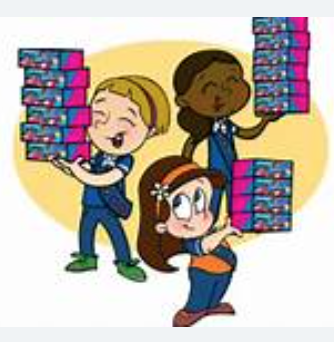
“Hi, Pop and Gran. Do you want to buy some Girl Scout cookies?” Our Grand tilted her head, raised her eyebrows and grinned, across many miles as we visited using FaceTime. Of course, Husband and I wanted to buy cookies.  In fact, if our 7-year-old Grand had offered sawdust patties, we’d have been happy to buy some.

            Ann held a colorful brochure in front of her computer camera and named thirteen cookie varieties available this year.  “You’ll probably want the Raspberry Rally.  It’s new this year.” Thirteen varieties!  Thankfully, our favorites are still available: Peanut Butter Tagalongs and Trefoils.   

             “Do you want to know how many are in a box?” Ann held the brochure ready to read, but we didn’t need that information. 

            “Do you want to know about Raspberry Rally? It’s really good. I tasted it at the Cookie Sales Rally. You have to buy it online.  I can’t sell it.”  Since our Grand couldn’t order it, we had an easy out. And who’d want to eat a raspberry flavored cookie when a peanut butter and chocolate Tagalong is a choice?

            Husband and I listened as Ann described each cookie and then we ordered our favorites.

            “How do you want to pay?  Credit card or cash?”  Our Grand had been well trained. 

            Girl Scout cookies have come a long way since the first sales in 1917 when the cookies were baked in homes by Oklahoma troop members and their moms to pay for a troop activity. 

            Five years later, The American Girl magazine, published by the Girl Scouts of the USA included a recipe and suggested that cookies be baked at home and sold for twenty-five to thirty cents per dozen.   Throughout the 1920s, Girl Scouts across the country baked sugar cookies, packaged them in wax paper bags and sold them door-to-door. That century-old recipe inspired Trefoils, the iconic shortbread cookies.

            In 1936, the national Girl Scout organization licensed commercial bakers to produce cookies, using traditional recipes, and cookies were sold nationwide.  Today, two commercial bakers produce the cookies -over 200 million boxes in 2022.

            In the 1950s, local Girl Scout troops set up tables on sidewalks in front of shopping malls for Saturday cookie sales, a tradition that continues.  Fast forward to 2014, cookie sales began online, Digital Cookie® and was deemed a successful program for Girl Scouts of the 21st century. 

            Until the mid-1980s when I worked for the Cumberland Valley Girl Scout Council, I wondered if all the money earned by children paid the salaries of adults sitting behind desks?   That’s not true. The profits provide programs and activities that are determined by the council members, troop leaders and scout members. 

            Do scout members benefit in ways besides earning money?  Our young Grand showed confidence in her sales pitch and she used math skills to determine how much our order of ten boxes cost.  And she was surprised we didn’t order Thin Mints. “They are the most popular, you know?”

            As I said, my Grand was well-trained.

PS. If anyone tries the Raspberry Rally cookies, let me know if they measure up to Tagalongs.

Give Heart Hugs for Valentine’s Day

            Only five more days to buy flowers, candy, cards and jewelry – all traditional Valentine’s Day gifts. 

I’m astounded by statistics shown on balancingeverything.com. In 2021, Americans spent $21.8 billion to celebrate Valentine’s Day. The average per person spending was $164.76; the average amount that men spent was over $200 and women spent much less.

            Valentine’s Day is the number one holiday for florists, accounting for most of the industry’s fresh flower sales, according to proflowers.com. Last year in the United States, over $2.3 billion was spent on flowers.  The Greeting Card Association estimates that 145 million Valentine’s Day cards are sent each year.

            While I appreciate purchased gifts, Heart Hugs, those times when heartstrings tighten, are perfect gifts for Valentine’s Day’s.  The people in my life give Heart Hugs to show their love all year round.

            Niece sent a text, just now, as I hold my fingers on my keyboard.  Her life is busy; she’s mom to two middle-school age boys and she teaches third-graders.  Yet, she sent words of joy, shared her plans for the weekend, and a thank you for loving her.  A few sentences, that’s all it took to give a Heart Hug.

            Son called.  “Hey, Momma.  How’s your day going?” Across the 1200 miles between us and no matter what we talk about, I feel his arms wrap around me.

            When Son’s 7-year-old daughter and I talked by phone, my heart (and head) filled with her chatter.  She told about her family’s recent vacation. “The supper buffet at the hotel was big!  More food that I’ve ever seen.  Some that Mom and Dad had never seen and it looked so pretty and good!”  I asked what she ate and she said, “Mac and cheese and chicken nuggets.”  She told about the slow hotel elevators and exactly where she and her brothers slept in their hotel room.  All details that made me smile.

             I hope Micah always greets me with the exuberance he does now as an eight-year-old.  I waited in my van in his family’s driveway for his older sister, to take her to my house. My Grand threw open the back door, stopped at the top of the concrete steps, spread his arms wide and shouted, “Gran!” Then he ran down the steps, in sock feet, and sat beside me to talk.

            Daughter and I sat across a restaurant table from each other – only the two of us. It doesn’t happen often so we know to treasure our conversations that range from books recently read to remembering times past to making plans to sharing funny stories and prayers for family members and friends.

            When my oldest teen-age Grand throws his arm over my shoulders, that’s love.  Husband’s bear hugs make every day happier.

            My favorite cards are hand-made – those are keepers to be read and reread.

            This Valentine’s Day give the flowers, the jewelry, the candy and cards.  And tighten someone’s heartstrings with Heart Hugs, memories to be relived and cherished, not just Valentine’s Day – every day.