• Recent Posts

  • Archives

  • Categories

  • Meta

Walk a Mile

My new button says “Walk a Mile in My Shoes.” For a few hours, I shadowed Kelsee, a Registered Cardiovascular Invasive Specialist at Cookeville Regional Medical Center.  I followed her to the Cath Lab, the Cardiac Catherization Laboratory, where doctors perform tests and procedures to diagnose and treat the heart.

            As Kelsee and I walked the hospital hallway she said, “I’m excited to introduce you to the others on my team.  We’ve got three patients, three procedures this morning.  I’m helping with the first one so my friends will take care of you.” Kelsee’s words foreshadowed the time I spent with her. 

            My preconceived vision of a Cath Lab was a small room with four white bare walls where doctors, nurses, and staff quietly and solemnly do their work. I was wrong.  Supplies for the procedures line three walls.  The other is a bank of windows to an adjoining room where staff members monitor computer screens showing the patient’s vital signs such as temperature, blood pressure, and blood oxygen saturation.

            Kelsee said, “First, we’re going to replace a pacemaker.  Want to see what one looks like?  Mike can show you.”  Mike is a rep, a representative, for the manufacturer of the small device that helps regulate the heart’s rhythm.  A shiny silver device, the size of a book of matches.   

            Why was Mike wearing a head covering and lab coat to go into the Cath Lab?  “When a device from my company is used, I’m here to make sure the pacemaker is operating properly and make programmed adjustments if needed.”  He explained that the patient’s pacemaker was ten years old and its battery no longer functioned well. 

            Kelsee stood on one side of the operating room bed and Dr. Wathen, a cardiac Electrophysiologist, on the other.  Three Cath Lab staff members and I watched and they explained the procedure, the vital readings, and answered my questions.  Through the headset I wore, I heard Dr. Wathen explain what he was doing and reassure the patient.  “You’ve got a good group here with you today.  We’re doing everything we can to get you feeling better,” he said.

            After connecting the pacemaker to the leads implanted in the patient’s heart, Dr. Wathen said, “Mrs. Ray, look, it’s here in place,” and he looked toward the windows.  Later, we visited briefly. “This is the easiest thing we do. This team works together well.”  We walked down the hallway to the Electrophysiology Laboratory.  “Here’s the E.P Lab. It’s is closed this week to be updated.  Come back again and watch a more complex procedure,” he said.

            Walk A Mile is offered for us laypeople to see what happens at our hospital.  I observed a pacemaker replacement and two cardiac catheterizations to diagnose heart ailments.  But I was most impressed by the enthusiasm and teamwork of the hospital employees who are friends and take pride in their jobs.            

Thank you CRMC for this opportunity.  If I need heart care, I want Kelsee and her friends beside my bed.  I’ll wear my button so they’ll know I’ve watched through a window.

Do You Have Any Pet Peeves?

“What gets under your skin?” Jim Herrin asked in a recent Sunday editorial and I immediately thought of a time during my teaching days.

“My daughter thinks you don’t like her. Ann (not her real name) says you always frown at her and she has to sit in the back row,” said a mother who had requested a parent-teacher conference. I had great respect for this mother, a fellow teacher. I chose my words carefully.

“I’m sorry Ann feels this way and I like her, but not a couple of things she does. Does she sit on her knees and sway from side to side while seated at home? She does here in the classroom and she sits in the back so other students won’t be distracted with her in front of them,” I explained. Her mother said that her daughter’s swaying bothered her at the dinner table. “But what really grades on my nerves is a constant repetitive sound. Like a pencil tapping on a desk. I’m not sure Ann is aware when she does it, like I didn’t know I frown when I look at her.”

Ann’s mom said, “Oh, that’s my pet peeve, too, and my high school students know it so they sometimes make sounds just to annoy me.” For the next few minutes, we two teachers shared our pet peeves, the little things that made us cringe. Thankfully, this conference ended well with a plan to help Ann understand that I liked her.

Other sounds annoy me. Like some people talking. Over the weekend, I watched the Tennessee men’s basketball team play in the SEC tournament and I’m sure I frowned when Dick Vitale, the game announcer, got on a roll. His hyper-pitched and overly-excited voice, non-stop screaming, and repeating the same words annoy me. “Oh! Oh! Oh! Unbelievable! Look at him! Nobody jumps like that! He’s above everyone with that rebound! That’s why he gets more than 10 rebounds a game! Oh, baby!” he screamed.

Another time Vitale screamed, “He hit the floor to get the ball! Hit the floor! Did you see him hit the floor?” In my head I screamed, “I heard you the first time!” Yes, I know I can mute the sound and I’ve done that more than once, but I like hearing the crowd, the explanation of fouls, and everything except Vitale when he’s excessively exuberant and screams.

While discussing pet peeves with Husband, we agreed that rudeness is high on our lists. I’m annoyed when someone is rude to a restaurant waiter or store clerk or anyone whose job it is to serve the public. I worked as a salesperson in a women’s clothing store, and that experience taught me to stand in the shoes of the person on the other side of the counter.

I can’t end without admitting why I rarely chew gum. The sound of popping gum must be a pet peeve to some people. Why else would they frown and move away while I chomp on a stick of Spearmint?

####

What’s for Supper?

cutlery-297617__480Who cooks supper meals? Remember meat-and-three-meals? Pork chops, fried chicken, beef roast, or meatloaf and three sides. Vegetables such as potatoes, green beans, corn, peas, cole slaw, and carrots. Mom cooked like that. And sometimes she served homemade soup with hot cornbread or spaghetti topped with her special tomato sauce and meatballs. That’s the suppers I ate as a child and I learned to cook at Mom’s elbow.
When friends reminisce about the first meals they ate as newlyweds, they tell funny stories because the wives didn’t know how to cook. My newlywed story is different. A few months after Husband and I married, I remember him telling me, “We really don’t have to have a big supper with meat and vegetables every night.”  I took him at his word.

I’ve always like cooking – like to chop, dice, bread, measure, mix, knead, sauté, brown and bake. But planning and shopping are chores. If someone would just tell me what to cook and buy the groceries, I’ll cook. I’ve been in a slump and I looked for other meal options.

Anyone else tried mail order meals? I ordered by email and UPS delivered a box of food packed on ice on my doorstep. Inside was everything needed, with directions, for two meals for Husband and me.   Everything for Crispy Rice Chicken Katsu with roasted Chinese broccoli. Everything. Including a liquid egg, ¼ teaspoon red pepper flakes, and 2 fluid ounces Tonkastu Sauce. The meal was delicious, easy to prepare, and I loved that I didn’t have to buy a large amount of an ingredient that I rarely use. One box included 2 teaspoons of Chicken Demi-Glace and 3 thyme springs and 1 red fresno chili.

To avoid planning and for easy shopping, there are fresh ready-to-cook meals available in the grocery stores. Sweet chili chicken, mild Italian sausage with sweet peppers and onions, flank steak stuffed with spinach and provolone. All ready for the oven or microwave. Even taco soup for my crockpot. And salads are bagged with cut lettuce and carrots, dressing, and croutons. All I have to do is open the plastic bags and dinner is ready.

Frozen meals have come a long way. Remember TV dinners in the 1950s? Meat drowned in bland brown gravy and tasteless mashed potatoes and diced soggy carrots weren’t acceptable on Mom’s table. But oh, the frozen meals choices today. Beef Lo Mein, Alfredo Chicken, Three Cheese Lasagna, Chicken Pai Thai, Chicken Pot Pie. And there are kids’ meals with chicken nuggets, mac and cheese, and broccoli.

And delicious prepared meals are available from local caterers. Take the food home, heat it, and serve. Nothing could be easier. Voila! Dinner is served!

I’ve tried mail order meals, meals in a box, meals in plastic bags, catered meals. Some passed the test – as good as Mom’s. Most didn’t. Time to make this week’s menu and shopping list, including what I call ‘find-it, eat-it’ meals. Husband is good with that.

Let the Children Play

Screen Shot 2018-09-06 at 1.04.17 PMWhen I read a recent news story stating that doctors should prescribe ‘Play’ for children, I did a double take. Surely, everyone knows children need to play. Surely.
A report, “The Power of Play,” was endorsed by the American Academy of Pediatrics. Dr. Michael Yogman, lead author of the report, stated that play often gets a bad rap as being a waste of time. He said, “Play is really brain building because it has all kinds of effects on brain structure and function. Executive function skills, learning to persist on a task, learning to solve problems, learning to be flexible about how they are learning things. It’s how we learn, not what we learn.”

As a retired elementary school teacher and grandmother of eight, I agree. Children need time to play. Free play. Inside and outside. Time to explore and pretend. Playtime alone, with friends, with siblings, with parents.

I think of when I was a kid and played in the barn loft and struggled to move the heavy hay bales to make a house and a maze. I didn’t know I was learning to plan and carry out a task.

When my childhood friend Elizabeth and I squished mud to make mud pies, we had fun and we learned. How much water was needed to hold the mud together? Where would the mud pies dry fastest? How long did it take them to dry?

I hope every child climbs trees. Obviously, it’s good physical exercise, but it requires decision making and problem solving.   Which limbs are strong enough to climb and which limb can be reached next?

I was probably eight years old when I sat in the top of my family’s cherry tree and thought I couldn’t get down. I was scared. I was allowed to climb any tree, as high as I wanted, as long as I could get myself back on the ground. My hands trembled. I eased down much more slowly that I’d climbed up. No one watched, unless they watched from inside the house. When I finally jumped to the ground, I felt a sense of accomplishment and success. I didn’t know I was building self-confidence.

Last week, I watched 4 year-old Jesse line up about twenty-five matchbox and other small cars and trucks in order. Big to little. Three red cars together. My Grand was learning classification and organization. When Fisher Price little people (two-inch toys) were stuck inside a small plastic playhouse, he turned the house upside down and shook it, but the people didn’t fall out. Then he looked through a small opening to see the stuck people and pushed them with one finger. After several minutes, he got the people out. I resisted offering help. This was Jesse’s problem.

“We’re recommending that doctors write a prescription for play, because it’s so important,” said Dr. Yogman. And he stated that the most powerful way children learn isn’t only in classrooms or libraries, but rather on playgrounds and in playrooms. I agree.

####

Cousins Play Bingo

Screen Shot 2018-08-30 at 8.43.50 AM “Gran, can we play Bingo?” Dean, age 7, asked.

“Yes, that’s a great idea,” I said.

Dean and Elaine cheered. “And get prizes?” Elaine, also 7, asked. I nodded. My Grands high-fived and threw their fists in the air and shouted, “Yes!”

Dean and Elaine were born a month apart, but rarely play together since they live a three-hour airplane ride from each other. When Dean visited Husband and me for a few days (aka Pop and Gran Camp), I wanted these two first cousins to play, without parents and siblings.

“Gran, you get Bingo. Dean, let’s get the prizes.” Elaine took charge since she knows where the game and prize basket are kept. She and I play Bingo occasionally, but the only other time these cousins have played together was a family gathering when they were kindergarten students. Their parents, siblings, and grandparents played too. An adult called out the numbers and put marbles showing the called numbers in a rack. Elaine and Dean needed help then, but not now.

They carried the basket filled with fancy pencils and cheap trinkets and cheaper candy. “Look at this!” Elaine said as she held a piece of candy wrapped in Halloween paper. (Time to replenish the basket, I thought.)

Elaine chose a Bingo card. Dean shuffled through 100 cards and finally said, “The one on the bottom is always lucky.” Elaine reminded Dean to cover the FREE space with a small colored disk and that he had to cover five spaces in a row to Bingo.

“Get a card, Gran. You have to play, too,” said Elaine.

Dean turned the handle on the metal wire basket and counted four balls that fell into a trough. “I’ll call the numbers,” he said. Elaine frowned, then suggested, and Dean and I agreed, that we take turns calling four numbers.

Dean sat up straight, held a small yellow marble and announced, “B 5!” He placed the marble under B in the number 5 slot. “I don’t have 5,” said Dean and his shoulders slumped.

“I do! Look!” said Elaine as she covered the number.

“O 63!” Dean said.

“Oh, I have 62 and 64,” said Elaine.

“I have 62 and 65,” Dean groaned. “Gran, do you have it?” I shook my head. “Nobody has it! Why’d I even call it?”

The game continued. Every number was discussed. Who had it? Who didn’t? What numbers were on our cards close to it? Who had 54 when 45 was the called number? What numbers were needed to make Bingo?

Forty minutes later, Dean shouted, “Bingo!” and Elaine checked the called numbers on the tray. Dean had his eyes on his card and his hand clutching a package of Sour Tarts as said his numbers. “That’s a Bingo!” Elaine announced.

The hour-long game ended when each Grand had five Bingos and five prizes. Then Elaine and Dean ran upstairs to bowl on the Wii. They giggled and squealed and laughed.

I hope it’s true that cousins are childhood playmates that grow up to be forever friends.

*****


I Wish I Liked Bananas

Screen Shot 2018-07-26 at 8.26.33 AMLast week I wrote about Mom’s recipe for pie filling and later as I layered slices of bananas, vanilla wafers, and pie filling to make the best banana pudding ever, I decided it was time to overcome my aversion to eating a plain banana. I like everything about bananas, except their slimy texture. The ripeness doesn’t matter. Green or black-speckled, all bananas feel slimy.

Bananas are perfect snacks to eat quickly and easily and they’re healthy. They provide fiber, potassium, vitamin B6, vitamin C, and various antioxidants. They may even help prevent asthmacancerhigh blood pressurediabetes, cardiovascular disease, and digestive problems.

I like a banana’s flavor, its convenience, and its health benefits. But every time I’ve tried to eat one, the slimy, mushy texture triggered my gag reflex. One bite, one chew, and I breathed deeply to avoid spitting it out. I told myself it’s a healthy fruit and its potassium might alleviate night leg cramps. The antioxidants are good for my heart and keep free radicals (whatever those are) from attacking my cells. And it’s cheap and I don’t need a plate or spoon. But in the past, mind over matter has never worked. That bite grows bigger and slimier the more I chew.

Friends have told me I need to pair a banana with something else, and peanut butter and bananas are natural partners because the banana offers quick carbs and peanut butter offers protein. Since a spoonful of peanut butter is my favorite quick hunger solution, it was worth a try. I sliced circles of banana and topped them with peanut butter. The flavors definitely compliment each other, but after one bite, I couldn’t eat another.

I smashed a spoonful of granola into the peanut butter. It was better, but I only managed two more bites. Sunflower seeds are crunchy so they would surely camouflage the banana. How can sliminess overpower crunchiness?

Next, I made fruit salad with apples, peaches, grapes, and small chunks of banana. I won’t notice anything except crispness I told myself. But that was a lie. My tongue rolled over the slimy banana and I chewed quickly and swallowed.

Sweetness could surely make a banana palatable. I cut three banana slices and dipped each into one of three sweeteners: chocolate syrup, honey, and brown sugar. All were delicious, but still slimy. Enough sweetness makes anything go down. I’d kid myself to think the nutritional benefits offset the harmful sugar effects.

So now I’m back to accepting that I don’t eat bananas although I do love Mom’s Banana Pudding and banana splits and banana bread. What’s better that a sliced banana with three scoops of ice cream (one vanilla, two chocolate) topped with chocolate syrup, real whipped cream, and a cherry? And overripe smashed bananas baked in banana bread surely provides some antioxidants and potassium and all that other healthy stuff.

But I still wish I could peel a banana, take a bite, and enjoy it. Suggestions, anyone?

Touch the Whole Elephant

Screen Shot 2018-06-07 at 7.57.44 AMSix years ago, while five-year-old Elsie and I ate breakfast, I flipped the pages of my new poetry book, Great Poems for Grandchildren. I read a few nursery rhymes aloud and then happened upon The Blind Men and the Elephant by John Godfrey Saxe. Little did I know this poem would become one of all my Grands’ favorites and little do they know that it was written in the 1800s.
Last week, Elsie’s sister Lucy, age 7, asked, “Gran, will you read poems?” It’s become a tradition: breakfast and poetry. Lucy looked thru a stack of books close to the kitchen table. “Where’s the book with the blind men and elephant?”

“It was six men of Hindostan to learning much inclined,

Who went to see the elephant (Though all of them were blind);

That each by observation might satisfy his mind.

“Gran, stop,” Lucy said. “What does that satis word mean?”

“Satisfy?” I asked. Lucy nodded. “Well, when you eat pancakes you satisfy your stomach and aren’t hungry. They wanted to learn about an elephant and satisfy their minds. They were learning.”

Lucy nodded and said, “Keep going.”  She leaned toward me and waited for the last word on the next stanza.

“The first approached the elephant and happening to fall

Against his broad and study side, at once began to bawl,

‘Bless me, it seems the elephant is very like a ….”

“WALL!” Lucy shouted and laughed. She knew the last word of the next five stanzas.

The second blind man felt the elephant’s tusk and declared the wonder of an elephant is very like a SPEAR.

The third happened to take the squirming trunk and said the elephant very like a SNAKE.

The fourth’s hand felt the knee and said the mighty beast is very like a TREE.

The fifth chanced to touch the ear and marveled that an elephant is very like a FAN.

The sixth groped the swinging tail that fell within his scope and said the elephant is very like a ROPE.

“And so these men of Hindostan disputed loud and long

Each of his own opinion exceeding stiff and strong,

Though each was partly in the right, and all were in the wrong!”

Lucy shook her head. “Why didn’t they touch the whole elephant?” Lucy has heard this poem many times, but until now she hasn’t ask questions. “I don’t know,” I said.

“Well, if they had or just talked to each other, they’d know what an elephant looks like,” my young Grand said, the same conclusion that her sister and two other older Grands have made.

Saxe’s last stanza isn’t included in my poetry book for children.

“So, oft in theologic wars, the disputants, I ween, tread on in utter ignorance

Of what each other mean, and prate about the elephant, not one of them has seen!”

My Grands and I have laughed about this poem. Those silly blind men. An elephant with a snake trunk. A rope tail. And each has asked the question: “Why didn’t they touch the whole elephant?” Yes, why?

What’s a Loose-Neck?

Screen Shot 2018-05-24 at 6.58.26 AM

“Look what I found. My little kids will love them,” my friend said. Five college girlfriends and I were eating lunch and sharing our shopping finds at The Sponge Docks near Tarpon Springs, Florida. Jo set six little wooden-like critters on our table. Each would fit in the palm of a toddler’s hand and no two were the same animal.

All had long twig like necks that wobbled side to side from hollow bodies and black dot eyes and brightly colored bodies with designs. We blew gently to make their necks and heads rock. These happy looking little creatures made us laugh.

“What are these? Where did you get them?” I asked. These were the perfect gifts to take my little kids, my Grands.

I was surprised to see more than a thousand Loose-Necks displayed in a small souvenir shop. Wobbly-necked little animals set on shelves everywhere. Turtles. Giraffes. Penquins. Snails. Fish. Dinosaurs. Aardvarks. Pigs. And more and more turtles, which were the original and are the most common design. None exactly the same. Folded notecards on shelves told how they were created.

Loose-necks are made from the pits of limoncillo fruits. Farmers in southern Mexico harvest the fruit in late summer, usually August. After removing or eating the sweet, jelly-like fruit, they lay the limocillo pits out to dry. Then the surface of each pit is sanded to make it smooth and the bottom flatten. A pick and tiny scoop are used to clean the core of the hard pits.

The Loose-Necks’ small heads and necks are carved from real wood and each head is painted with a black pinpoint eyes. Legs and a tail are attached to the pit. The entire body is then coated with a protective seal and when it dries, the real artwork begins.

Each little animal is hand painted bright colors and decorated with intricate designs. Flowers. Dots. Lines. Circles. Abstract drawings. None exactly the same.

I was taken back to think how much time and effort went into making one little animal. The gathering, drying, sanding. Cutting out the heads, legs, and tail from wood. Attaching the head with a tiny rubber band so that it wobbled. And then painting.

“Are these really only one dollar?” I asked the sales clerk. My friend had told me the price and I saw a price sign, but I was stunned that something that required so much hands-on labor would be this cheap.

The clerk nodded. “Or six for five dollars,” she said.

This was supposed to be a five-minute and on-the-way-out-of-town stop, but I sauntered around the store to choose twelve Loose-Necks. “Choose another. You get 13 for $10,” the clerk said.

Now I have Loose-Necks all around our house. When my Grands visit, they blow to make the Loose-Necks’ heads wobble and we laugh. I’m pretty sure I like these little critters more than they do. I love that something so simple brings smiles and giggles.


Decorating Easter Eggs

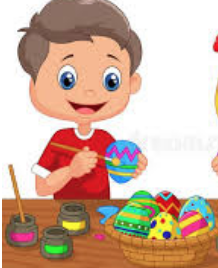
Screen Shot 2018-03-29 at 7.33.22 AMIt’s Easter and time to color eggs. Maybe this year we’ll decorate eggs some way other than a water dye solution. Before I could even explain different ways, my young Grand asked, “Why do we dye Easter eggs and can’t we just color them?”

The practice of giving Easter eggs began as a Christian tradition. A red dyed egg symbolized the blood of Christ and the hatching of an egg symbolized the resurrection.  The tradition carried through the years to different colors and processes.

Ukrainian etched eggs, especially those designs made using the scrimshaw method, intrigue me most. The inside of an egg is blown out (I’m not sure I can master that) and then the shells are lightly carved using a high-speed drill and a fine pointed knife. India ink is applied and the excess wiped away, showing intricate designs.

A design on a Ukrainian egg is created by applying wax to the egg before dying it. The wax protects the shell from the dye and layered designs are created. Usually detailed designs with many colors are used.

For a whimsical look, eggs can be decorated as heads of people or characters with painted faces, using permanent markers or brightly colored crayons. Yarn for hair and ribbon and felt fabric for collars can be attached with glue.

While researching methods, I came across the most valuable Easter eggs ever created. Around the late 1800s, jeweled Faberge eggs were crafted as Easter gifts for the families of Russian czars. Only 65 were known to be made. Today most are housed in museums and each egg is worth millions of dollars. A Faberge ‘style’ egg, for as little as $20 is available, but don’t expect real jewels.

I’ll fall back on the way I first colored eggs with my mom, then my children, and then my Grands. A PAAS dye kit. In the 1880s, the PAAS Dye Company began selling egg dying packets. William Townley worked in a drugstore in Newark, New Jersey and often concocted recipes for home use. He developed small colored tablets, in spring colors, to be mixed with water and white vinegar, and he sold the first packets of five colors for 5 cents. The word PAAS comes from Passen, the word for Easter that was used by Townley’s Pennsylvania Dutch neighbors.

Today’s basic PAAS kit is about $4 and for $20 deluxe kits are available. Neon colors. Emojis. Swirls. Marbled effect. Glitter. Spacemen. Crazy bird. Decals. Stickers. More choices than my Grands and I need. But we’ll improvise.

So we have a plan. I’ll boil a few dozen eggs, buy the basic PAAS kit, and collect a few other things. Markers and glue. Ribbon and yarn. Glitter and sequins. Wax crayons. My Grands and I won’t create valuable art like the Faberge eggs or priceless scrimshaw eggs. And we certainly won’t spend the hours required for a Ukrainian masterpiece. We’ll talk about the first red dyed eggs. We’ll have fun and make some memories.  That’s why we decorate Easter eggs.

Lessons from Children

Screen Shot 2018-03-08 at 7.50.13 AMLast Friday, I was reminded of a lesson while celebrating Read Across America. This day isn’t on my calendar as it was when I was an elementary classroom teacher, but thankfully friends at Capshaw School invited me to read aloud. Although I often read with my Grands, sharing a book with a classroom of students is a different experience.

The calming atmosphere of the school where I taught for twenty years settled over me. I felt as if I were returning home, as a teacher in charge. The smells, the colors – all the same. The greeting, the smiles – different people, but the same.

Mrs. Rand introduced me and gave her second grade students a chance to ask questions. “What’s your favorite color?” Yellow, just like this questioner wore from head to toe. “Do you know my step-mom? She went to Capshaw.” I know step-mom’s parents. “What’s your favorite book?” Had this child been prompted to give me a lead-in to the book I’d brought to read?

These seven and eight year old students sat at my feet on the floor; I sat in a chair exactly like my former teacher desk chair.  I had practiced holding and reading a big picture book so that I could read sideways and upside down. “The book is Giraffes Can’t Dance by Giles Andreae,” I said and showed the cover picture of a bright yellow, orange-spotted giraffe turning a flip.

In the book, Gerald’s knees buckle when he tries to twirl at the Jungle Dance. The other animals cha-cha, waltz, rumba and laugh at Gerald. “Look at clumsy Gerald! Giraffes can’t dance, you silly fool,” they jeer. Sad and alone, Gerald creeps away. The song of a cricket and his encouraging words makes Gerald sway his body, shuffle his feet, and swish his tail. And then he throws his legs sideways and leaps into the air into a backward somersault. The other animals gather around and declared Gerald the best dancer ever.

As I read the last words of the book, the children leaned forward and a few clapped. “So what could be another title for this book?” I asked. The children’s answers told me they understood the story’s theme. Giraffes Can Dance! Giraffes Dance When They Hear Their Music. Gerald Had to Learn. Everybody was Wrong, Giraffes Dance.

And then one child said, “Everybody can do something. Giraffes don’t have to dance.” I wanted to hug him and I asked him to please say that again. “Everybody can do something,” he said.   I got my teacher fix: a reminder that children are teachers, too. We adults can listen to and watch children and learn from them.

Some people say, “I could never be a teacher.” If every minute of a teacher’s day was like the thirty minutes I spent with those young students, everybody could be a teacher and everybody would want to. But everybody doesn’t have to. Because everybody can do something. Different somethings.