• Recent Posts

  • Archives

  • Categories

  • Meta

In Case of an Emergency

Omni House Parker Hotel. Boston. Monday. 9:25 a.m. The day begins with coffee and sweet rolls in the room. Leisurely, my college girlfriend, Alicia, and I brush our teeth, put on shoes, and listen for four girlfriends to knock on our door. Today is the first day to sightsee and celebrate our birthdays, our friendships that began in 1965 when we were Tennessee Tech freshman.

June and Kathy knock. We hug and greet. A loud voice thru the hotel intercom interrupts our conversation. Something like, “The Parker House uses voice messages to notify guests of emergencies. We are concerned for your safety. In case of an emergency, you will be given directions after this message.” The message repeats.

June, a retired school principal, says, “Well, that brings back memories of fire drills at…” The intercom breaks in. “Evacuate the hotel immediately. Go to the nearest stairway and down the steps.” June opens our room door. The message repeats. I throw my iPhone into my purse. Alicia says, “You go on. I’m just going to put a coat of clear polish on my nails.” The message repeats.

“No, you’re not. Grab your purse. We’re going,” I say. Alicia follows June and Kathy to the hallway. There is no sign of fire or smoke. As I follow my friends, the evacuation announcement continues. I pray our other two friends are safe.

Near the stairwell, a room door opens. A woman holds a baby in arms. Two young children stand beside her. My grandmother instincts kick in. I take one step toward them and note fright on the toddler girl’s face. No, this child doesn’t need a stranger to add to her fear.

My friends and I fall into the single file line down the steps from the fifth floor. I grip the rail with one hand and my purse with the other. No one says a word. I look down, planting my feet on the steps. Stay calm; don’t be scared I say silently. Fourth floor. No one hurries. Mechanical walking. Shuffling of feet. No talking.

My hair covers my eyes. If I fall, people will stumble. “I have to stop to get my hair out of my eyes,” I say. An unknown voice replies, “Thanks for the warning.”

I tuck my hair behind my ears. Sling my purse onto my shoulder. One more flight.

Hotel employees hold the lobby doors open and stand to form a walkway to guide us outside. Police officers and firefighters stand in the lobby. No one speaks. My friends and I find a place on the sidewalk to stand. A phone call confirms our other two friends are outside and walking toward us.

Two fire trucks are parked in the street. Firefighters sit in the cab. The hotel intercom blasts, “All clear. Have a good day. Thank you for your cooperation.” My friends and I hug each other.

Kathy says what each of us thinks. All clear. The best words of the day. Another reason to celebrate.

####

Straight Line Winds Hit

Screen Shot 2017-06-01 at 7.18.16 AMLast Saturday night, most of us were carrying on normally, not expecting damaging weather. Husband and I hosted our supper group, friends who have gathered around each other’s dining room tables for decades. Lightning flashed. We heard, and ignored, the rain and the wind.

The lights flickered and then darkness. Of course, someone kidded that we should’ve paid our electric bill. We waited for the lights to come on. “Well, this is a first. We’ve never eaten in the dark,” someone said. I made a mental note to always use candles as part of the table decorations.

Eventually, someone turned on the flashlight on an iPhone. Using it, I found the box of candles stored under a bathroom sink. Christmas red glitter candles, white candles, fall candles. Some tall, some short. Each set on a glass plate and lit. Two under glass globes brighten the dining table.

“Luckily, I turned on the coffeemaker before dinner and we can have coffee with dessert,” I said. We cut pies, scooped ice cream, and poured coffee in the glow of candlelight. All seemed well as we talked and told stories of past times the power went off.

And then a text was received from a someone’s adult child. “Are you okay? Trees and power lines down everywhere.” The message was read aloud three times before we all listened. Another adult child sent a similar message. “Stay put. It’s bad out here.” We were being told by our children to not go out of the house. That was a turnaround from years past.

Twenty minutes later, through phone texts, we all confirmed that our children and grandchildren were safe. By candlelight, we cleared the table, scraped dishes, divvied leftovers, and took our children’s advice.

We settled on the sofa and comfortable chairs and someone told a joke. And that reminded someone of another joke and another. And soon, jokes were just a few words: “Remember that one about the train.” We laughed hard. We reminisced funny past group experiences. Hee-hawing and cackling.

During a moment of quiet, someone said, “So if we’re asked what we did Saturday night when the lights went out, we’ll say ‘Just sat around and told jokes with old friends.’ ” The evening ended. All got home safely, detouring to avoid blocked roads.

Through the night, the city employees and volunteers worked to restore electrical power and clear roads. And Sunday morning, like so many people, Daughter and Son-in-Law and their children discovered their yard covered with large limbs, branches, and twigs. They called a friend and asked to borrow his truck. He brought his truck, his chain saw, and his children. Two other families pitched in. The dads sawed, big kids carried big limbs, little kids toted branches. Hours later, the yard was cleared.

I hope such fierce winds never hit again. It’s a time Husband and I will never forget and Daughter’s family won’t either. We’ll remember the winds, the darkness, the damage, and most of all, the friends.

####

What’s Normal?

screen-shot-2016-11-17-at-7-36-16-amI declined a brunch invitation because I was in the middle of moving. “I hope to get back to normal soon,” I said.

My friend quickly replied, “What’s normal?” A question most of us have heard. Normal. We know what it means: usual, ordinary, expected, everyday, routine, fixed, traditional.

I’ve missed normal everyday life for the past few weeks. I can’t define a normal day for another person. Everyone’s routines are as different as fingerprints. None of us do the exact same things nor in the exact same ways.

But I know what’s not normal for me and my days have been packed with not-so-normals. Like handling a warm apple pie candle five times while packing. Throw it in the garage sale box. Wait, it goes with the electric simmering pot that’s in my writing and sewing room. Don’t pack it with books because it might get mushed. Not with fabric. What if it comes out of the plastic package and makes a mess? Put it with kitchen stuff or maybe the bathroom stuff or just stick it in my purse.

It’s not normal to brush my teeth with my finger. I patted myself on the back because the coffee pot, coffee, and cups were ready for the first morning at our new house. Yet, I didn’t have my toothbrush or bath soap.

It’s not normal to sit on a living room couch with a broken leg. The movers warned us the back right leg was loose and when I accidently bumped into the couch, the leg fell off. Anyone else flip a dozen light switches before turning on the light you want? And who can’t turn on a front porch light? It’s controlled by a push button, not a switch. At least, that’s what Husband says.

It’s not normal to move a box of sandwich zip lock bags five times. Which drawer or cabinet should they be in to be most handy?

I pushed every button on the microwave. A dim light came on. A brighter light. Nothing happened. The word ‘Cancel’ flashed. Just cancel. Lukewarm coffee, that was hot an hour earlier before I lost it, tastes good.

It’s not normal to search ten minutes for peanut butter. Hit my head on the same cabinet door three times in one day. Read out loud the words printed on oven controls and still be confused about which button to push first. Not recognize the sound of my doorbell. Lose a bathroom rug. Hang bathroom towels straight and evenly spaced because that can be accomplished quickly to satisfy my need for order.

It’s not normal write this column just before deadline. To continue to move the words “Write column” from day to day until it had to be done.

These past few weeks have thrown me curves. I look forward to flipping light switches and turning on my oven with confidence. And laughing and visiting with girlfriends over brunch. I look forward to normal.

Laugh – It’s Good for You

screen-shot-2016-09-22-at-2-38-11-pmJune wiped her wet eyes and took a deep breath. “Oh,” she said, “I feel so much healthier.” I, too, wiped my eyes, as did my college girlfriends while we celebrated a milestone birthday. We’d laughed so hard, we cried. So hard that we emptied a box of Kleenex to wipe our faces. June took another deep breath and said, “I love being with you all because we laugh. Long and loud.”
What was so funny? We reminisced about a time when we were together and got caught in a downpour of rain at a shopping mall. We made a plan to get to our van without any of us getting our hair wet. Holding the only small umbrella we had over her head, Blondie walked to her van and parked it closer, two parking spaces away. The other six of us huddled under a store awning. Carrying the umbrella, Blondie jumped a puddle of water and walked toward us. She and June walked back to the van. Blondie got in the van and June carried the umbrella and walked Kathy to the van. Then it was Kathy’s turn to walk one person to the van. A few trips later, and after we’d all jumped over the same puddle of water, all seven of us were in the van. No one’s hair was wet, but we poured water out of our shoes and our clothes were damp.

We laughed then, almost twenty years ago, about how silly we must have looked walking two by two under a small umbrella and we laughed when we were together recently. Hysterical, uncontrolled laughter.

According to medical authorities, there’s evidence that we were healthier after laughing. I read an article in Reader’s Digest that quotes from a book, Heal Your Heart, by Dr. Michael Miller, MD. He states that deep belly laughter triggers the release of endorphins, which activates nitric oxide. This chemical causes blood vessels to dilate and increases blood flow, reduces the buildup of cholesterol plaque, and lowers the risk of blood clots. After fifteen minutes laughing, volunteers in Dr. Miller’s study got the same vascular benefit as if they had spent 15-30 minutes at the gym or take a daily statin. No treadmill. No meds. Just laughter.

Even watching a funny movie improves health. In another study, the blood vessels of those who watched There’s Something About Mary dilated, and the blood vessels of participants who watched Saving Private Ryan narrowed. And it’s been proven that people with heart disease were less likely to use humor in an uncomfortable situation, such as when a waiter spilled water on them, than people with healthy hearts.

Now I know why my friend, Jo, is super healthy. She shared that one morning while walking for exercise, she fell, rolled, and got right up. Because she rolled with such good form, she laughed. “I’d rather be sore from laughing than from a fall! I laugh out loud every time I can,” Jo said. Most often at herself.

So maybe a couple of old sayings are true. Maybe laughter really is the best medicine and maybe laughter is a tranquilizer with no side effects. No negative side effects – only positive ones.

Good reasons to laugh hysterically and keep a sense of humor. And good reasons to get together with friends who laugh with you.

It’s All About the Suntan

imagesBeach towel. Spray bottle filled with water. Transistor radio. Baby oil and iodine. History textbook. Everything I needed to get a perfect tan. Actually, I didn’t need the textbook, but as a college student I carried it along just in case the mood to study struck while I soaked up the sun.

On sunny spring days in the late 1960s, the narrow yard between two dormitories and concealed from Dixie Avenue by a brick wall was filled with Tennessee Tech coeds wearing bathing suits. Like an overcrowded beach during vacation season, we laid towels in rows, side by side, and saved spaces for friends. Some places were like Sunday morning church pews – reserved, but unmarked. Ideally, spring quarter classes were scheduled around sunning time, early morning and late afternoon classes. Midday was for sunbathing.

We didn’t protect our skin from the sun’s rays; instead, our goal was a perfect tan. Who dreamed up the notion that baby oil with a few added drops of iodine made good suntan oil? We smeared oil all over our bodies and lay for hours, or until our next class, baking our skin and we sprayed water on ourselves when we got hot.

The yard wasn’t the only place to sun or lay out, as we said. As a freshman, I lived on the 5th floor, the top floor, of Unit B dormitory, now M. C. Cooper Hall. Jill* lived in a single room across the hall and her room had a small dormer window that opened onto a flat roof over the building’s wide porch. One night Jill, and two other friends, Ada* and Kara*, and I decided to climb onto the roof.

We moved Jill’s desk under the window, removed the screen, and climbed as if we were heaving ourselves out of a deep swimming pool. The stars were close and the air cool. We could see and hear people, but no one knew where we were. We looked across Dixie Avenue, above the treetops, to the eagle atop Derryberry Hall. And then about mid-March, we realized the roof was the perfect place to get a tan and we could wear whatever we wanted. That black roof was closer to the sun and much less crowded than the sunbathing yard.

Only about fifteen girls lived on 5th floor, but we four friends didn’t share our sunning hideaway. We locked Jill’s door so no one, or so we thought, knew about our escapades. We whispered to each other, never played our radios, and even pretended to study. We weren’t scared of the height, but we were scared of getting in trouble. We stayed close to the window and left it open so we could climb inside quickly. Actually, we sunbathed on the rooftop only a few times. That black roof was miserably hot!

Thinking back to those days of sunbathing, my friends and I should have been scared that we were damaging our skin. I’ve had several basal and squamous cell non-melanoma skin cancers removed, most likely a direct result of overexposure to ultraviolet rays. But we had great tans, kept each other’s secrets, and I’m confident we were only four of many, many coeds who ventured out onto dormitory roofs.

During this year of TTU’s Centennial Celebration, it’s been fun to share some of my experiences as a student. Thanks to all who planned and carried out the many events. I hope the current students cherish their memories and appreciate their education as I do.

*Names changed because I promised my friends I would.

This Time Last Week

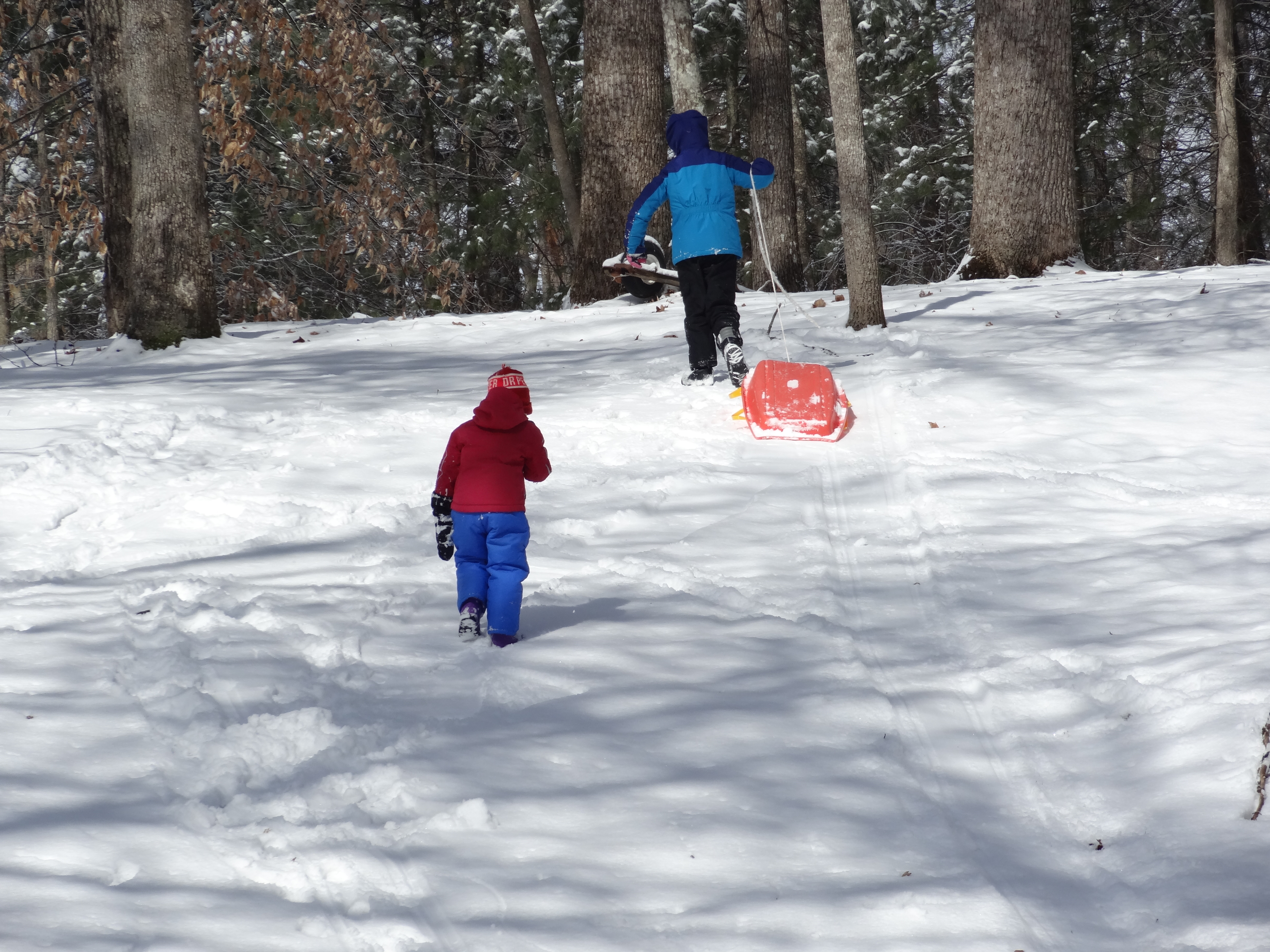
DSC03442“On our way. Friends coming too,” Daughter texted. A morning snow sledding party for nine children, ages 8 months to 10 years, and their parents. Daddies hoisted sleds out of the back of SUVs, and mothers carried food baskets. Husband entertained our youngest Grand, who is too young to sled down our backyard hill, and I donned my boots and coat to watch the outside fun.

Eight children, five adults, and twelve sleds, in all shapes and sizes at the top of the hill. Within minutes a line formed, much like snow skiers waiting to ride a ski lift. “I’m next!” was the mantra of the morning. Children rode doubles on a long wooden sled with their daddy or mother. Older child and younger or two youngers doubled. They raced. Girl against boy. Daddy against son. Mother against daddy. And they lugged their sleds back up the hill. “Walk up the side. Not in the middle of the hill,” the parents shouted, over and over and over again.

One daddy stood at the bottom of the hill beside a big tree, a possible hazard. The children veered away from it or did just what their parents told them. “If you’re about to hit a tree or out of control, roll off your sled.” Two mommas sat with crossed legs on matching disc sleds at the top of the hill. “We’re next,” one said. “We’re going down together. Holding hands.” And they did. All the way to the bottom. Neither let go of the other’s hand and neither rolled off her sled as they headed straight toward the tree. One momma crashed into the side of the tree. She looked up at her husband, who had caught every child who had careened within a few feet of the tree. He threw up his hands and then helped her up. She was okay. I heard one of the older kids ask another, “Why didn’t she just roll off?”

Sleds were abandoned. Children made snow angels, ate handfuls of snow, and walked along the edge of the creek. (I anticipated a snowball fight – that was the next day when only Daughter’s family came to sled.) Time to go inside where Husband had the gas logs burning and had thermoses filled with hot water. The mothers’ baskets overflowed. Hot chocolate and cider mixes, apple juice, bananas, cookies, pretzels, yogurt, string cheese.

Wet snow clothes were thrown into the dryer. Coats hung over open doors. Boots lined up in corners. “So I’ll know where they are,” one mother said. They ate and drank. They sat. They talked. They laughed. Big kids lay in the floor. The young ones cuddled beside parents.

“Who’s ready to go back out?” a mother said. The older kids quickly bundled up. A younger one balked. “I don’t want all that stuff. I just want to play!” Her choice was simple. Wear all that stuff or stay inside. She wore the stuff. Within twenty minutes, only Husband, youngest Grand, and I sat by the fire. Sledding, round two, was short and then they left. They took their sleds and their empty food baskets.

Later that night, on Facebook I looked at pictures and read a post one of the mothers wrote. “Gotta love when childhood friend’s parents still invite us over to play in the backyard. It’s like we are 16 again…but have husbands and children now.” I gotta love it, too.


Never Run Out of Hugs

images-1 I love all the hugs that I share with my Grands. And just as each Grand is different from the other, so are their hugs.

I held my arms out to Dean, age 3 ½, and asked, “Do you have a hug?” He spread his arms wide, threw them around my neck and said, “I never run out of hugs!” Until the next day.   Dean sat on my lap as I read aloud Little Blue Truck Leads the Way. I read the last page, squeezed him with one arm and said, “How about a hug?”

Dean shook his head and grinned. “No hugs. I don’t have any,” he said and he jumped onto the floor and stood beside me. I told him I’d give him one of my hugs and I did. “Now you have a hug to give,” I said. Dean wrapped his arms across his chest, raised his shoulders and clutched them with his hands. “I gave me a hug!” he said.

Dean’s little brother, Neil who is 21 months old, laid his head on my shoulder and wrapped his arms around me. A whole body hug. Later, I sat on the couch and watched Neil line up his matchbox cars on the windowsill. Then he held a car in each hand, stood, and turned his back to me. He walked backward until his back touched my knees and then he looked up at me. That was my signal to pick him up onto my lap. Neil pushed himself back against me and sat still. Another whole body hug.

Elaine, who is also 3 ½, has perfected the welcome hug. When I open the back door to her family’s home, I hear the slap of Elaine’s feet as she runs toward me. Her arms form a T with her body. Her eyes and mouth are open wide. I quickly sit on the nearest chair or squat down. “Gran!” she screams, just before she throws her arms around me. It’s a two-arm around the neck squeeze and a kiss on my cheek.   If I don’t sit or squat fast enough, it’s a two-arm around the knees squeeze and a kiss on my thigh.

Lou, 7 years old, surprised me last week. I turned my van’s motor off and expected her to undo her seat belt, open the van door, jump out, say “Bye, Gran,” and run into her house as she usually does. She stood behind my driver’s seat.   After her older brother got out of the van, I asked, “Lou? Everything okay?” She put her arm around my shoulder and her head beside mine. “Gran, thank you for taking me places. I love you.” Then she opened the van door, jumped out, and ran up the back porch steps to her house. She stopped at her family’s back door, turned toward me, and waved. I counted that as another hug.

Virginia Satir, a respected psychologist and family therapist, is often quoted. She said, “We need four hugs a day for survival. We need eight hugs a day for maintenance. We need twelve hugs a day for growth.”   I agree.

A good thing about hugs is when you give one, you get one, and then you’ll be like Dean – you’ll never run out of hugs.images


Love, Janet

start_bg.ny One more Christmas card came in my mailbox today. A card from Huron, Ohio. From Janet Gordon, who became my aunt’s best friend when they were young housewives and raising children.

Aunt Doris and Janet and their husbands developed a friendship that emerged from living far away from their families and in the same neighborhood. It was the late 1940’s. Akron, Ohio. That close relationship continued even after Aunt Doris and Uncle Hugh moved to Tennessee in 1962. The two couples vacationed together and stayed connected through Sunday night telephone calls.

As a kid, I played with Janet’s daughter while visiting Aunt Doris and Uncle Hugh in Akron, and I saw the Gordon family a few times when they visited here in Tennessee. In more recent years, Aunt Doris had shared the Gordon family news with me. Of the four friends, only Janet survives. After Aunt Doris and Uncle Hugh passed away within a month of each other in 2013, Janet’s daughter called me. She said that her mother needed to connect with Doris and Hugh’s family. Janet had talked with my cousin and her daughter asked that I also call her.

Janet and I talked about Aunt Doris keeping up with fashion and her determination to act young. We talked about a time that I played at Janet’s house when I ate too many marshmallows and had a stomachache. Janet lamented that she never thought she’d be the last of the four friends and declared that she was doing well. I hung up the phone and added her name to my Christmas card list.

Janet’s card included a copy of her Christmas letter. She wrote, “2014 has been a happy year for me. I accomplished most of the goals I set for myself. The goal that stands out the most is that I know if I put others first in my life, and try to encourage someone every day, I am happy and able to cope with living alone.” June 2014 was a special time because her granddaughter visited for a week and had a surprise 91st birthday party for her.

In March, Jane fell and required hospital care and caregivers during a three-month recuperation. She learned “to never underestimate what a fall can do to slow you down.” About a mild ischemic stroke that she suffered in November, she wrote “The Good Lord still wants me here as I had help immediately.” She spent four days in the hospital and continues to have speech therapy and the care of a home health nurse twice a week.

Janet ended her letter. “I am doing very well. I will start setting my personal goals for 2015. I wish you and yours joy, peace, and loving warmth as you fellowship with your family and friends. Have a safe, happy, and blessed Christmas. May you have a prosperous 2015.”

She’s 91 and lives alone. After two hospital stays in 2014 and a three month recuperation from a fall and while currently working with a speech therapist and receiving care from home health nurse, Janet is happy and doing well. She accomplished most of her 2014 goals and I’m sure she’s set 2015 goals.

I tucked Janet’s letter under my writing calendar. When there’s a day that I feel the least bit down in the dumps, I’ll read Janet’s words again. And be blessed.

Homecoming Suit, Shoes, and Corsage

menu-aboutIf I dressed for TTU’s Homecoming this Saturday as I did as a student, I’d look as out of place as a model wearing white sandals in the September issue of Vogue magazine. Imagine showing up at a football game wearing a matching wool jacket and skirt, nylon hose, and heels. And a corsage pinned to my lapel. But that’s how we co-eds dressed way back when. We dressed up and we wore flowers.

I particularly remember one Homecoming. Mom had made an orange wool tweed suit for me that fall and I saved it to wear for Homecoming. The three-button jacket and an A-line skirt were perfect, but I didn’t have the right shoes. I had black heels and wearing orange required brown shoes. The closest place I could buy shoes to fit my extra long, extra narrow was Nashville, and I didn’t have a car. So a friend drove me to Nashville, I went into one shoe store and bought the perfect taupe-colored, high heel leather shoes, and we came back to Cookeville. It was that important to have exactly the right outfit for Homecoming.

My attire wasn’t complete without flowers, a corsage that showed Tech’s colors, purple and gold. Husband, who was Boyfriend at the time, knew exactly what I wanted. Three yellow roses surrounded by sprigs of feather fern and a bit of baby’s breath. Gold colored ribbon, with just a couple of loops of purple, but mostly gold so the purple wouldn’t clash with my orange suit.

Most Homecoming corsages were yellow chrysanthemums, better known as a mum. Huge, mums, as big as saucers, and heavy. I’d worn one of those the previous year. It was so heavy that not even three long corsage pins held it in place, and the flower petals began to fall out before the final buzzer of the football game.

Most girls wore variations of the basic mum corsage, a plain yellow mum with a purple bow made from ½ inch ribbon. The mum could be surrounded by purple or gold net or a combination of the two colors. The letters TTU could be written in purple glitter on a yellow ribbon streamer or with gold stick-on letters on purple ribbon, but that meant the ribbon was 1½ inches wide. If the mum was exceptionally large, TTU formed with purple pipe cleaners could be placed right in the middle of the flower. Big wide bows made from purple and gold ribbon finished that look.

Homecoming 1967 was a cold, rainy day, but I didn’t give a thought to not wearing my homecoming outfit. I put on my wool suit, my brand new shoes, and Boyfriend pinned on my rose corsage. He held a black umbrella over our heads, we wore our knee-length raincoats, and we walked from the dormitory where I lived to the football stadium. It rained all afternoon, but we didn’t consider leaving. We got wet. So wet that I poured water out of my new shoes, which were ruined forever with water spots.

Did my team, Tennessee Tech, win the game? I don’t remember. Having the perfect homecoming outfit and corsage was much more important than any ballgame.

I Know the Feeling


Screen Shot 2014-07-31 at 6.58.02 AMLast summer Robbie invited me to bring my Grands, ages 8 and 6, to swim at her house while her 9 ½ year old grandson Noah was visiting. The children splashed and played along beside each other, just as children do when they meet someone new. At lunchtime, we all dried off and spread our towels to sit around the pool. Noah started inside the house, turned, and asked my Grands, “Do you’ll want a Luncheable?”


David and Lou frowned. I answered for them. “No, but thank you, Noah. We brought our lunches.” I handed my Grands the small cooler in which Daughter had packed their food. Rollup sandwiches, made with flour tortillas filled with thin sliced turkey and shredded mozzarella cheese. Hunks of watermelon. Clusters of grapes. Homemade cookies.


Noah settled himself beside David.   He ripped the thin cellophane covering off a square plastic package. Lou tilted her head and looked at the package. David eyed it and said, “What’s that?”


“What’s what?” Noah said.


“Your lunch?” David asked. Inside the six-inch square plastic package were three small round tortillas, 5 slices of pepperoni, some white shredded cheese, and a take-out ketchup sized packet of pizza sauce.  Lou furrowed her eyebrows as if memorizing the package’s contents.


“It’s like little pizzas,” Noah said. Using his teeth, he ripped open the packet and he squirted red sauce on a tortilla.


“Where’d you get it?” David asked.


“Nana gets them at the grocery or somewhere,” Noah said. David held his roll up sandwich close to his mouth but he didn’t bite it, instead he watched as Noah covered the tortilla with a pepperoni slice and cheese.


“That looks really good,” David said and he laid his sandwich back in the cooler. “Does every grocery store have them?” Noah shrugged his shoulders. “I wonder if Mama could find them.”


“I think they’re by the milk and stuff,” Noah said and bit into his miniature pizza. David and Lou watched as red sauce dribbled down Noah’s chin. I knew exactly how my Grands felt. I remember being envious when I was young and spent the night at a friend’s house and for breakfast her mother spread Blue Bonnet margarine on toast. At my house, we spread home-churned butter on Mom’s homemade biscuits.


Now, watching Noah and David and Lou, I restrained myself from raiding Robbie’s refrigerator for two more packaged lunches. “Noah, would you like some watermelon?” I said. He bit into the watermelon and somehow that reminded David and Lou that they, too, had food to eat.


But that’s not quite the end of the story. Last week Robbie again invited us to her house. “We’ll eat lunch and swim, just like last year,” I told my Grands. “Noah is there. And on the way, we’ll stop at the grocery store to buy your lunch, maybe Lunchables.” They chose exactly what they’d watched Noah eat a year ago.


My Grands and Noah pulled the cellophane covering off their lunches and each ate every morsel packed in those small plastic boxes. I knew exactly how my Grands felt. The way I felt decades ago when I carefully unwrapped a stick of yellow margarine, put it on a serving plate, and told my friend, “Mom is making toast for breakfast.”


###