• Recent Posts

  • Archives

  • Categories

  • Meta

When Kids Fuss and Fight

To suggest a topic for a column, a friend sent a link to an article: ‘ReeDrummond Shares How She Stops Her Five Kids from Fighting.’  Drummond is best known as The Pioneer Woman who has a cooking TV program.  Her article took me back to raising my two children.

Drummond and I could’ve gone to the same parenting school that taught parents to let children solve their own differences, unless they bicker just to annoy each other and then tell them to stop and separate them. And if children try to physically hurt each other, adults must intercede.

I never knew siblings argued, sometimes I think for their own entertainment, until I was a mother.  My only brother was almost five years older than me and treated me like a princess.  I remember only one time, a summer day, when we argued and probably shouted mean words.  Mom broke two switches off the cherry tree in our back yard and told us if we wanted to fight that we could “switch” each other. 

I went first and flipped the backside of my brother’s blue jeans.  Then it was his turn.  He refused.  He slapped the switch several times on his own legs. I cried. Mom walked away and my brother hugged me.  I don’t remember what we argued about, but I know Mom never called us down for arguing again. 

            When Daughter and Son were elementary school age and argued, I’d sit them down on the couch, one on each side of me. I told them to complement each other, saying only positive things.  It went something like this.

Son: She has a really nice brother.

Daughter:  His sister is smart.

Son: Her brother can shoot a basketball.

Daughter: His sister can play the piano.

By then, I was biting my lower lip and snickering, and they continued this chatter until all three of us laughed.  When they were older, they’d throw out pseudo-compliments without my direction – I think for my entertainment.

Sometimes when they got into she-said, he-said disagreements, I gave Daughter and Son pieces of paper and told them to write exactly what happened and suggestions to fix the problem.  Most times they’d come to me after a few minutes and agree that the problem was solved. 

When they were teenagers and argued, I sent Daughter and Son out of my hearing.  One winter evening, they bickered in the kitchen while I cooked supper.  I opened the back door and sent them outside and said that they could come inside when they were speaking kindly to each other.  Then I locked the door. 

Son and Daughter tell this story to their children and swear it was freezing cold and they were both barefoot and I wouldn’t let them in no matter what.  I expect they’ll soon say they got frostbite, but both still have all their toes.

The Pioneer Woman tells her kids to shake hands and hug. That probably works.  Parents, whatever it takes to survive kids fighting and arguing, do it.

The Safe Room

What if you were being followed and felt threatened? What if you were in a dangerous home situation?  If you were scared that someone would hurt you and you wanted police protection?    

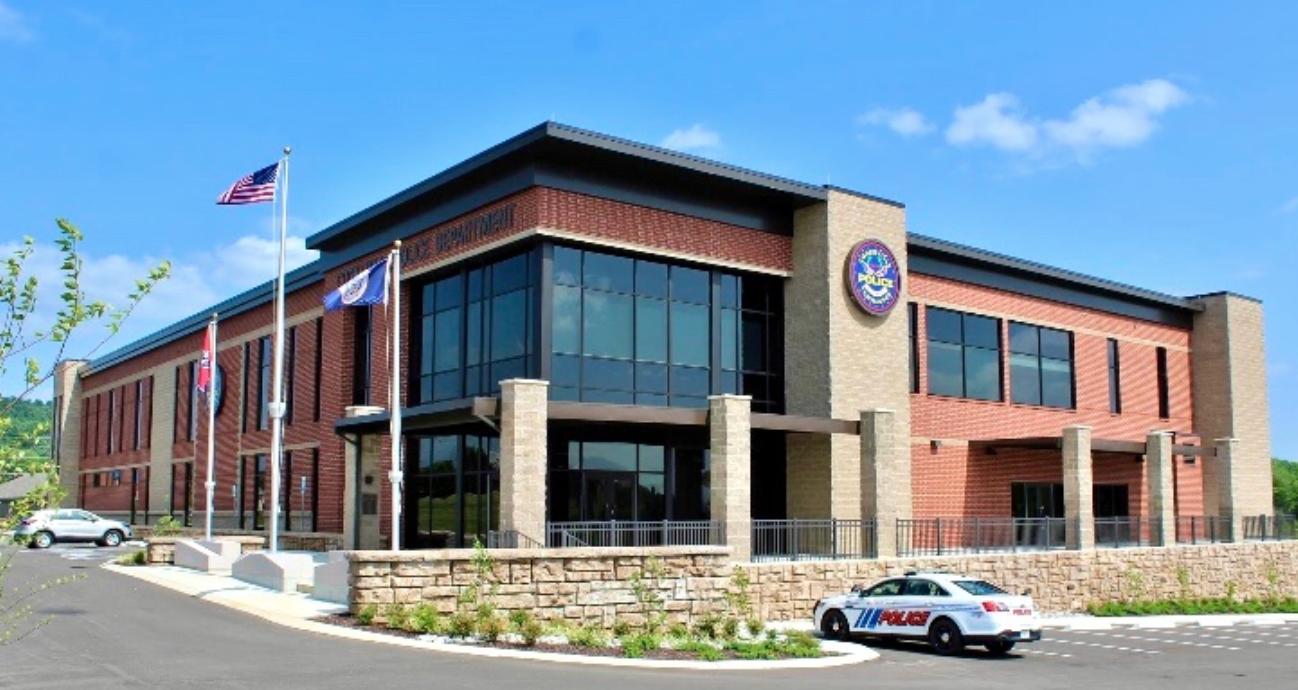
When I toured the new Cookeville Police Station, located at 1019 Neal Street, about a month ago, my take-away was the Safe Room – the first thing I saw after entering the lobby, only five steps to a gray door labeled Interview Safe Room. 

I was told that the Safe Room is available for anyone, anytime, 24 hours a day, 7 days a week, but I wanted to know more.

            Recently, I sat inside the Safe Room across a table from Lieutenant Anthony Leonard, the Cookeville Police Department Public Information Officer. “Can anyone come to this room anytime?  Is that why it’s here?” I asked.

            Lt. Leonard nodded.  “It’s a monument of a safe place.  The police department provides safety to the community. This room is that.”  Indeed, it is a monument, a perfect example of a safe place. 

            “It’s built with concrete walls and the two doors are ballistically rated for gun safety,” Lt. Leonard said.  It’s a small room, 9’ x 12’.  The walls are painted gray and the room is furnished with only a small desk and three office chairs.  “There are other safe places, but this one puts you in immediate contact with a police officer.”

            I asked if a police officer would immediately come into the room when someone entered it.  Lt. Leonard explained. “No, but the police dispatcher (about 100 feet away down the hallway) will immediately know someone is here.” He pointed to an overhead camera. “When you close the door and turn the dead bolt lock on the door that you came through, you are safe.”

 “To talk to the dispatcher, push the lighted blue circle beside the door.”  The lighted circle is an AI, Artificial Intelligence, a security device that provides video and audio. “The dispatcher will send an officer who will come into the room through the other door that can be opened only with a pass key.  The dispatcher can continue to see and hear everyone in the room.”

“So, if I’m afraid of being hurt or I’m followed in my car by someone with road rage, I can come here?” I asked. 

“Yes, but 911 is always the go-to phone call,” Lt. Leonard told me.  He explained that the 911 call-taker can give directions to the police department and call the police dispatcher. Then a police officer could meet me outside the building, but the Safe Room is available without calling 911.

            Many people spent years designing and building the new police headquarters.  I was impressed by the detectives’ cubicles, the chief’s office, conference rooms, break rooms, interview rooms, and other offices.  They thought of everything – even a Safe Room.

As I left the police station, Lt. Leonard reminded me that anyone who is threatened should first call 911 and the Safe Room is always open, 24/7.

Helpful Technology Goes Awry, Again

Today’s guest columnist is Daughter Alicia.  After she read my column about my frustration with QR Codes, she shared a recent technology experience at her house.

Background: our laptop has a pesky habit of interrupting on-screen work with a multitude of notifications. It interrupts with no regard of manners or propriety. No doubt, there is a way to stop notifications, but I haven’t done that. 

When it was time for 15-year-old Elsie to take the drivers’ permit test, we learned it could be taken online. Hooray! How convenient!  I registered to become Elsie’s test proctor and jumped through the hoops downloading the TN proctor ID application, and we were good to go.

I welcome a second teen driver. Every time I get behind the wheel, my offspring share much needed tips in the form of side-eyed comments: “Blinker,” “It’s yellow, Mom,” and “Turn here.”   

Elsie had studied diligently; she was ready. Step one: scan a QR code, after my proctor ID app recognizes my face. In the two weeks since I had installed the app, my face must have morphed to a state of non-recognizability. I timed out three times due to ‘security concerns’ for having the wrong face.    

After a live chat with Josh, an online assistant, who verified I was who I said I was, we were admitted to the testing site. I tried to play it cool as my girl was a shade anxious, but I sweated from the effort of being recognized by the wizardry of biometric identity. 

Elsie read the instructions, which told her to not have any web-connected devices nearby and to not open other on-screen windows (presumably to prevent wayward teens from on-the-spot research/cheating/tom

foolery). Ever the rule follower, she put her phone and Apple watch several feet away. She began.

I sat quietly. No hints. No ‘Are you sure?’ mom-interference. About a dozen questions in, an email notification popped onto the computer screen.  To be able to see question behind the pop-up,  Elsie hit the x to delete the notification.

Immediately, the test screen blacked out and words in big red letters appeared: YOU HAVE FAILED.  Surely not. Oh, but yes. “An alternate tab was opened. This is against the rules. This test is marked FAILED.” 

We stared at each other in disbelief. I cannot think of one thing Elsie has ever failed, and to be suspected of cheating – devastating. I was gobsmacked when I realized she FAILED because she closed a notification: ‘You have a new email.’ Good grief.

Elsie buried her head and came out laughing. We laughed until we cried. I don’t know which was worse for my girl: failure or being found guilty of cheating without a jury of peers. She carries the burden of being the oldest daughter who has a rather high self-imposed bar of success.  The next chance to take this test is 24 hours later.  At which point, we’ll load up and head to the good ole Department of Motor Vehicles Office to test in person, just like God and Henry Ford intended.

Technology: Love It and Hate It

Technology makes life simpler by one definition:  methods, systems, and devices which are the result of scientific knowledge being used for practical purposes in industry and our everyday day lives.  Technology certainly proved practical when Husband, our 15-year-old Grand, Elsie, and I set off on a five-day trip. 

Holding my iPhone in hand, I said, “Hey, Siri. Get directions to Sandusky, Ohio.”  Seconds later, Google Maps showed three possible routes on my phone screen. We chose one showing 486 miles and 7 hours 35 minutes.  Because I wanted to follow our route on paper and I like to know the names of towns we travel through, I kept my Rand-McNally atlas close by as we followed a blue line and spoken directions from my phone.   

I appreciated detailed directions. “In ¼ mile, use the right two lanes. Turn left onto Interstate Highway 77.” As Google Map’s back-up navigator for Husband while he drove, I sometimes repeated directions, watched for highway and street signs, and looked up the name of the next town.

When we arrived at our destination, I praised technology.  We didn’t make a single wrong turn, although driving time was extended an hour due to road construction, and along the way Google Map had located and directed us to the nearest Chick-Fil-A.

As we travelled, we used technology in other ways.  Texts, emails and phone calls kept us connected with friends and family.  I played word games, and our Grand listened to audio books.

            The next day I encountered my bane of technology.  At a Cedar Point Amusement Park information booth, I asked for a park map.  “You can scan one,” said the park employee.  She pointed to a QR code, a black and white square, and immediately looked towards another park visitor.

Quick Response codes have been described as barcodes on steroids; they hold information horizontally and vertically.  Was I expected to see everything at Cedar Point, a 364-acre park, on my 3” x 6” phone screen?  Never understanding the park’s layout, I floundered for the next few hours and followed Elsie from ride to ride.

Finally, we saw the main information center so I again asked for a paper map.  The employee said, “You can scan one,” and pointed to a QR code. I gave her my best grandmother smile and said, “I’ve been frustrated all morning.”

She nodded and ducked below the counter.  “Here you go. This should help.”  I triumphantly waved my paper map toward Husband and Elsie.

At suppertime, a hostess guided us to a restaurant booth and pointed to the tabletop.  “Your waiter will be right with you. You can scan our menu here,” she said. Another QR code.

As we looked at phone screens, the waiter must have sensed my frustration because she asked, “Would you like paper menus?”  Most times I think I’m moving along well (for my age, some would say) in this technology world, but I hope all the world’s information doesn’t get packed into black and white squares.

Curiosity and Determination

When a Grand asks to play our pump organ, I say, “Yes.” And I often say that my grandfather and his two sisters bought the organ about 1915 when they were young adults. 

            “Did one pump and one play?” eight-year-old Micah asked.  I shook my head.  Micah had played our piano and organ since he was a toddler – old enough to reach the keys.  Creating his own melodies, his little hands have run up and down the keyboards, and he learned to play with fingers, not fists. 

            He pumped the organ pedals and played, and like every other time, my Grand declared that you needed strong legs to pump.  When it was my turn, I played ‘Jesus Loves Me’ while Micah sat quietly studying my fingers and the hymnal propped open on the organ.  After I played the last note, he asked, “Gran, how do you know what key to play by looking at that book?” 

             I quickly found Lesson Book – Level 1A that Micah’s big brother and sister had used.  Knowing Samuel and Annabel used the same book made this young Grand throw out his chest. He asked to play the piano so he wouldn’t have to pump. 

            Micah is methodical – before he rides his bike, he puts on his helmet, arm and knee pads, and riding gloves – so when I flipped a few pages to one that showed black notes and finger numbers for ‘Merrily We Roll Along,’ he stopped me.  “Gran, what if I miss something important in the front?” 

            He practiced sitting tall and curving his fingers like a cat’s paw.  We both numbered and wiggled our thumbs and fingers. “Are thumbs always number 1, even in a different book?” Micah bent his thumbs.  What a relief that music books uses the same numbered fingers. 

            We counted quarter, half, and whole notes in a measure. Micah played all the black keys in groups of two; then those in groups of three.  Forty-five minutes after opening the Lesson Book, we turned to ‘Merrily We Roll Along’ and we sang the numbers over the notes: 2343 222 333 222.  (Keys are named as letters in later lessons.)

            Micah put three left-hand fingers on the three black keys below middle C, and I put my index finger over the first note in the lesson book.  “No, Gran. I think I’ve got this,” he said.  And he did.  Maybe because Micah is left-handed, playing with his right hand was more difficult, but he tried over and over to master ‘O’er the Deep Blue Sea.’  

            Micah took home copies of two pages from the lesson book. “I’ll play on our piano.  Everyone will be so surprised!  It’s kinda’ like reading.  When can I play the next page?”  Micah will learn the names of keys and he’ll understand that notes for ‘Jesus Loves Me’ are written on five straight black lines.  My Grand’s curiosity led to learning and his determination to success.  And I got to watch. 

Can We Just Stop a Minute?

We stood around a high-top table at a rooftop restaurant.  Telling stories.  Remembering days long past.  Sharing where we’ve been and what we’ve done during the last fifty-something years, since the late 1960s. A few of Husband’s college fraternity brothers and their wives or dates had gathered for supper and a long-overdue visit.

            We laughed as we reminisced about parties, one when a diamond engagement ring was thrown across the dance floor.  (The ring was found and the next day he put it back on her finger.  The couple married and will soon celebrate their 53rd anniversary.)

We talked about children and grandchildren.  About jobs and careers.  About trips. About moves from apartments to houses.  About upsizing and downsizing.  About retirement and the luxury of doing what we want, when we want.

“Can we just stop a minute?” Gil said. “Just stop and appreciate that we’re here together.  After all these many years – when we were students at Tech – we’re together right now, at this moment.”

We five around that one table stopped.  We nodded.  We looked at the clusters of others who were talking and laughing.  My eyes filled with happy tears.

I’ve carried Gil’s words for two weeks. Just stop and appreciate.  Right now, at this moment. I am thankful for that time with friends, some Husband and I have kept up with and seen regularly, some we hadn’t seen since 1969.  For that reunion, people had made plans and travelled distances and even though some of us will gather again, the next visit won’t be that moment.

Time with family and friends doesn’t have to be long planned and can be anywhere, anytime. 

As I drove a friend to Vanderbilt for a radiation treatment, we talked about the days when we were neighbors and our children were young and how we fed PBJ sandwiches to the kids who were in our backyards at lunchtime.  Those were happy memories and I was happy for the time just the two of us were together in my van.

When I sat at a restaurant with two friends last week, I stopped talking and just listened.  I took in their faces, their smiles, their concern for another friend who was sick.  

As I visited on the phone with a friend, I didn’t dust window shutters or empty the dishwasher.  I concentrated only on our conversation. 

Most days, when the weather allows, before or after supper and sometimes both, Husband and I sit in rocking chairs on our front porch.  We share what we’ve done that day and greet neighbors as they walk their dogs.  We watch neighborhood children ride bikes and scooters.

Last week’s heart-breaking news of the deaths of young children and teachers in Texas tells us once again to hold those we love in long hugs.  To appreciate each conversation.  To take in and cherish time together.

Can we just stop a minute?  Just stop and appreciate.  Right now, at this moment.

Savor a Sun-Warmed Strawberry

Roots and Wings

‘There are only two lasting bequests we can give our children.  One is roots.  The other, wings.’  When I researched to learn who wrote or said these inspiring words, I learned many people have used them:  Henry Ward Beecher, Jonas Salk, Ronald Reagan, and others. But I didn’t find out who first gave this sage advice.

            As 865 Putnam County high school students graduate this week, parents wonder if their children are ready.  Ready to move out of their homes.  Ready to take on the responsibilities of living with peers.  Ready for a full-time job.  Ready to study to attain the next degree.  Ready to measure up to the rigorous training in the armed forces.  Ready to manage their time, their money, eat healthy, even ready to wash their own clothes. 

            Yes, they are.  Because you gave them roots.  Roots that go all the way back to when your children were swaddled in small blankets and you attended to their every physical and emotional need.  When they fell on their bottoms as they stumbled to take steps and you clapped to encourage them to stand and try again.  When they started kindergarten and you threw an air kiss.

            Roots grew thicker and stronger when children learned to socialize with classmates and team mates.   Learned to adapt to teachers’ and coaches’ expectations that were different than at home.   Learned rules and consequences, and probably experienced consequences that taught life lessons.   Learned to compromise, to lead, and to follow.

            You parents encouraged wings to develop through root experiences.  When toddlers fell, they picked themselves up and wings fluttered.  When children felt unsure and scared, you encouraged.  When the world’s values didn’t match home values, you helped your children sort, discard, and keep what was necessary to be successful.

            And when children felt rejected or defeated, they knew a safe, secure place. At home, their wings could wave frantically and then rest to rejuvenate and grow.

            Roots and wings continue to develop even after most people think children are old enough to be on their own. When my children were young, Mom told me about giving roots and wings and years later she chuckled when Son showed both.  He was working his first full time job after college graduation and lived a four-hour drive from Husband’s and my home.  We planned to visit him for the weekend and Son asked, “Will you bring my camo coat? The one that’s hanging on the coat rack in the mudroom.” 

            Son’s wings had taken him to independent living.  His roots told him that home was the same. That his coat he’d hung on a coat rack when he was a high school student, years earlier, was still there.  The coat had been moved to a closet and we took it to him.

The greatest gifts parents give their children truly are roots and wings.  Gifts we continue to give, even after children wear caps and gowns and think they are all grown up.

Once is Enough

How did I miss National Cheese Fondue Day on April 11 and Chocolate Fondue Day on February 5?  Maybe because after Husband and I hosted a fondue dinner we both said, “Never again.”

            In a column recently, I wrote that by the time I had a fondue party, others had fondued for years.  Many of us long-time married folk received fondue pots as wedding gifts.  In the early 1970s, Husband and I heated cheese in our pot and dunked chunks of bread, but our only time to fondue with a group was about ten years later when we hosted a fondue dinner.

            In 1978, Husband and I and five other couples formed a supper club, that we named The Gourmet Group, and we began gathering in each other’s homes.  We cooked and served food from many countries, and fondue seemed like a fun and easy meal.

             Fondue originated in Switzerland in the 16th century as a way to use hardened cheese and stale bread during winter months.  So, melted Gruyere, a traditional Swiss cheese, and bread cubes was the logical choice for our appetizer.  As we six women planned our menu, we decided to make the whole meal fondue since each of us owned a fondue pot.

            Fondue appetizer.  Fondue meat.  Fondue dessert. 

            Husband and I set two tables so six people could share one pot. The cheese melted perfectly, we dipped bread and drizzled cheese on tables and our chins.  We dropped bread chunks in the pots and retrieved them with slotted spoons. We enjoyed every bite.

            The cheese pots were removed and main dish pots were brought to the tables.  The person in charge of main dish had researched the size to cut beef cubes, the oil to use, and how much oil to put in pots   Each person’s dinner plate held raw beef and sides.  I don’t remember the sides, probably traditional Swiss vegetables or salad, whatever those are. 

            We waited for the oil to heat.  We waited and waited.

            Finally, the oil was hot. Each of us put a piece of meat in pots.  After the suggested time, the meat was raw.  Hardly warm.  Maybe just two people could cook, but cooking two bites at a time would make for a long evening.  

            None of us were that patient so I pulled out my heaviest deep pot, put it on the stove, and poured in oil. We stuck a few pieces of beef on forks into the hot oil and within seconds it cooked.  Not perfectly, but not rare. Forgoing forks, we dropped beef cubes into the oil, which splattered everywhere, and quick-fried.

            I don’t remember dessert.  Maybe we ate strawberries and chocolate hand-to-mouth.

            What Husband and I never forgot was the grease – on the stove, the floor, the tables. Now, about forty years later, The Gourmet Group continues to gather monthly and if the word fondue is even said, Husband and I shake our heads.  Never again.

Mother’s Day is a Day for Memories

When you think of your mother, where is she? 

            I see Mom in her kitchen and in her sewing room.  She’s standing in the flower shop in the basement of my childhood home.  She’s sitting in her brown recliner.  She’s driving a lawn mower. 

            Maybe you think of your mom at one place, and I first picture Mom wearing a dark green plaid apron tied around her waist and patting biscuit dough made with Martha White self-rising flour, Crisco, and buttermilk.  She’d sift the flour, cut in Crisco with a pastry cutter, pour buttermilk into a flour well, and gently stir with a wooden spoon just until the flour wasn’t dry.  Never measuring.  Never looking at a recipe.  

            Mom handled the dough gently, patting it on a flour covered pastry cloth and then making it about ½” thick with a rolling pin that didn’t have handles.  She cut biscuits the perfect size for two bites for Dad and three or four for me.  Smaller biscuits bake more evenly, she told me, and you can eat more. 

            That same biscuit dough became dumplings for my chicken and dumplings birthday meal and Mom made dessert butter rolls using the same dough.  (When biscuit dough is more than biscuits is a topic for another column.)

            Mom and Dad hosted many family holiday dinners and backyard cookouts.  She taught me to fry chicken, make vegetable beef soup, and use a pressure cooker for a perfect beef roast and all the trimmings.  When I made lumpy gravy, it’s because I didn’t follow Mom’s directions.

            Out of necessity, Mom learned to sew when she was a teenager and made clothes for herself and her two younger sisters.  During my growing up years, she made clothes for me, both my grandmothers, and herself; every seam was smooth and even and every garment fit perfectly.  Mom took up quilting to make each of her three grandchildren a quilt – machine pieced and hand quilted. 

            In 1960, Mom turned her love for flowers into a business to pay for my brother’s and my college educations when she opened Ruth’s Flower Shop in the basement of our home.  She arranged gladioli and pom-pom mums or carnations in white metal containers to take to the local funeral home and she made orchid corsages for Mother’s Day.  More than once, she dyed wild roadside Queen Anne’s lace for brides who couldn’t afford store-bought flowers for their bride maids’ bouquets. 

            Saturday house cleaning was finished by lunchtime so Mom could watched baseball games.  Leaning back in her favorite recliner she cheered for the New York Yankees and the Atlanta Braves. 

            When Mom’s grandchildren were young, one of their favorite things to do was ride in a metal wagon pulled by a riding lawn mower.  Mom drove all over Dad’s and her backyard, as long as the kids sat on their bottoms in the wagon.  

            Mother’s Day is a day to make and share memories and to celebrate with those you love most.  Happy celebrating!