• Recent Posts

  • Archives

  • Categories

  • Meta

Showing a Lot of Heart for the Playground

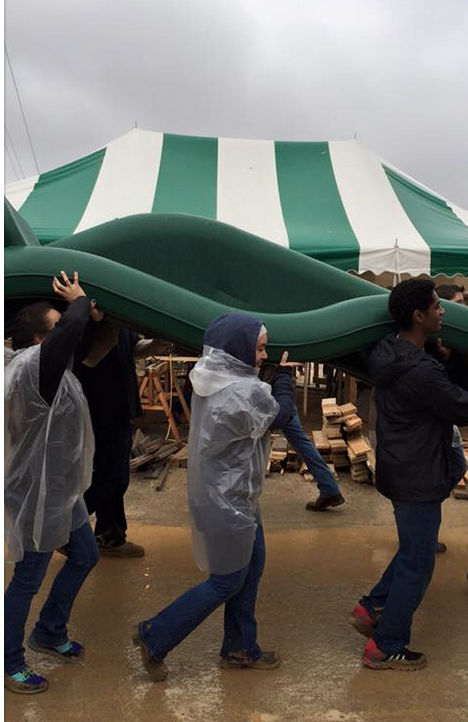
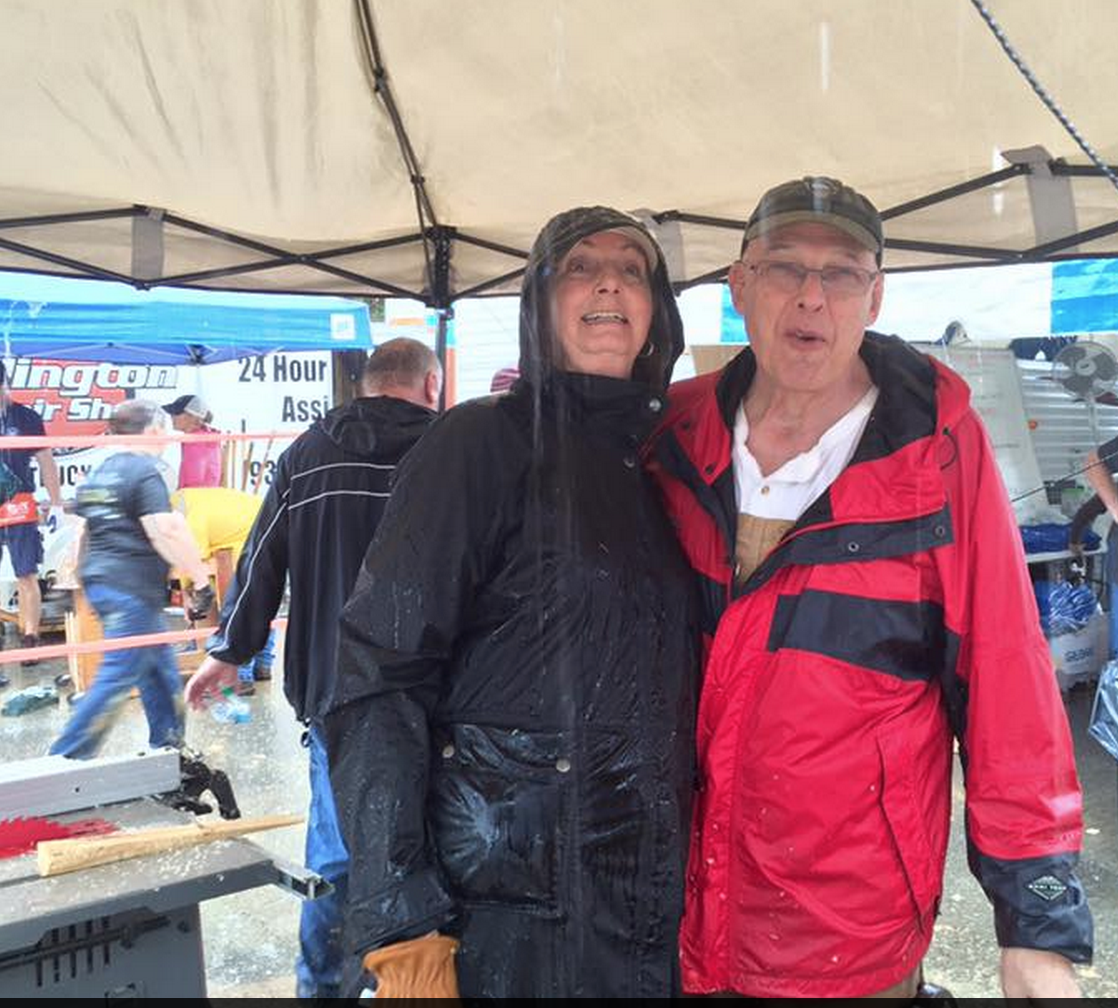
Screen Shot 2015-10-04 at 3.05.04 PMAnd the rain came down. That could sum up the experiences of the volunteers who’ve been building the Heart of the City Playground in Dogwood Park this week. But it doesn’t.

Tuesday was the first building day and Husband and I were there. Decked out in work clothes and boots, caps, and rain jackets, we signed in at 7:45 a.m. We were welcomed, given a nametag, and immediately assigned to a crew. Our captain explained our first task. “We’re gonna’ cut some boards. So we need planks carried and one person on the circular saw.”
Screen Shot 2015-10-04 at 3.10.32 PM

In trying to avoid being hit by long recycled plastic planks that Husband and others carried, I found myself standing opposite a man named Joey who stood in front of the saw. I side-stepped to move away from the saw. “Don’t leave,” Joey said. “Just step a few feet that way,” he nodded his head to show me where to stand. “You can double check my measurements and count the boards. I’ll cut. You count.” So I counted and stacked boards. Twenty, 48”. Sixteen, 12”. Thirty-six, 33”. And the list went on.

Those cut boards were screwed together to form rectangular boxes. Ah, sandboxes, I thought. But they weren’t. This crew built five huge platform ladder steps that children will climb to get to the top of something. I don’t know what. It’ll be something fun to play on. These steps were built by a group of people who didn’t know each other and who rubbed shoulders as they worked. When I wasn’t stacking short boards or moving them from one place to another, I shoveled sawdust from the work areas and picked up wood scraps and trash. At the art tent, I wiped dust off of decorative cut shapes so they could be painted.

Neither Husband nor I worked in the mud. But my oldest Grand, age 10, and his dad did. “We had a great time in the mud and got wet to the bone,” Son-in-Law said.

Other volunteers summed up their experiences. “It’s tiring and very gratifying,” said Greg.

Serina said, “Working with all the wonderful people on this job reinforces why I love Cookeville.”

Casey said, “It’s been a blessing. It’s been humbling. It’s been life changing.”

Kimberly had one word, “Rewarding.”

Bill, a project leader from the playground company, Leathers & Associates, said, “People are here and smiling and it’s getting done.”

Ashley, one of the two co-chairmen who has dedicated more than a year to the playground, said, “It’s been challenging, but I know the good Lord above is with us every step of the way. If volunteers keep showing up in these less than favorable conditions with smiles on their faces, there’s no doubt we will get this playground built by Sunday evening!”

There’s a job for everyone. Just show up. If you want to be a part of something good, a part of something that brings people together, a part of something that makes life better.

Wear your work shoes. I’ll see you there.

Choosing the Right Check-out Line

Screen Shot 2015-09-30 at 4.22.24 PMBefore getting in a grocery store check out line, I survey every line. How many people in each line?   How full are their carts? I’m determined to choose the fastest moving line, and one day I was positive I’d made the best choice. The only cart ahead of me was filled two-liter drinks, and the customer was piling those drinks on the conveyer belt.

I began stacking my groceries behind the drinks. By the time my cart was empty, I realized that some drink bottles were still on the counter and a woman, wearing a manager’s nametag, was talking to the customer.

Manager: I’m sorry, but there’s a limit. You can only buy six two-liter drinks at the advertised price.

Customer: Nobody told me.

Manager: There are signs on the drink aisle and it was stated in the newspaper ad. (She nodded toward the newspaper tucked under the customer’s arm.)

Customer: I didn’t get all the same drinks. I want six of each kind.

After a few more exchanges, in which the manager spoke in a calm, controlled voice, the customer put her hands on her hips and looked at her cart. She handed one two-liter bottle to the young male cashier and said that she didn’t know which drinks to put back. The manager walked away after thanking the customer for her understanding. The cashier stood quietly and smiled as the woman changed her mind several times. I wanted to tell her to choose six, any six!

Finally, she handed money to the cashier. He counted out her change and explained the savings shown printed on her receipt. At last, my turn. But it wasn’t. The customer stared at her receipt. At this point, I’m annoyed, and I notice that the cashier has maintained a pleasant attitude. I read his name on his nametag: David.

Customer: You charged me too much.

David: The discount is listed below the regular price.

Customer: You charged me for 7, not 6.

She threw the receipt onto the counter, and David counted aloud to six as he pointed to numbers on the receipt.

Customer: You didn’t count all of the numbers.

In a friendly voice, David suggested that she take the receipt to customer service where someone could be sure that everything was correct.

Customer: You just don’t want to do it right.

David: (turning to the employee who had bagged the six drinks) Will you please carry her bags and get customer service to help her immediately?

The bag boy picked up the three full plastic bags, nodded and smiled to the customer, and said, “Right this way, ma’am.” It took another minute for her to put the newspaper, her billfold, and her glasses in her purse before she walked away.

David turned my way and smiled. “Welcome. How are you today?”

“Thanks, I’m really good. And you?” I asked.

“Having a good day.”

I shook my head and chuckled. “You certainly handled that situation well. I wouldn’t have been so patient. Congratulations on a job well done.”

“We try, ma’m,” he said as he began scanning my groceries.

I’ve had some bad days. Some confusing and frustrating checkout experiences. I don’t mean to be critical of the customer ahead of me. My takeaway from this experience is to appreciate people, like David, who are courteous and respectful, even in a difficult situation.

I chose the check out line that took a really long time. I chose the right one.

Words Remembered Fifty Years Later

Screen Shot 2015-09-24 at 10.21.02 AMI saw myself as a college freshman while I watched the performers last Saturday night at the kick-off of the Tennessee Tech Centennial Celebration. When Tech marked its fifty-year anniversary, I was there. I’d graduated from Pickett County High School and enrolled in Tech two weeks later. Summer quarter felt like the days I’d spent on Tech’s campus for 4-H meetings and contests. Not many students, laid back attitudes, and I took one class, a whole year of biology.

In September, the atmosphere morphed into real college life. Hectic schedules, crowded sidewalks, full dormitories, many people. It was overwhelming and frightening for this girl who’d walked the graduation line with only fifty high school classmates.

I would’ve been happiest weaving my way on the paths I’d learned during summer school and pretending I wasn’t a newcomer, but like every other freshman, I wore a beanie, a gold and purple hat. I stuck it on the crown of my head and snatched it off in all-freshmen classes, but when I walked across campus, that beanie balanced on my head, less an upperclassman see me without it. Most simply reminded us newbies to cover our heads, but I lived in fear that one would ask me to sing the Tech hymn as had happened to a friend.

Some freshmen events were optional, but no one was exempt from the President’s Welcome Reception, hosted by President and Mrs. Everett Derryberry. We students were expected to dress up, and not wear our beanies, even though the reception was held in Memorial Gymnasium. I put on my best Sunday dress, hose, and high heels and walked with friends across campus from Unit B dorm on that warm late afternoon.

The gym was hot and packed with people. Students coiled around the basketball court and zigzagged in the middle forming a seemingly endless line to shake hands with President and Mrs. Derryberry, who stood close to the bleachers at the basketball half-court line.

Secretly, I was excited to meet Mrs. Derryberry. I didn’t know anyone from England. Senator Albert Gore had visited in my home when I was a child, and I’d shaken hands with Governor Buford Ellington. But I’d never met someone who looked like royalty, and Joan Derryberry had the look of a queen.

She wore a blue dress that day. A string of white pearls circled her neck. Her hair styled in a loose French twist and a soft wave swept over her forehead. I was nervous. What would I say to such important people? I watched as other students shook hands with President and Mrs. Derryberry. A quick handshake and a few words.

Finally, it was my turn. President Derryberry clasped my hand and I told him my name. He nodded, welcomed me, and introduced me to his wife. Mrs. Derryberry leaned toward me, her face just inches from mine. Her eyes squinted with her smile. She enclosed my right hand in both her hands and in a soft voice she first complimented me on standing tall and straight and whatever she said after that included the word beautiful. Then she asked me where I was from. “Byrdstown,” I said, and she nodded and assured me she knew exactly where it was and she wished me well at Tech.

A brief mandatory conversation. A greeting that made a small town girl feel important. Words I have carried for fifty years.


###

What Grandparents Do

images  Grandparents do silly things. Like travel halfway across the country to hug grandchildren. Husband and I made this all day journey to visit Son and Daughter-in-Law about twice a year, until five years ago. Now, three Grands later, we make the trip more often.

Son carried Husband’s and my suitcases from his car, opened the front door of his home, and announced, “Pop and Gran are here!” Bare feet slapped the wooden floor as Dean, age 4, and little brother, Neil, ran. Husband lifted Dean who wrapped his arms and legs around his Pop in a whole body hug. Two-year-old Neil stretched his arms high and his threw his head back. I lifted my Grand into a hug and he buried his face in my shoulder. “Oh, Neil! I love you,” I said. “Uv’ you,” Neil said and swiped his open mouth across my cheek.

Baby sister Annie lay on her stomach on the floor. Dean ran to her. “Annie, look! Pop and Gran are here!” I sat on the floor beside my four month old Grand and picked her up. I hugged her close. Her brothers patted her arms, her head, her legs, and snuggled close to me. The hassle and cost of the day’s journey were worth every effort, every minute, every penny.

Grandparents laugh at the same corny riddle time and time again. Dean sat across the supper table from me. “Gran,” he said, “What did the cow do when her car wouldn’t start?” I guessed that she got her car fixed or walked or bought a new car. Dean shook his head from shoulder to shoulder. “She rode her MOO-tercycle!” my Grand said and he burst out laughing. I laughed, too. The next day and the next I still didn’t know what that cow would do and Dean and I both laughed when he shouted, “MOO-tercycle!”

Neil asked and answered his own favorite riddle. “Sad cow?” he said and immediately lowered his chin, stuck out his bottom lip, pulled down his eyebrows, and said, “MOO, hoo, hoo.” When everyone at the table laughed, he skipped the question and chanted, “MOO, hoo, hoo.” Dean’s and Neil’s riddles were part of every meal’s conversation for three days. I laughed every time.

Grandparents babble. Annie sat in her bouncy seat. I said, “Look at you. You’re as cute as a June bug. La, la, la, la, la. Look at those big beautiful brown eyes. You’re such a happy and strong girl.” My Grand kicked her left leg and made her seat rock. Her eyes sparkled. Her mouth opened wide and she stuck her fist in her mouth. I rattled on. “Oh, is your fist good? Yum. Yum. How about a song? Ole MacDonald had a farm….” Annie laughed out loud at my imitation of a horse. Even her big brothers laughed.

Grandparents like wiggles and scrunches. Recently a new grandmother said, “Before my granddaughter was born, I’d think ‘What’s the big deal?’ Yesterday a friend showed me pictures of her first grandchild and told me how her grandson wiggles his toes, scrunches his nose, and fills his diaper. You know, I get this grandparent thing. I didn’t understand why grandchildren were so special. You gotta’ be a grandparent to get it. I get it!”

Grandparents stick together. After all, we do such silly things.

###


Aprons and More Aprons

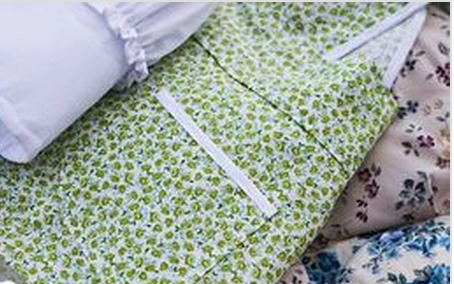
Screen Shot 2015-09-10 at 8.07.50 AMAprons are not just for mothers and grandmothers, and a cook’s apron can tell you if you want to eat what’s on the dinner table. I thought I’d shared everything about aprons in a previous column, but some friends’ comments pushed me to write more.

When Kay’s son was a high school student, he asked for an apron for Christmas and he didn’t plan to cook. He put it on every school morning before he left home. All the crumbs from his breakfast that he ate as he drove, fell on the apron, not his clothes. I wonder if his football teammates knew he wore an apron. Do they tease him or wish they were brave enough to slip one over their heads?

One Christmas I surprised Son with an apron. He unwrapped his gift, saw bright orange fabric and said, “Oh, a Lickity Split apron.” LickitySplit – the convenience store that Husband owned when Son was a kid. Son stood, slipped the neck strap over his head, and then said, “Wow! This is great! It’s long enough.” The standard Lickity Split apron didn’t cover much of Son’s 6’9” frame. But when I cut the bottom off of one and sewed it onto another, that extra long apron was just right. On work mornings, he dresses for the day and wears his apron while making and eating breakfast with my Grand who awakes before the sun comes up. And Son is a grill master – the spots on his apron prove it.

My friends agree that a spotless apron means one of two things: it’s never been worn or don’t trust the cook. A good cook’s apron has stains. Squirts of spaghetti sauce, splatters of bacon grease, drippings from barbequed ribs, and blackberry purple blotches. If the cook’s apron is spotless, I say, “You know I’m really not very hungry. I won’t eat much.” Maybe the cook is wearing a brand new apron, but I have an out until I take a few bites and can decide that I’m hungrier than I thought.

A gardening apron hangs on a hook in my laundry room. Bib style made of heavy fabric and with big pockets along the bottom – perfect to carry a digging trowel and I’m not sure what else because I’ve never put a gardening tool in it. I discovered those pockets are also perfect for feather dusters, dust cloths, spray cleaner, and a few paper towels. I should wear it more often or give it to a gardener.

One of my favorite aprons is a waist apron with ties much too short to reach around my waist, but it’d fit one of my young Grands perfectly. It’s made of bright yellow cotton fabric and trimmed with decorative tape with tiny red and yellow flowers.  This apron has many deep narrow pockets, the perfect size for crayons, and two larger pockets. Crayons, scissors, and mucilage glue – that’s what was in the pockets when Mom gave me this little yellow apron, that she’d made, for my sixth birthday.

I’m told there are specialty job aprons. For welders, seed-sowers, chefs, waiters, potters, blacksmiths, artists. But somehow, when I think of an apron, the first one to come to mind is still a green and white one that tied around Mother’s waist. And it’s covered with stains.


Oh, Yes We Did!

IMG_0311“Gran, can we play in the creek tomorrow?” four-year-old Elaine asked as I tucked her into bed. Yes, after the water is warm. By 8:00 a.m., the water was as warm as my Grand’s patience allowed. When your day begins at 6:00, two hours later is the middle of the day.

Elaine carried a bucket and plastic shovels. I hauled towels, my cell phone, a mug of lukewarm coffee, a bottle of water, and a folding chair down our backyard hill to the creek. A small creek – only a few inches deep, three feet wide with clear, and gentle flowing water.

Elaine stomped and stomped. “Look, Gran, the water’s brown! Where’s my feet?” She stood perfectly still and I challenged her to stay still until the water cleared and she could see her feet. As she stared down, water striders glided on the water’s surface around her ankles. Elaine squatted. Her nose almost touching the water. The striders dispersed. “Where’d they go? I wanna catch one,” my Grand said.

Elaine raised her open hand and when a strider came close, she slapped the water and closed her fingers, but she didn’t catch anything. She tried again and again and again until finally, she showed me a crushed insect.

“Way to go, Elaine!” I said and then convinced her that the strider would be happier with its friends in the creek than alone in a plastic bucket. When she opened her fist underwater to release the strider, green algae floated onto her hand and she grabbed it. “Look, Gran! This is slimy!” She plunged her hand to the creek bottom and brought up a handful of algae.

“Is this supposed to be here?” Elaine asked. I explained that algae grows in water like weeds in dirt and it should be in the water. “Wow! That’s comazing!” (comazing – not amazing) my Grand said as she squeezed algae in both hands and then gathered enough to cover the bottom of a bucket. She held the bucket under my nose, “ Look. It’s like wet moss.”

Elaine and I took giant steps in the creek. We swirled water with a stick. We threw rocks and splashed and threw a leaf and watched it float. “Gran, will you help me build……what’s it called? One of those things that Samuel and Elsie (her older siblings) make?” She described it as rocks stacked on each other. “Do you mean a dam, Elaine?” I asked. “Dam!” she shouted. “Dam! Dam! Dam. Is dam a bad word?” Elaine’s interest in building a dam was shorter than the time it took to shout the word three times.

“I need to make some mud balls,” Elaine announced. She dug black clay from the creek’s bank and squashed it between her hands so that it stuck together. Carefully, she arranged the balls, the size of hickory nuts, on a big rock to dry. Every ball had to be the same size and placed in two straight lines.

A few more splashes and swirls and stomps and creek play time ended. As Elaine and I walked toward our house, I ad-libbed a silly one-line song. “Oh, we had fun in the creek,” and Elaine immediately sang, “Oh, yes, we did!” Our song continued.

We splashed and walked

            Elaine: And picked up rocks

            We saw a dragonfly

            Elaine: And wet mo – mo- moss

            We threw some rocks

            Elaine: And picked up water striders.

            Oh, we had fun in the creek.

            Elaine: OH, YES! WE DID, DID, DID, DID, DID!

Tie On an Apron

imgresJust the word apron makes me smile. Granny’s aprons were part of her day’s attire and used for many tasks, including carrying eggs from the henhouse. Grandma Gladys’ aprons were stained with bacon grease. And I can see Mother wearing her green and red striped apron and standing at her white Westinghouse stove as she stirred milk and sugar and Cocoa for a chocolate cream pie. All their aprons tied around the waist, officially called waist aprons.

Granny tied a clean apron over her dress every morning. Her daily attire was a cotton, button-up-the-front dress, long sleeves in the winter and short sleeves in the summer, and an apron that somewhat matched her dress. Granny made aprons from flour sacks that held twenty-five pounds of flour. The sack, ripped open at the seam and laid flat, just needed three sides hemmed and one side gathered. Stitch the gathers to a front waistband, in a complementary fabric, and attach long strings to the waistband. The fabric strings were one or two inches wide and long enough to tie in a bow in the back or wrapped around the waist and tied in the front. Granny wore her apron all day, except when she went to town or church or visited a friend.

When she chopped weeds or hoed her garden, Granny used her apron to wipe sweat from her face. And she held the bottom of her apron up to form a pouch with one hand and picked black-eyed peas with her other. Then she sat on the white church bench on her front porch and shelled the peas right into her apron. No need for a bucket or a pan. And although Granny always had chickens and gathered eggs, she never owned an egg basket.   Her apron held eggs quite well.

Grandma Gladys’ aprons were gifts from her three daughters and she tied hers high above her waist to catch bacon grease splatters. She was the master at frying meats and vegetables. Seems she wore the same apron for a week, until washday on Monday. Because Grandma liked pretty things, some of her aprons were decorated with ruffles along the bottom hem.

Mother tied an apron around her waist only when she worked in the kitchen – cooking or canning or freezing. She wore the same one until it wasn’t clean – sometimes once, sometimes several days. And if it could be worn again, she tied her apron to a kitchen drawer handle when she took it off.   Some of hers were originally flour sacks – striped or solid fabric, no tiny floral prints for Mother – but she made some Sunday aprons from store-bought fabric. Fabric she’d bought on sale or fabric left over from a dress she made.

When I cook, I pull a bib style apron over my head. I need a whole body apron – not a waist one. I wouldn’t dare slice tomatoes or brown beef roast without a covering. I’m so messy that if I didn’t wear an apron, I’d have to change clothes to be presentable at the dinner table. Before I get the cornmeal and buttermilk out to make cornbread, I slip an apron over my head, wrap the ties around my waist and tie it in the front – all in one motion.

And I keep an apron handy – hanging on a kitchen cabinet doorknob. That’s just the way I was raised.

An Act of Quiet Kindness

Screen Shot 2015-08-19 at 9.51.03 PMThis week’s guest columnist is Myra, my cousin. Some would say she’s my second cousin’s wife. She’s my cousin and good friend. Her story is best told in her words. Myra posted a brief version of this story on Facebook. It’s been shared 1,597 times.

I stopped at Larry’s OK Tire Store, in Johnson City, TN, to buy tires. Larry’s, a locally owned community fixture, also does repairs and it was busy. While I waited, I talked with other customers, including a couple in their late 50s.

A young man and his two young children unobtrusively enter the store. The boy wore Avengers pajamas and tennis shoes. The father wore faded jeans so long they cover his well-worn tennis shoes. Stooped and appearing fatigued, he shuffled to a chair in the corner. His son sat on his lap; his daughter at his feet. Both were quiet and still.

The wife of the couple asked the children, “Are you getting ready to go back to school?”

No one immediately responded. Finally the father said, “Well, we’re from out of town.

My son is here getting cancer treatment.” Niswonger Children’s Hospital is less than a mile from Larry’s.

“How old is he?”

“Five.”

“Where y’all from?”

“Kentucky. We’re staying here for his treatment. We’ve been down to St. Jude’s in Memphis before this.”

Silence. The boy fidgeted. I noticed dark circles under his eyes and thought of my two healthy children.  Jesse, the employee behind the counter, never looked up. Larry and several men worked in the garage shop area.

The husband asked, “Have you heard of MD Anderson in Houston?” Just then, Jesse announced that the couple’s truck was ready. As they left, they shook the father’s hand and said they would pray for his son.

I watched the quiet family out of the corner of my eye. The boy pointed to the 25-cent jellybean dispenser. His dad fished a crumpled dollar bill from his jeans’ pocket and quietly said, “I’ll get change later.” Jesse had joined the workmen in the garage shop.

Desperate to help, I found one lone quarter in the bottom of my purse. “Here, this’ll get a handful of  jelly beans,” I said. The little boy slid off his dad’s knee and slowly walked to me. I wished for another quarter to give the girl. She never complained about not getting candy.

I asked the father, “Are you having tire trouble?”

“No. Trouble with the oil filter. I’m glad they can look at it today.” He didn’t offer other details.  I didn’t ask. I wondered if the mother was resting at the hospital. Or wasn’t she in the picture at all?

The boy clutched the jellybeans and climbed onto his father’s lap. Frustrated that I didn’t have cash,  I ripped a subscription card out of a magazine and wrote a note that I handed to Jesse when my car, with its new tires, was ready. My note: “Can I please pay this young man’s car repair bill?”

Jesse didn’t look up. “There won’t be one,” he said briskly. I paid my bill and he dashed to the garage shop again.

As I left, Jesse rushed into the waiting room. He walked to the father and held out his hand, as if to shake hands. Not saying a word, Jesse pressed a wad of money into the father’s hand.

There is much I could say about how privileged I feel to have witnessed this act of quiet kindness, but I’ll leave it at this: I’m never buying tires anywhere else.


The Real Story of Mr. Lizard

imgresEvery August I drag out Husband’s and my wedding pictures when we celebrate our anniversary and share them with anyone who will look. And every year someone, now one of our Grands, asks, “What’s he doing?” The picture shows a man, dressed in a white jacket and black pants, bent over and reaching for something under a church pew.

August 3, 1969. Because Byrdstown First Christian Church wasn’t air-conditioned, the windows were raised, hopefully, to allow a breeze. Large fans had circulated air before the 4:30 p.m. ceremony, but were turned off when the wedding music began.

I stood downstairs, directly under the sanctuary, with Dad. The bridesmaids had walked up the steps and down the aisle. Dad kissed my cheek and assured me that I would always be his little girl and he was happy that I was marrying the man I loved, and then, using his white handkerchief, he blotted tears and sweat from my face. Dad and I took deep breaths and waited for silence. When the organ music stopped it was our cue that the rest of the wedding party was in place and we should walk up the steps.

The music stopped and Dad and I heard screams and stomping. Where the guests leaving the church?

Dad left me standing at the bottom of the steps and ran upstairs. Some women stood on pews and many guests stood in the aisle. Two groomsmen, bent from the waist, stretched their arms under pews. T. D. raised his hand. He held a small blue-tailed lizard between his thumb and fingers. The guests applauded. The lizard was taken outside and left near a huge oak tree.   And when the organist hit the first note of the wedding march, Dad walked me down the aisle to Husband’s side.

It was a beautiful wedding. Bridesmaids wore yellow dresses and carried green Shasta mums. Husband’s little sisters were junior bridesmaid and flower girl. Groomsmen wore white jackets and black bowties. Ferns, candles, sprays of flowers adorned the church. And what is remembered most about our wedding? Mr. Lizard.

Most people guessed he crawled inside thru an open window. Not unusual, especially on a hot day. And that’s exactly what I assumed until a few months ago. During a family gathering, I sat with Husband’s cousins around Aunt Bill’s dining room table.

“You know, I need to tell you something,” cousin John said. “Remember that lizard at your wedding?” A few heads nodded. Some people laughed, remembering the commotion.

John took a deep breath. “Well, all these years, I’ve felt guilty. You know everyone thought that lizard came in through a window? It didn’t. Dad did it.”

“He what?” I exclaimed.

“Dad found it outside on the church porch and stuck it in his suit coat pocket. He took it out and let it go right where we were sitting. No one knew except me. Not even Momma. And all these years, I’ve felt bad about it. I’m really sorry.”

I was surprised and immediately accepted John’s apology. It never occurred to me that anyone, not even an uncle who liked to play jokes, was responsible for Mr. Lizard. John’s parents are both deceased, but John apologized profusely for his dad. “He shouldn’t have done it.”

Maybe not. But it’s a good story, and now I can tell the real story about Mr. Lizard. A much better story than the one I’ve told for 46 years.

###


Grand Finale of Falls

images“If you were shorter, I think you would’ve caught your balance and wouldn’t have fallen,” said my friend Kathy, who witnessed my arms and legs flail as I tried to catch myself after tripping. I had to laugh. Kathy probably cuts 8 inches off of a pair of store-bought pants to shorten them and I could add those 8 inches to my pants so they’d come to my ankles. If I were her height, I wouldn’t have flipped in the air and hit the side of my head on a piano. But I did.

Catching my balance doesn’t come naturally to me. Never has. I was eight years old when I fell on the blacktop road running to my Granny’s house. She scrubbed my skinned knee with soap and water and painted it with Mercurochrome. For many years, I sported a white silver-dollar size scar.

I was a Tennessee Tech student and the chimes rang the hour for my class to begin. I ran and jumped over a low chain beside the sidewalk, caught my toe on the chain, and landed on the sidewalk. Books, pens, notebooks, and purse scattered. I hobbled into class, late. Torn pantyhose. Blood on the sleeves of my white blouse. Kleenex stuck on skinned elbows and knees. “Glad you made it,” my instructor said.

When I was 27, I fell in the middle of the dance floor at a wedding reception. One of those fancy summertime county club receptions. We women wore long dresses and dangling earrings. The music stopped for intermission and guests gathered around tables covered white floor length tablecloths and adorned with massive floral arrangements.   I spotted a friend across the room that I hadn’t seen in years and rather than walk the long way around the room’s perimeter, I walked across the empty dance floor. A floor must have been oiled on only one spot – right in the middle. My feet went up, my backend down. If the collective sign “OH…” shouted by the 200 guests could have had the power to lift me, I would have immediately stood. But it didn’t, so Husband and friends came to my aid. No visible injuries. Deep embarrassment. I’ve never walked across an empty space in a crowded room since.

My fall that Kathy witnessed four weeks ago was my Grand Finale, I hope. How many people do you know who have stood on a stage, taken two steps, lost her balance on a slightly uneven floor, danced alone with flailing arms and legs, flipped, smacked into a grand piano, and landed under that piano? According to the four friends who watched, a stunt girl couldn’t have done better.

If I were shorter, I would’ve stopped after the dance and regained my balance. But I didn’t. So here’s what I now know. A piano is harder than my head. A concussion takes time and patience to heal. Quiet and calm and sleep are healing. So are notes and visits from family and friends. Husband is a top-notch caregiver.

And patience must be practiced. And practiced. And practiced. Day, after day, after day.