• Recent Posts

  • Archives

  • Categories

  • Meta

We Need Nice

“If you can’t say something nice, don’t say anything,” Mom told me again and again and again.  Sometimes, she’d raise both eyebrows and say, “Now, be nice.” Even now, sixty years later, her words ring in my ears and hit my heart. Mom knew children; we could be jealous, self-centered, rude, and cliquish.  We needed to be taught, by example and words.

            I didn’t like being told over and over to be nice, but as an adult, a parent, a teacher, an advisor to a college sorority chapter, I found myself saying Mom’s words. And my Grands will tell you, they’ve heard her advice more than once.

            I never questioned what nice meant when I was young.  I just knew.  But when I read 6th graders’ writings about a story character who was nice, and when I sat with coeds who wanted their best friends who were really nice to be sorority members, it was necessary to define the word. Whether talking with twelve-year-old or nineteen-year-old students, I found out that everyone didn’t have the same connation of the word. 

            Nice had to be described by actions, by behavior.  This reminded me of one of my grandmother’s sayings:  pretty is as pretty does.  What does a nice person say and do?

            One dictionary meaning is someone who is pleasant in manner, good-natured, and kind. Synonyms for nice include pleasant, likeable, agreeable, personable, charming, delightful, amiable, friendly, kindly, congenial, good-natured, gracious, sympathetic, understanding, compassionate, and good.  Antonyms are unpleasant and nasty.

            It’s impossible to be nice all the time.  I’m sure some students and their parents would give examples of me as a mean teacher.  We’ve all had experiences when we weren’t at our best – pleasant and kind.  I regret those times.  And we have to bite our tongues to avoid speaking, harness our fingers on a keyboard, and simply not respond when our thoughts are hurtful to another. 

            I started this column after scanning online news reports and social media. I wonder if not seeing the person we’re speaking to face-to-face, or maybe not even knowing that person, removes the filter to be kind.  Being nice and kindness are life lessons most of us were taught when we were children.

            I’ve saved writings about life lessons.  One is a newspaper clipping from a Dear Abby column published in June and it’s worth repeating.  This advice caught my eye because it was first published in the 1960s, a time that Mom came down hard on me when I wasn’t kind to others.  It’s entitled ‘A Short Course in Courtesy.”

            The six most important words:  I admit I made a mistake. 

            The five most important words:  You did a good job. 

            The four most important words:  What is your opinion?

            The three most important words:  If you please. 

            The two most important words:  Thank you.

            The one most important word:  We.

            The least important word:  I.

            In today’s world, with so much division and so many people hurting, we need common courtesy.  We need kind.  We need nice.

Hurricane Sally Turned

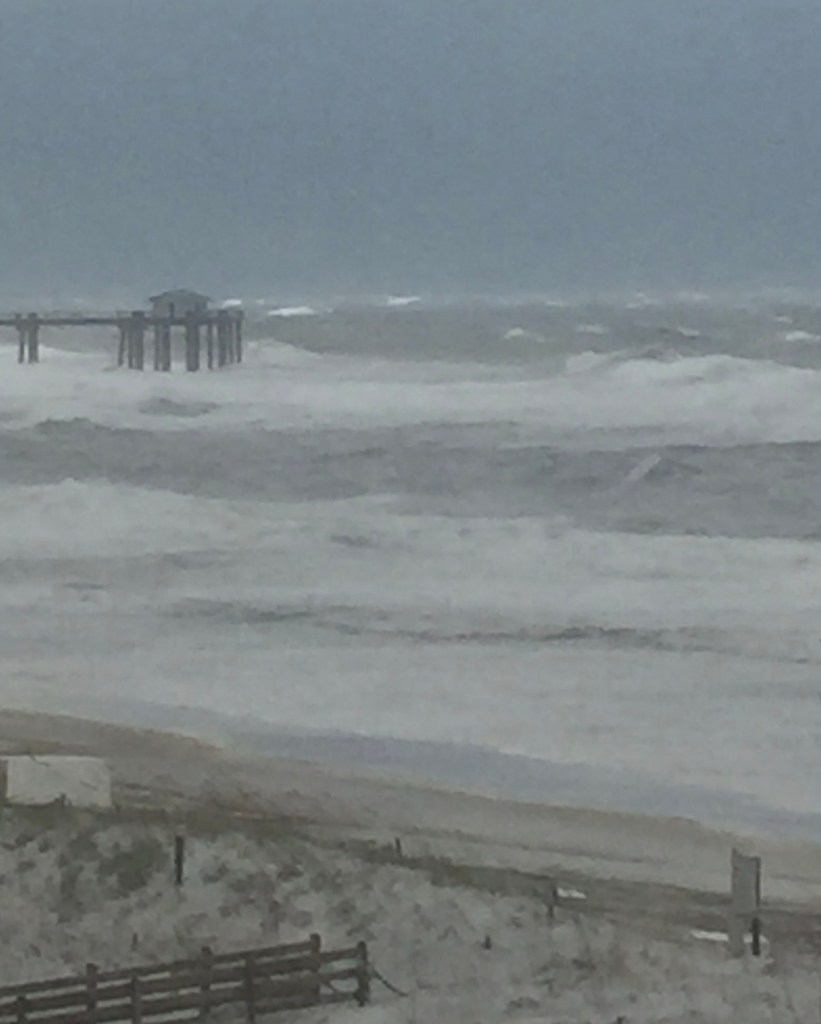
I never wanted to ride out a hurricane, but that’s what happened Wednesday, September 16. A few days earlier when Husband and I drove to Fort Walton Beach, Florida, Hurricane Sally’s predicted landfall was Louisiana, but she took advantage of a woman’s prerogative to change her mind and turned toward Florida.

            On Tuesday, I watched from our fourth-floor condo balcony as the ocean mimicked the clouds and became gray, blurring the horizon.  Powerful waves created tall water sprays.  White caps formed on distance water.  The branches of palm trees swayed.  I was awed by the power of nature.

            Husband, two friends, and I watched weather forecasts and we didn’t like what we saw.  As evening came, we moved the balcony furniture inside, located flashlights, candles and matches, and then we worked on a jigsaw puzzle, listened to 60’s music, and played cards until the wee hours of the morning.

            At 3:40 a.m. we four stood shoulder to shoulder in a small utility room after being notified of a tornado warning.  Electrical power was out so we held flashlights. We heard the wind howl and knew Sally could hit the coastline.  When the tornado warning ended, the logical thing to do was go to bed in bedrooms farthest from the sliding glass doors facing the ocean.

            6:30 a.m. The good news was that the palm trees were still swaying, not flat on the sand, and the boardwalk wasn’t damaged.  But where was Sally?  And how long would the electricity and internet be out?  We used our cell phones sparingly to avoid eating up data and draining the batteries.  My friend JoAnn, who I dubbed JoAnn the Jaunty Weather Girl, sent texts with TV pictures of weather maps showing Sally’s path and status, including her 105 mph wind speed, and the damages along the coastline. 

            We were relieved that the hurricane had travelled north of us and alarmed that there was destruction only fifteen miles west in Navarre.  Instead of coffee and a hot breakfast, we drank water and ate breakfast bars and fruit.  The refrigerator and freezer were stocked for the next five days, including fresh shrimp and chocolate ice cream. ‘Save the Shrimp’ was our goal so we opened the freezer and refrigerator once to put all the ice and the shrimp in a cooler, and the ice cream was the perfect consistency for milkshakes. 

            The ocean waves were even stronger, taller, wider than the day before. The water sprays higher. It was mesmerizing.  We had no TV, no internet, no electricity, no music.  But, thankfully, we had running water and were safe.  Taking advantage of daylight, we worked on the jigsaw puzzle and read.  When the electricity came on at 2:30, our afternoon naps were interrupted by lights we’d tried to turn on.             By Friday, internet was restored and the ocean was blue and calm.  We sat on the beach and counted blessings.  I’d never choose to be that close to a hurricane again, but I might drink a chocolate milkshake for a mid-morning snack – even if there’s no hurricane.

The Best Lunch

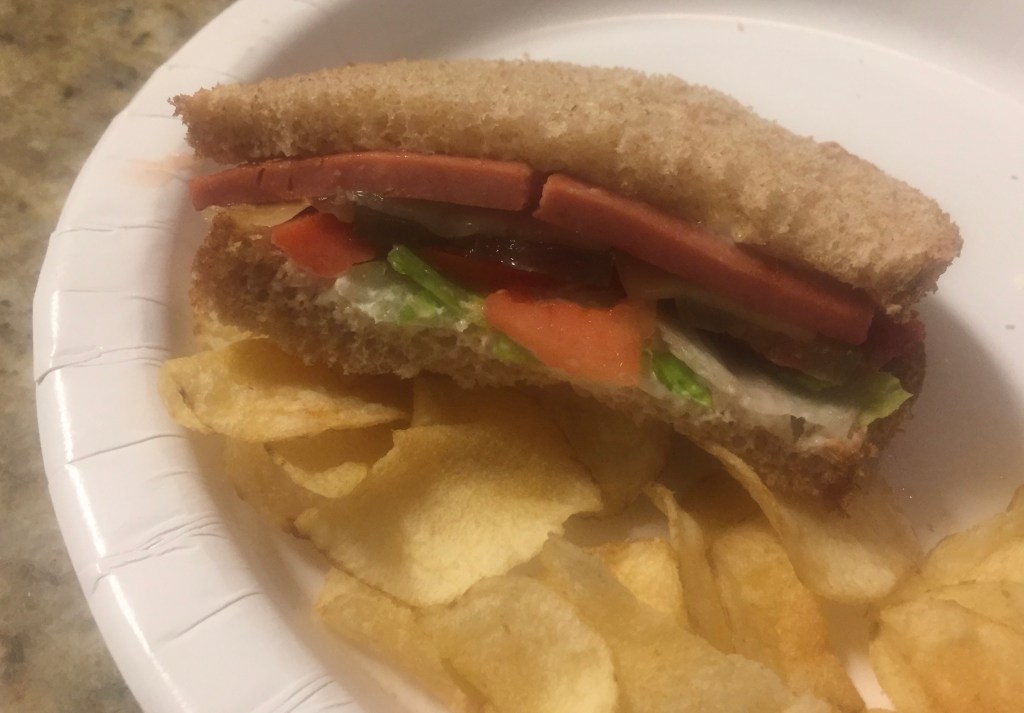
When Gloria said, “I had the best lunch Saturday,” I wanted to know exactly what she ate. I didn’t expect her to say, “A fried bologna sandwich.”

            Fried bologna.  I could almost smell it cooking in my black skillet, the same one Mom used. When I was a kid, bologna sandwiches, sometimes fried, were often Saturday lunches and they weren’t my favorite. We ate bologna between two slices of soft white bread slathered with Miracle Whip.

            Surely, Gloria’s lunch was better than what I remember eating. “How did you make your sandwich?” I asked. 

            Buy thick sliced beef bologna.  Cut three small slits around the edge of the slice so it will stay flat when it’s cooked.  Brown both sides of the meat in a skillet, using the medium heat setting.  Spread mayonnaise on both pieces of bread. Put lettuce on first so the bread won’t get soggy.  Layer sliced tomato, pickles, fried bologna, cheese, and the other piece of bread. 

            What kind of bread and pickles?  Any special mayo and cheese?  Gloria’s favorites are wheat bread, bread and butter pickles, Hellmann’s or Dukes mayo, and cheddar cheese.  “Other kinds of pickles could work,” Gloria explained, “but they should be sweet pickles and it could be American cheese.” 

            It’s been a long time since I’ve eaten a sandwich with just bologna, but it does add flavor to a deli sandwich I make with ham, roast beef, and two kinds of cheese.  I’m one of those people who wonders what bologna is made from and if I really knew, would I ever eat it?

            One well-known bologna label lists mechanically separated meats (chicken or turkey or pork or beef), water, corn syrup, salt, dextrose, mustard, sodium phosphate, sodium propionate, potassium chloride, beef juices, sodium ascorbate, sodium nitrite, sodium benzoate, flavor, hydrolyzed beef stock, extractives of paprika, and celery seed extract.  (Now I know why sodium is at the top of the nutritional listing.)

            If I had to explain to people who don’t know what bologna is and I want them to eat it, I definitely wouldn’t encourage them to google the word.  I found it’s a cooked, smoked sausage made of cured pork or beef or a mixture of the two.  It might include choice cuts, but usually contains afterthoughts of the meat industry – organs, trimmings, end pieces and so on.  Who wants to eat afterthoughts? 

            Bologna is a throw-back food that takes us to the 1950s when a bologna sandwiches were staples in lunchboxes, those carried by students and factory workers.  And most were like Mom’s, a piece of meat between white bread.  Later bologna fell out of favor when people became more conscious of healthy eating, but it’s made a comeback in recent years.  Maybe we need a little nostalgia in our lives.

            I haven’t tried Gloria’s sandwich yet, but I will.  And I’ll take the advice I discovered on an online advertisement: don’t think about how your bologna is made or what exactly it’s made from, and just sit there peacefully and eat your sandwich.

Let Children Play

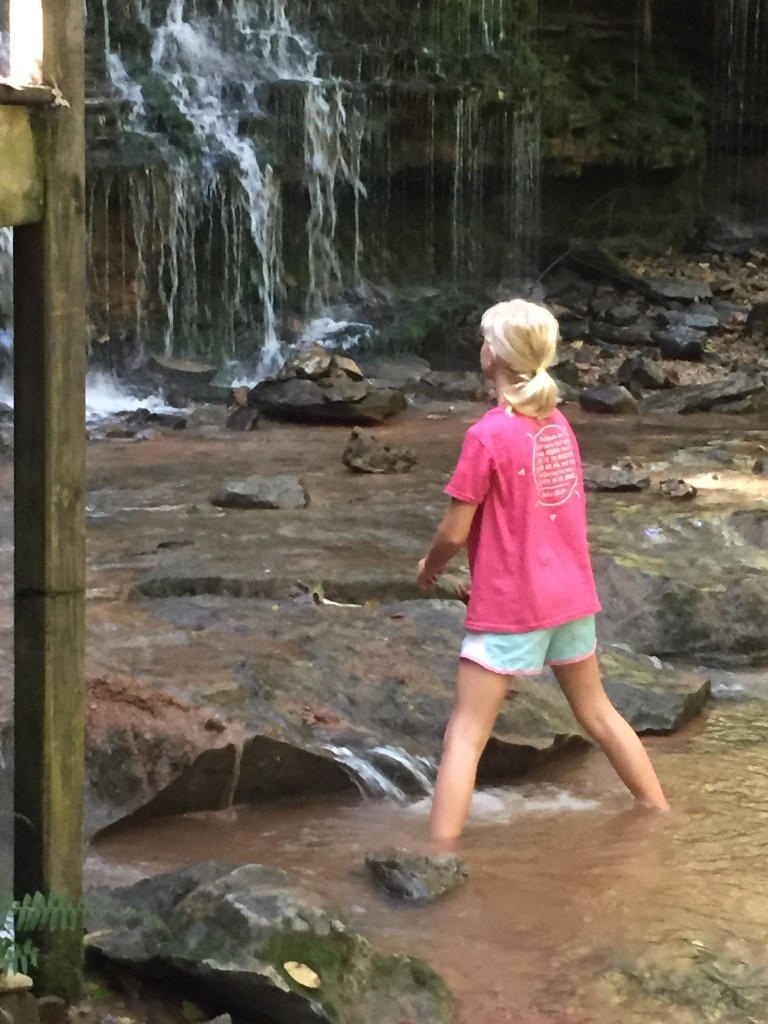
A gravel path led to a fifteen-foot waterfall and a pool of water, only inches deep with big smooth rocks. My two Grands leaped from rock to rock and waded in the water to the falls.  They walked behind the falls, but didn’t get wet.

            They played follow the leader and created paths across the pool stepping only on rocks.  Then they explored: one following a path up a small grassy hill, the other cupped her hands under a six-inch water fall. 

            And then, using their hands, they both dug into the silt, made a ball, and put it at the top of the miniature waterfall.  When it quickly washed away, Lucy said, “Let’s make a bigger ball!” Annabel dug up two hands full of silt and squeezed the water from it.  Just as she started to put it on the rock ledge, Lucy shouted, “Wait! Let me do mine too.  We’ll see which one dissolves first.”

            Each girl gently placed a mud ball near the edge of this tiny waterfall and they counted, “Three, two, one!” and dropped the ball.  “Gran! Did you see how fast that mudball washed away?” Lucy asked.

            Standing a few feet away on the dry bank, I nodded and gave two thumbs up. “We’ll do it again! Watch!” Annabel said as she scooped her hands under the ankle-deep water. 

            I watched, applauded, and took in the moment.  These two Grands are 9 and 11, and I was so glad they like to play in mud.  They made big mud balls and little ones to compare how much faster little ones washed away.  They found slightly smaller and slower waterfalls, only two inches tall. 

            These Grands have always played in dirt.  When Annabel was six, I sat outside watching her and her two younger siblings play.  Annabel offered me a drink. “I’m making chocolate milk with soap and mud.  Do you want to taste it?” she asked.  I grimaced and shook my head.  “I did and it’s disgusting,” she said. “Now I’m going to make a pancake with chocolate sauce and it’ll be delicious!”   A flat rock covered with thick muddy water looked similar to a giant pancake and maple syrup.

            According to authorities, playing in mud is not just fun.  Science shows that today’s sanitized world can increase levels of childhood allergies, but exposure to dirt strengthens a child’s immune level to prevent allergies.

            Serotonin, an endorphin that regulates mood, is released for a calming, happy feeling.  And playing in mud provides a connection to nature, an appreciation for the environment.  Mud, cheap and always available, is nature’s play dough. 

           Thinking skills are improved while playing in dirt because unstructured outdoor play leads to critical thinking.  I listened as my Grands casually stated their hypothesis.  They tested, analyzed, compared, counted, and came up with conclusions. They created their own science lesson.          When Annabel, Lucy, and I visited City Lake Park, I just wanted some outside time, some calming time.  And we got that and more – all three of us.

It’s a Mystery

I love a good mystery.  The who-did-it stories.  The why-did-it-happen questions. Recently, I was curious as I looked through a huge stack of newspapers that my mother-in-law, Ann, saved. 

            After her death in June, I wrote a column about Husband and me searching those papers. We cut out many pictures and articles of people Ann knew, but some papers went to recycling intact because we didn’t find anything to keep.

            There is one paper we have studied many times and can’t find anything about anybody we know, but there is something unique about this edition of the Nashville Banner, published May 14, 1946. A section has been cut out.  A 1½ inch x 1 column section.  What’s the missing article?

            It’s bordered by a story of charges against a grocer violating Tennessee Sunday blue laws, an engagement announcement from Scottsville, Kentucky, and an obituary from Columbia, Tennessee. So, maybe we were looking for a personal article.

            Ann kept detailed lists of family members, including dates of births, weddings, and deaths.  Husband searched for May 1946, but didn’t find anything.  We hoped his aunt, who has a very clear mind at age 93, would remember something.  She didn’t. 

            Then, I looked carefully at the small pink address label, that is glued upside down on the front page, and here was another mystery.  Who was Fred Luke whose address was Route 2, Cookeville?  Husband knew a Luke family, but doesn’t remember Fred. A google search gave no clues.

            Next, I used the services of the Tennessee State Library and Archives.  I filled out the online Microfilm Copy Order and mailed my request, with the required $5.00, for page 6 of the Nashville Banner May 14, 1946.  On the subject line, I listed the titles of surrounding articles.  Finally, we’d know what had been cut out of this paper.

            Two weeks later, I received an email including a pdf file.  I immediately looked at the bottom of the page and it was completely different from the page I held in my hand.  Thinking I’d been sent the wrong page, I checked the date of the microfilmed page: Tuesday, May 14, 1946.  So, I took pictures of the page we have and sent it.  I asked if there might be a page that matched in a different edition on file.

            I received a long letter of explanation from the assistant director for reference services of the state library.  He had looked through microfilm for that date, and others, for pictures and articles that matched those on our page and found nothing.  He explained that it was common for a newspaper, at that time, to print early and late editions and some content was printed aimed at specific communities, not appearing in all editions. He only has one afternoon edition on file.            

What was this missing article?  Why did Ann save this paper?  Did Fred Luke, whoever he is, cut out the article?  Maybe you can provide clues.  As much as I love a good mystery, even more, I love a mystery solved.

Living through a book

When my friend Jennie handed me a book, I thought it was just another book to read. But I was wrong, it was much more.

      Doctor Woman of the Cumberland is an autobiography by May Cravath Wharton, M. D.  Beginning in 1917, Dr. May practiced medicine in and around Pleasant Hill, Tennessee, for 40 years.  She grew up in the upper Midwest, taught at the University of North Dakota, and studied medicine at the University of Michigan.  When she was in her mid-30s she thought she was settled for life; her private practice in Atlanta, Georgia, was in her words, “vigorous and growing.”

      May met Edwin Wharton, and they married after a short courtship.  They moved to Cleveland, Ohio, where he was head of a missionary project and she was a resident physician.  Edwin was called to several churches; eventually they settled in a small New Hampshire community.  Then a call came for Edwin to be principal of Pleasant Hill Academy and a teaching job was offered to May. At age 45, Dr. May left what she considered a “good thing” to move to rural Tennessee.

      The book opens with her arrival at the Crossville train station and her description of riding in the backseat of an ancient Ford.  Dr. May wasn’t readily accepted as a doctor.  Patient and willing to adapt, she was finally called on to doctor all people, many of whom had never received medical care.  In 1920, her husband died, and the people of Pleasant Hill convinced Dr. May to stay.  She travelled by horse and car to care for patients in their homes, and she campaigned for a hospital. 

      In 1937, a house for tuberculosis patients opened, and a visitor remarked that Dr. May’s dream had come true.  She responded, “A dream has no dimensions.”  With the help of many, her work eventually led to a retirement village and a hospital.  Dr. May left a strong legacy of good health care.

         I lived this book.  Although Dr. May was born about twenty years before my grandparents, her experiences were glimpses of my grandparents’ lives. I saw Papa riding horseback through the hills and hollows of Pickett County when Dr. May crossed treacherous paths in Cumberland County.  In the 1950s as I rode with Papa in his pick-up truck, he talked about the good paved roads, unlike the muddy, slick roads he dove on in his Model T.  Dr. May described the roads’ deep ruts and how cars slid backwards on slopes.

      I felt the rope as a metal cylinder dropped into a well when I drew water to fill an aluminum bucket at Granny’s old homeplace.  I saw an elementary school classmate when I read about Dr. May caring for children who needed a good scrubbing and head washing.             Dr. May’s determination, persistence, and team efforts led to success. I don’t know why I’ve never read this book before, but I’ll read it again.  I connected with Dr. May’s story in many ways, and she reminded that anything worth having is worth working for.

Wedding Gift That’s Still Around

When Husband and I celebrated our anniversary recently, I took the rubber band off of a collection of 3” x 5” note cards entitled “Recipes:  Family Favorites and Other Things.”  Aunt Anne didn’t share food recipes; she wrote marriage advice as part of her wedding gift to us.

            Some directions are short and sweet.  ‘How to avoid a fuss with your husband – shut your mouth. How to live on a budget – have it printed on the rug. ‘Tis said the way to a man’s heart is through his stomach – sometimes it seems like the long way around.’

            ‘How to hold your man – tie him!’  Aunt Anne expounded.  ‘Tie him with a mixture of kindness, consideration, honesty, and truthfulness.  Leaven with common sense.  Spice with a pinch of temper and a good argument now and then.  Frost with lots of hugs and kisses.’

            ‘How to avoid in-law trouble – stay away from them.’  Aunt Anne had a sense of humor, and her sincere advice encouraged me to appreciate and respect Husband’s parents.  ‘Always remember your mother-in-law and father-in-law spent a whole lot of time and effort and money to produce that hunk of manhood and they are handing him, the finished product to you – for free.  Be kind to them.  In twenty-some short years you might be a mother-in-law.’

            Aunt Anne waxed on about money and marriage.  Although the working world has changed since 1969, there’s wisdom in her words.  ‘Let’s face it girls, it’s still a man’s world.  Oh, we get jobs and sometimes make more money than men and we vote.  We stick our little pinkies in world affairs, but we still rock the cradles.  In the biological process of filling that cradle, we are just as old-fashioned as our grandmas. 

            ‘For a time, we are dependent so it might be a good idea to remember how grandma managed long before the female executive came along.  She raised chickens, sold cream, taught music, and resorted to trickery.  She padded the household account.  She filled Grandpa’s wine cup and raided his pockets.

            ‘And she had the vapors.  Grandma swooned, looked fragile, and clung to Grandpa’s strong hand while sending messages with her fluttering eyelids that penetrated to the depth of his protective instinct. She just couldn’t wash the clothes so Grandpa hired it done. This isn’t the devious trick that it sounds.  Grandpa felt ten feet tall with a huge chest expansion and everybody was happy.’ 

            Aunt Anne gave Husband advice too.  ‘When your wife gets a spell of the contraries, get a cup of tea (maybe the kind with fizz on top), put it on this platter, and turn on the TV.’            

Husband’s small plastic platter and my index card box, covered with blue flowered contact paper, are long gone, but I’ve kept the cards for fifty-one years.  Since Husband and I are now home together 24/7, I need Aunt Anne’s advice as much now as I did as a young bride, maybe more.

Celebrate Birthdays!

On my birthday last month, it wasn’t a coincidence that Kim sent an email to the members of our women’s church circle group.  She wrote, “I want to share a devotional with you today and say it is okay to grow old.”  I agree and I appreciated this encouragement.

            “Wear out, not rust out” is the title of Dr. Joe Pettigrew’s devotion.  He questions why so many quit celebrating as the years pass and asks what it looks like to really celebrate our years. 

            I plan to make a big deal out of birthdays no matter how many candles are on my cakes.  When my children were young, I learned that celebrating their grandparents’ birthdays were happy times and created happy memories.  For a few years, Husband and I have celebrated my birthday with five Grands and their parents at the lake, but we sold the pontoon boat so in June my Grands began asking, “Gran, what’ll we do to celebrate your birthday?” 

            I had the answer. For two days, a huge blow-up water slide was in our backyard and we laughed and slid and splashed.  My Grands discovered ways to twist and bounce down the slide and throw huge water sprays from the pool at the bottom of the slide.  We ate chips and Moon Pies for snacks and hamburgers and chips for supper.  I blew out the many, many candles on my chocolate cake while everyone laughed when the candles continued to burn. 

            Days before my birthday, my 6-year-old Grand had asked, “What do you want for your birthday?” He was surprised that I hadn’t made a list and wondered how anyone would know what I wanted. What if I got something I didn’t like?  Micah was right, and I did want to replace my hummingbird feeder. 

            So now where my old faded feeder had hung, there’s a bright new one that Micah and his siblings gave me. And one morning last week, Micah’s older sister, Lucy, and I sat for over an hour watching two hummers dart and sip.  Would that have been fun for her if she hadn’t given the new feeder and poured sugar water into it?

            I’ve never understood why anyone says, “Oh, I’d rather just skip my birthday.  It’s just another day.” It’s not.  It’s a day that family and friends feel good about wishing you a happy day.  A day to eat cake and ice cream and ignore the calories. A day to remember childhood birthdays when getting a card meant getting money.  To celebrate blessings and overcoming trials.  To make memories for yourself and those who love you.  To look forward to the next birthday and what the future holds. 

            Dr. Pettigrew wrote that the idea of life winding down at age sixty or seventy makes no sense.  He even quoted scripture that gray hair is a glorious crown. I’m making note of those words since I have a natural gray crown.             

Wear out, not rust out.  That’s my intention.

Listen to the Children

A mother and son sat on their front porch steps. He rolled his red Matchbox car across the concrete porch while they counted the days until his first day of kindergarten: seven more days.  “Will the corona be gone then?” he asked.

            “I wish, but no, it probably won’t be,” the mom replied.  This young one clutched his car in both hands, lay on the porch, curled into a ball, still and silent. When I heard this story, I wondered what other children were saying and doing so I asked Facebook friends to share.

            A five-year-old girl sat in her mother’s lap and sipped from her drink, but when her mother wrapped her arms to hug, the mother was pushed away.  “Moooomaaa!  Six feet apart!  Remember, the corona?” the girl said.

            “This virus is a trouble maker!” said a four-year-old when he was told that because of the COVID-19 his nursery school had closed.

            My Grand, age six, told me to not touch a spoon he’d just touched.  “Gran, you’ll get the CORONA!”

            Another young one used kitchen tongs to hand her mother something and said, “Now you don’t have to worry about corona virus.” Laster she asked, “Is it always gonna’ be like this?”  She was assured things would change.  This child misses her good friend, but doesn’t want to talk to her on video chat. “It will make me sadder,” she explained.  Her older sister, age eight, wanted to buy a litter picker-upper for $1 to protect herself from touching things. Her mom wasn’t sure this purchase was logical, but since it gave her child peace of mind, it was a good investment. 

            While watching an episode of Peppa, a preschool animated television series, a four-year-old said, “MOM! They’re too close to their friends!”  He was assured it was filmed before March.

            A nine-year-old kid girl said, “We can’t do anything fun with the COVID going around.” 

            A little girl was playing with her dolls.  She set the table for them and served lunch and told her grandmother the names of each of her babies.  Little brother, age four, was drawing with crayons on paper, and he held one finger over his mouth and whispered, “Shhhhh! I’m in a meeting!”  His sister and grandmother continued talking.  Again, brother whispered, but this time more loudly, “Shhhhh!  I’m in a MEETING!”  When asked what kind of meeting, he said, “Drawing!  Shhhhh.”

            The daughter, age 6, of a nurse practitioner reminds her mother to put clean clothes in their garage so after work her mom can change out of her scrubs in the garage and not take the corona in the house.

            A four-year old often asks, “Is the sickness gone yet?  This is taking ages!”

            “Is the quar-um-team over yet?” asked a three-year-old.

.           A pre-school age girl prays, “Dear God, please help all the people get well and the virus go away.”             Will young children remember this pandemic?  Yes.  How they remember it is determined by how we adults respond to their words and actions.  And by what we say and do when we think they aren’t listening and watching.

As School Begins

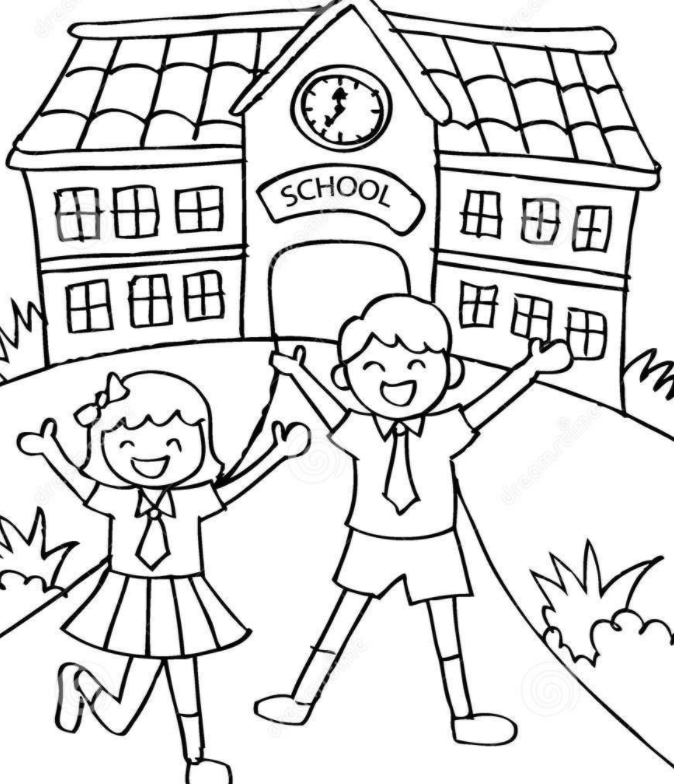
Every year when school begins, I feel a tug be in the classroom. Even after being retired from teaching for ten years, I miss elementary-age students.  I miss morning greetings and young brains ready to take on the day.  I miss the gleam in students’ eyes when they understand long division or master the challenge of writing a persuasive essay.  I miss sitting in a circle with a few kids as we take turns reading aloud and then talk about a story.  

            No two days in a classroom were the same. Daily schedules for lunch and recess and math and Science were constant and weekly schedules for music and physical education classes rarely change and often the state grade-level curriculum didn’t change.  So, what made each day different and fun?  The students. 

            I really like retired life so I think just a few days with twenty kids could be fun, but not this year. Not when COVID19 threatens. I’ve even said that I’m thankful I’m not teaching and if I were in charge of the world this school year would be a do-over, a transition year

            When I taught 4th and 6th graders, we studied a poem entitled, If I Were in Charge of the World by Judith Viorst, and students wrote their own poems.  If I were in charge, this school year would be a transition year like T-1 classes between kindergarten and first grade. A year as a T-1 student helps six-year olds who’ve spent a year in kindergarten, but aren’t quite ready for first grade.  This extra school year helps young students be strong learners, strong readers.This could be a Transition Year for all students, but I know that’s impossible so how can I and others help teachers and students?

            Reach out. Pray. Be tolerant.

            Reach out to someone you know or someone who is a friend of a friend or anyone. Send encouraging hand-written notes and post positive comments on social media. Tell teachers that you know their jobs are difficult and you appreciate their efforts.

             Pray. Teri, a retired principal asked on FaceBook, “Anyone else Parking, Praying Everyday?” She was referring to the PPE campaign,Park & Pray Every day. Driving past a school?  Pull in, park and pray for the children, the teachers, the staff. Driving past a school bus lot?  Park and pray for the bus drivers. Driving near the administration building?  Park and pray for the leaders.  Park and Pray Every day or just voice a split-second pray as you drive past a school.

            Be tolerant as teachers experiment with new ways to teach.  No kindergarten teacher ever expected to lead five-year-olds in rhymes remotely. Science is best learned hands-on; not watching a video.  While teachers often welcome opportunities to try new teaching methods, there are usually best practices to follow.  But not this year.

            This school year beginning is unique. Nothing – not college classes, not in-service programs, not experiences – has prepared anyone to teach in the middle of a pandemic.  Let’s let teachers know we support them. #####

            No two days in a classroom were the same. Daily schedules for lunch and recess and math and Science were constant and weekly schedules for music and physical education classes rarely change and often the state grade-level curriculum didn’t change.  So, what made each day different and fun?  The students. 

            I really like retired life so I think just a few days with twenty kids could be fun, but not this year. Not when COVID19 threatens. I’ve even said that I’m thankful I’m not teaching and if I were in charge of the world this school year would be a do-over, a transition year

            When I taught 4th and 6th graders, we studied a poem entitled, If I Were in Charge of the World by Judith Viorst, and students wrote their own poems.  If I were in charge, this school year would be a transition year like T-1 classes between kindergarten and first grade. A year as a T-1 student helps six-year olds who’ve spent a year in kindergarten, but aren’t quite ready for first grade.  This extra school year helps young students be strong learners, strong readers.This could be a Transition Year for all students, but I know that’s impossible so how can I and others help teachers and students?

            Reach out. Pray. Be tolerant.

            Reach out to someone you know or someone who is a friend of a friend or anyone. Send encouraging hand-written notes and post positive comments on social media. Tell teachers that you know their jobs are difficult and you appreciate their efforts.

             Pray. Teri, a retired principal asked on FaceBook, “Anyone else Parking, Praying Everyday?” She was referring to the PPE campaign,Park & Pray Every day. Driving past a school?  Pull in, park and pray for the children, the teachers, the staff. Driving past a school bus lot?  Park and pray for the bus drivers. Driving near the administration building?  Park and pray for the leaders.  Park and Pray Every day or just voice a split-second pray as you drive past a school.

            Be tolerant as teachers experiment with new ways to teach.  No kindergarten teacher ever expected to lead five-year-olds in rhymes remotely. Science is best learned hands-on; not watching a video.  While teachers often welcome opportunities to try new teaching methods, there are usually best practices to follow.  But not this year.

            This school year beginning is unique. Nothing – not college classes, not in-service programs, not experiences – has prepared anyone to teach in the middle of a pandemic.  Let’s let teachers know we support them. #####