• Recent Posts

  • Archives

  • Categories

  • Meta

A Refreshing Walk with My Grand

imgres “Wots dat?” Neil asked and pointed toward white, feathery puffs of cotton that floated above his head.

“It’s seeds from cottonwood trees,” I said. He reached his hands high to catch the seeds, but they floated around him and onto the ground. He picked up a delicate seed and closed it inside his fist. When he spread his fingers wide, the seed seemed to have disappeared. He wrinkled his forehead, cocked his head, and picked up another seed.

Neil, my almost two-year-old Grand, seemed perplexed. He gathered several cottonseeds -one at a time- closed his hand, and when he opened it, he didn’t see the same white cotton puff. “Gone!” he announced and then began walking.

Neil and I were taking a morning walk. In his neighborhood, on the sidewalk, to a nearby park. “Wots dat?” Neil pointed to a white spot on the sidewalk. “Bird poo. Don’t touch it,” I told him and held his hand tightly. “POO!” he shouted and wiggled his hand free from mine. We had reached the park and Neil ran to and climbed upon a green metal bench. “POO!” he said and patted white spots on the bench.

A robin hopped on the grass, pecked at the ground, and raised its head. I held Neil in my lap and told him that the robin was searching for worms to eat. The robin flew low to the ground and Neil’s feet hit the ground running. Arms stretched in front of him, legs churning, Neil ran toward the bird. Mr. Robin stopped, pecked the ground again, and when Neil was only a few feet away, the bird flew. All around the open grassy field, the two played chase.

But, of course, Neil never came close to Mr. Robin. Finally, the robin perched in a pine tree. Neil ran to the tree and looked up. I pointed to the bird and suggested that he was full and ready for a rest. “Gone!” Neil announced.

Holding hands Neil and I walked along the sidewalk to the duck pond. “Wot dey doing?” Neil asked when we saw several ducks with their heads tucked along their backs. I said, “Probably sleeping.” Neil asked, “Why?” I explained that ducks get tired just like we do and, knowing that why questions never end, I veered our walk toward Neil’s home.

My Grand gathered short sticks that he gave me to hold and we talked about things we saw. Airplane contrails that crisscrossed the sky. White puffy clouds. A man who was power washing his driveway. A brown rabbit that hopped from shrub to shrub. A red pickup truck. Yellow tulips that Neil couldn’t pick.

“Wots dat?” Neil suddenly stopped walking. “It sounds like a fire truck,” I said. A fire truck that didn’t come within our sight, but kept Neil still long enough that he spotted ants, tiny brown ones, on the concrete walk. He squatted so low that his knees touched his chin and he watched the ants scurry to their anthill in the grass and then back onto the sidewalk. One ant hurried away from the others and Neil, still in a tight squat, shuffled his feet and followed it until it crawled into the grass.

“We’re home,” I told Neil. He rushed into his house and gave his older brother a treasure – one of his sticks.

There’s nothing quite so refreshing as taking a walk with a toddler. Everything is fascinating. Even seeds and ants and sticks.


Winter Weather – What’s to Like?

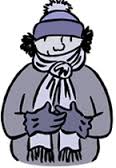
imgresI hate winter weather. I’m not complaining, just stating a fact. I hate bitterly cold temperatures and rainy 40-degree days.

I don’t like wearing a coat, a hat, a scarf, gloves, and boots. Not only do I feel like an overstuffed teddy bear, I look like one, and putting on all that garb takes time. Everybody’s time. Last night our five Grands who live across town and their parents ate supper at our house. Our oldest Grand, who is 9, called on the phone when I was ready to put the food on the table, and he said, “Gran, we’re running a little late because it takes so long to get everybody bundled up.” Spending time bundling up and being bundled up. What’s to like?

I remind myself that middle Tennessee is where I choose to live and I don’t plan to move and life is really good here so I do my best to appreciate this season.

Now is the time to watch birds. As I write this, I’m distracted because outside my window, a Downy Woodpecker evidently found a feast in an oak tree where a limb fell off recently. She pecked at that same place for several minutes, flew away, came back, and immediately a male Downy Woodpecker took her place. Did she get full and then invite him to her table?

And I really like seeing branches and twigs on deciduous trees. Springtime’s green leaves that turn brilliant colors in the fall hide the trees’ amazing structures. From the huge trunks to the toothpick twigs – each tree is unique. Have you seen a sunrise or sunset through the outline of trees? As beautiful as the colors of winter mornings and evenings are, the silhouettes of trees create even more incredible pictures.

Then there are comfort foods, like soup. Vegetable soup, made from all the leftover tidbits that I couldn’t throw away and stored in a freezer container and labeled For Soup. Or white chili. Brunswick stew. Turkey noodle soup.  Soup and cornbread on a cold winter day – divine.

Basketball is my sport – spectator sport, that is. I follow our home and state college teams: Tennessee Tech, Tennessee, and Vanderbilt. But I’m happy watching any televised college game – women’s and men’s. I’m entertained through the first week of April, when the NCAA championships are played. Sometimes I scream, “Great pass!” and then realize that players on the opposing team made the pass. I love the play of a good game.

Back to cold weather attire – there are advantages. Long sleeves hide my sagging upper arms. Turtlenecks cover that area that it’s said no matter how many facelifts I have, my neck will tell my age. My spider veins and age spots are hidden. Give me a pair of old jeans and a soft sweatshirt and I’m dressed for the day until I run to the mailbox.

By the time I find and put on my coat and scarf and gloves and hat, it’s almost dark – 4:55 p.m. I grab the mail, run inside my warm house, heat up yesterday’s soup for supper, find a good ball game on TV, and settle in for the evening.

So maybe I’ve convinced myself that I like these winter days. But I still hate feeling like an overstuffed teddy bear.


search

Huddleston Knob

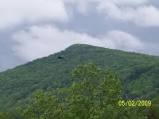
searchIf I had the money, I’d buy a small mountain. For purely sentimental reasons. The ad in Sunday’s newspaper states, “The Huddleston Knob. Absolute Auction. December 6. 2:00 p.m.” I grew up seeing that knob everyday.

Huddleston Knob is advertised “as possibly the most nostalgic tract of land in Pickett County. 138.05 acres of woodland providing a backdrop for many of the homes in Byrdstown, TN. It is undoubtedly the most recognizable parcel of land in the community. Sightseers, hikers, and neighbors have all gone up to the summit for the 360-degree breathtaking views.”

I never climbed to the top of The Knob, but I drove Dad’s tractor on our family’s farm at its foothills. Dad taught me to drive the tractor when I was 10 years old so that others who were bigger and stronger could do the heavy work. Like setting plants while riding the tobacco setting machine in the spring. And at harvest time, loading sticks of cut tobacco and throwing hay bales on the wagon behind the tractor. Our family’s farm was passed down to Dad from his mother who was raised there and my great-grandmother was a Huddleston. (Now I wonder if her family ever owned The Knob. Too bad I didn’t ask that question years ago when Dad or Granny could have told me. It may be time for a little research.)

My parents’ home was six miles from the farm, and from the back porch and a picture window, I watched the seasons change on Huddleston Knob. Our family called it The Mountain. It gave an excuse to sit in the back porch rocking chairs and provided calm for conversation. Mom would say, “Let’s get something to drink and watch The Mountain for a bit.” Or Dad would say, “Come on out to the porch. Let’s look at The Mountain and figure out what to do.” Joys and problems were shared as we stared across the miles.

After my children and niece were born, The Mountain took on a new name: Granny’s Mountain. Mom’s rocking chair was beside the picture window where she held her grandchildren and read aloud and told Purple Cow stories and rocked the children to sleep. I’m not sure who first called it Granny’s Mountain, but she made it hers when she talked about how it was turning green in the spring and orange and yellow in the fall and gray in the winter. Among Mom’s treasures was a wooden tray that Son made for her when he was 8 years old. It’s painted yellow and decorated with a child’s simple drawing of a tall green mountain and the words Granny’s Mountain. Mom kept it propped up on her kitchen counter.

As I read the words “The Huddleston Knob” in the newspaper ad, I smell the freshly turned and plowed dirt in the tobacco field and feel the itch from hay on a hot summer day. I see the serene green mountain, taste the lemonade, and feel the contentment of sitting beside Mom and Dad. I hear Mom say to Son, “Oh, I love it! Now no matter what season it is, I’ll always have my green mountain.”

And no matter who owns that 138 acres, Huddleston Knob belongs to all of us who have such memories. Some things can’t be bought.

###

Cave Walk


search “Wear supportive shoes, no flip-flops.  The temperature is a cool 55 degrees.  It’s about a mile and a half walk.  Nothing strenuous.  Just uneven ground and some steps.  You have to watch where you walk.”  That’s what Tucker told me about a cave tour when I called Cumberland Caverns.  He said all the right things to encourage Husband and me to take our nine-year-old Grand to the cave.


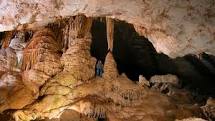
The tour starts with a 600-yard walk along a narrow gravel road.  “Does this count as part of the 1 ½ mile walk?”  Husband asks Tucker, who is now our tour guide.  It does.  We walk into the first cave huge room and David is mildly impressed.  We are all impressed by the waterfalls and the pond with albino crayfish.


Tucker points out stalagmites, stalactites, and columns, and he assures us that the huge cracks in the ceiling prevent it from falling.  We walk along a rough pathway that’s wide enough for a jeep.  Then Tucker says, “This next section is 350 steps, up 175 and back down.  If you don’t want to go, you can sit on that bench and wait.  We’ll be back in a few minutes.”  Steps up – rock steps, some tall, some short, all uneven, and narrow.  That wooden bench  is inviting.


Tucker looks toward three people: Husband, me, and a man who is carrying his toddler son in a large, metal frame backpack. “It’s a bit slippery in some places.  You can hold on to the railing.  Anybody want to wait?”  The railing is a one-inch metal pipeIs it stable?  Backpacking Daddy takes a deep breath and says, “I think I’ll wait.”  Tucker tells him that the lights may go off, but some emergency lights will turn on.   Husband and I both nod our heads – we’re going.  Backpacking Daddy takes another deep breath and says, “I guess I’ll go, too.”  Did he change his mind because if someone like me, at least 30 years older than he, thinks she can walk up and down all those steps, he figures he can?


David and two other young boys fall in right behind Tucker.  Ten steps up and a ninety-degree turn.  All three boys grab the handrail. Tucker says, “Feel how wet that railing is?  That’s bat pee.”  The boys immediately wipe their hands on their pant legs.  “Just kidding.  Do you know what condensation is?”  I cling to the railing, wet or not.


With a few huffs and puffs and gripping the railing, everyone makes it up and back down.  And those young boys practically step on Tucker’s heels as he leads.  We see the bare cave, so named because it’s empty and the meat grinder tunnel, named for what an early spelunker looked like he’d been through when he came out.   Finally, we toured the concert hall for Bluegrass Underground.  A perfect tour, I think.


“What’d you think of your first cave tour, David?” I ask.


“It would’ve been a lot better if we’d been able to climb the rocks and not have to walk on a road somebody made.  You know, really see the cave, without electricity.”  he says.


Yes, I know.  There’s such a cave tour.  David can crawl through tight squeezes and along a muddy bottom.  I’ll tell his daddy about it.


Mother’s Day Picnic

images

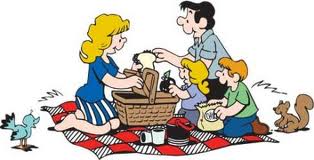
“Oh, make it easy,” I told my family.  “You know I like Kentucky Fried and a picnic.”  My family, like most families, wanted to get me out of the kitchen on Mother’s Day.

“Are you sure you don’t want to go out to eat somewhere?”  Husband asked.  I assured him that a picnic with just him and our children was my choice.  “So where do you want to go?”

“Surprise me!”  I said.

Our children, ages 9 and 11, teased me later that Saturday afternoon.  “You won’t believe where we’re having a picnic.  Guess.  Like 20 questions.”  Have we ever picnicked there?  No.  Have we even been there?  Not really.  Is this a place you think I want to go?  Yes!  Questions and answers all evening long.

Sunday morning, on the way to church, Daughter said, “Guess some more, Mom.  You’ll never figure it out.”  Will we have to walk a long way?  No.  Should I wear my hiking boots?  Husband and Son raised their eyebrows and glanced toward each other.  Yes.  Finally, I refused to ask another question.  It was time for clues.  A place I really liked.  I’d have to climb.  There wasn’t a picnic table.  There were lots of trees.  There weren’t any bathrooms.  We wouldn’t have to drive far.

On the way home from church, we picked up fried chicken – crispy, my favorite – and I got to choose the side dishes.  At home, we changed from church clothes into shorts and tee shirts, and I put on my hiking boots.  We gathered drinks, a roll of paper towels, a couple of folding chairs, and a quilt.  “On the way,” Husband said, “I need to stop at the house to check on something.”  ‘The house’ was the one we were building.  The first level was framed, and the carpenters had just started on the second level.

Husband opened the back of our van and grabbed something.  “I’ll be right back.  You don’t need to get out,” he told me.  Both our children followed him.  A few minutes later, Husband motioned for me.  “Come here.  I want to show you something.  The kids are upstairs where their rooms will be.”

I questioned if climbing the ladder to the second level was safe.  Had he let the kids climb up?  I clutched each rung as I carefully placed my big boots on the narrow ladder steps.  The blue sky, with a few puffy cumulus clouds, opened wide.  “Is there a floor up there?”  I asked.  Husband encouraged me to keep going.  Just as my head reached sight of the second level, my son and daughter jumped up from the quilt they had been lying on.  They stood tall; arms stretched high above their heads.  “Happy Mother’s Day!”  they shouted.

It was the perfect place for a picnic.  A plywood subfloor, with no walls or roof.  The only time I’ve ever dined among a maple tree’s high branches and looked down on the white blossoms of dogwood tree.  Our own private dining room, and I didn’t cook.

###

A Call for Help

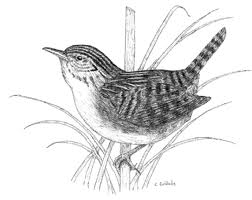
imagesWhen I stepped out of my car in the garage one unusually warm winter day, I heard a chirp.  Another bird has flown into the garage and doesn’t know how to get out, I thought.  A second chirp, high pitched and pitiful.  Almost like a shrill groan.  I hoped the trapped bird would fly out.  Several pathetic chirps.  Distress calls.  Following the sound, I walked toward the open garage door.  “Chirp, chirp.”

Beside my feet was an insect catching pad.  A non-poisonous, glue pad that was put there to do away with spiders.  A small wren lay stuck on that sticky paper that’s as thick as poster board.  His feet completely caught and one wing spread wide as if he’d tried to fly, but instead, his wing stuck on the glue pad.

I can only imagine this little bird’s excitement when he spotted a buffet of spiders spread for his mid-day meal.  Dead spiders touched his tiny toes, more slender than a toothpick.  No doubt he’d hopped right onto the white serving platter, and then he couldn’t move.

I have no qualms that spiders crawl onto a sticky pad and eventually die.  But I couldn’t walk away from Mr. Wren.  He tried to flap his stuck wing and chirped loudly as if to say, “Get me off of this!”

I pulled on my outside work gloves and lifted the glue pad and wren onto the garage workbench.  Using my most reassuring voice, I attempted to calm my patient.  He wiggled and pulled, but all four toes, on both feet, were spread apart and stuck.  I momentarily considered ending this bird’s life.  How could I possible separate his tiny toes from the sticky pad?  What if I cut the paper around his feet and he went through life wearing a pair of white paper snowshoes?  He lay still, silent.  Eyes looking at me.  I had to try.

Working carefully with a sharp scissor blade (a knife would’ve been better, but there wasn’t one close), I pried the least stuck foot loose, and held it and his body, in one hand while cutting away the excess sticky paper.  Mr. Wren didn’t move.  He couldn’t have been a better patient.  I freed his wing, every single feather.  To convince myself I whispered, “It’s okay.  You’re going to be fine.”  I cut around the bird’s second foot, hoping he’d try to hop on a dime-size paper shoe.  Mr. Wren didn’t move. I finally cut away most of the paper, and he wiggled.  When I set him on the outside driveway, he shook as if shaking off a bad experience.  He tentatively flapped his wings and flew close to the ground to a shrub where he perched for a few seconds.  And then he flew the way, into the woods.  Gone.  And I trashed all the insect catching pads that were on the garage floor.

This week the pest control man came to my house.  He walked into the garage, pulled a glue pad out of his back pocket, and said.  “I guess you want some more of these to take care of spiders and bugs, don’t you?”

He seemed surprised when I said, “No.”  I didn’t have time to tell the story of Mr. Wren.  Or that I look carefully at every wren that comes to my birdfeeder, but so far I haven’t seen one wearing one white paper sandal.

Backyard Nature Movie

images

            Last Friday was a day for the birds.  My list of chores and errands vanished into thin air when I raised the shade covering the kitchen window and saw a skiff of snow and birds on my birdfeeder.

The birds must have been happy that I’d finally filled their feeder with sunflower seed.  Sometime last fall I mindlessly bought a 40-pound bag of Deluxe Bird Food.  The price was right.  I watched as bird after bird threw white millet and red milo seeds onto the ground and emptied the feeder.  And then, after a few days, very few birds nibbled, much less ate, my bargain seed.  A couple of weeks ago, I filled my feeder with sunflower seed and hung two nets filled with finch seed.  And last Friday while my bird friends dined, I couldn’t pull myself away from the show.

A dozen or more house finches ate side by side on the two eighteen-inch cloth mesh nets.  Some birds hung vertical with heads up, some upside down, some sideways.  I wondered if a finch doesn’t like to dine alone.  As a group they flew away and then returned a few minutes later.  Two, three, four – until once again a small flock pecked at the tiny black seeds.

Isn’t a northern cardinal its prettiest on a snowy day?  Why would a male sit on my snow-covered deck railing just three inches from the sunflower-filled feeder?  Maybe waiting for his mate?  When the female cardinal hopped onto a metal perch to eat, he joined her for a quick snack.  She stayed for a five-course meal and was happy to dine with tufted titmice, a white-breasted nuthatch, and purple finches.

And then a woodpecker zoomed in and all the other birds scattered.  A red-bellied woodpecker.  Try explaining to a five-year old child that a woodpecker with a red head is not a red-headed woodpecker.  My Grand was sure that I was confused.  “Look, at his coloring,” I explained.  “See the black and white ladder on his wings and back?  That’s how you know he’s a red-bellied, not a red-headed woodpecker.”  I agreed that I couldn’t see red on his belly and yes, maybe he should’ve been named the black-and-white laddered woodpecker.  The smaller birds filled every perch as soon as the Mr. Red Bellied flew away.

A rufous-sided towhee, really a large sparrow, swooped in.  With his tail pumping, he hopped across the deck railing to the feeder, appearing to choose his favorite perch.  He came  dressed for a dinner party – white belly, black head, and distinct brown and black markings.  Just when I thought the show outside my window couldn’t be better, a pair of deer trotted across the yard.  She pranced.  He, with his tall antlers, strutted.

Last Friday’s snow wasn’t deep enough for my Grands to sled down my backyard hill.  (I’m still hoping for a ‘real’ snow so we can have a sled party.)  But a dusting of snow was plenty for the setting of a backyard nature movie.  All for the price of a bag of sunflower seeds.

###


Motion Picture Show

     A cool, rainy day during our family beach vacation wasn’t a bad thing.  An excuse to sleep late, to get out of the sun, and to explore the area.  A day to browse a bookstore’s shelves.  A day to drive seven miles for a special hot dog, one with sweet potato mustard.  A day to shop the big box stores that we don’t have here at home.  And best of all, a day for the monarch butterflies in South Carolina to realize it was time to fly further South.

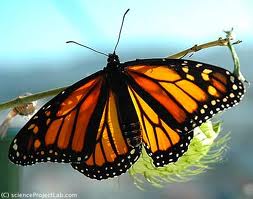
For a couple of days, we’d seen a few lone monarchs fluttering near the vegetation on sand dunes.  Beautiful, bright orange butterflies with black markings.  But when I walked on the beach in the early morning after our cool no-beach day, I had to dodge to avoid a butterfly that tried to sideswipe my ear.  They flew in small groups, three or more together, with an occasional single one fluttering fast to catch up.  They weren’t a mass of orange, like the film produced by National Geographic, but they created a calming motion picture show along the shoreline.  Right where I had my beach chair and my Grands played.

I knew enough to tell my Grands that these creatures were flying south to Mexico where they’d live through the winter and then fly back to their northern homes next spring.  And that they didn’t need a map; they flew by instinct.  After my Grands ran out of hearing range, Husband asked, “But don’t butterflies have a short life?  Just a few weeks?”  That complicated my explanations.  Would these same butterflies make the long 3,000-mile flight to Mexico, winter in tall trees for several months, and then fly back?

The migrating butterflies we saw, appropriately called migrates, are the great great grandchildren of the monarchs that flew north this past spring.  Monarchs go through four generations in one year.  Four generations from eggs to adults.  Next March or April, the butterflies we watched will return from migration to lay eggs on milkweed plants and die.  The first generation will live only two to six weeks after laying its eggs.  Same for the second generation that will be born in May and June, and the third generation, born in July and August.  And then the long lifers, the migrates, will be born in September or October.

“Look at the monarch that landed on my toe,” I said.  He sat, still, with wings outstretched.  My Grands weren’t impressed.  Maybe because I’d talked about monarchs all day.  I was amazed.  These small insects were imprinted with an inherited behavior that would bring them back along this same beach next March or April.  With lots of luck, I’ll remember how to make the 500-mile trip from Cookeville, without a map or a GPS, and meet them there.

After all, monarchs are the only butterflies that migrate.  Someone should greet them to celebrate their successful journey, and the sequel promises to be a picture show worth seeing.

.