• Recent Posts

  • Archives

  • Categories

  • Meta

Perfect Biscuits

“Can I have another roll?” A biscuit, I thought. Micah, age 9, looked at his mother with puppy-dog-begging eyes.  Daughter passed him the biscuit basket; it was his fourth, maybe fifth, biscuit.            

Watching my young Grand seated at our dining room table with his family, Husband, and me, I thought of Mom.  I’d used her measuring cup and sifter and rolling pin and metal biscuit cutter to make these biscuits.  

            But my biscuits didn’t look or taste as good as Mom’s.  Maybe because she practiced much more than I did – she baked biscuits almost every morning (except Sundays when she made pancakes.) Maybe because Mom used Martha White self-rising flour and I’d used Pillsbury all-purpose flour and added baking powder and salt.  Maybe because she used home-churned buttermilk and I’d used store-bought whole milk. Maybe because her biscuits bring memories of sitting with her and Dad and older borther Roger around our 1950s yellow Formica kitchen table.   

            To begin making biscuits, Mom opened a drawer.  A deep drawer filled with flour, a sifter*, a rolling pin* (with no handles), a metal 1-cup measuring cup,* and a tightly folded pastry cloth (now I wonder if it was ever washed) that had been a flour sack.

Using the metal cup, (the one in my AP flour) Mom dumped flour into a silver metal mixing bowl.  Without measuring, she spooned white Crisco shortening, from a blue can, into the flour and cut it with a pastry blender. When the mixture looked like small white gravel, Mom made a well in the middle and poured buttermilk into the well.  She used a wooden spoon to stir the flour mixture into the buttermilk, adding a little more buttermilk and flour until the dough was just the right consistency.

            Mom dumped the dough onto the pastry cloth and kneaded enough flour into the dough to keep it from sticking to her hands.  She gently patted the dough into a flattened ball.  Using very little pressure, she rolled the dough to about ½” thick – placing the rolling pin in the middle and rolling to the edge. Mom lifted the dough edges to allow it to “rest” and not be stretched.

            Using Mom’s biscuit cutter* is one of my earliest memories helping her in the kitchen. It was important to cut circles close to each other.  I cut and Mom put them on an aluminum baking sheet that was dark brown because it was well seasoned.  Mom gently formed the leftover pieces into a small ball and patted it with her hands.  I cut more biscuits and there would be small curved triangles left.  Those misshapen dough pieces were baked and were my favorite biscuits. 

            The chore of baking biscuits was finished when everything was put away.  Mom carefully folded the pastry cloth and I shook it in the back yard.  The sifter was shaken over the kitchen sink and the rolling pin was wiped clean, never washed, with a dry cloth.  The mixing bowl, cutter, and wooden spoon were washed, rinsed and dried immediately.

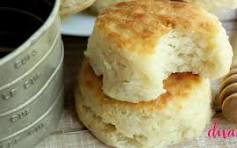
            Mom’s small biscuits – about two man-sized bites – were tender and flaky and browned on the top and bottom. Straight from the oven, each biscuit came apart perfectly so we could put a pat of butter on the bottom half and add the top. Homemade blackberry jam, apple jelly and grape jelly were served with hot biscuits. 

Biscuit dough wasn’t just for biscuits.  Mom used the dough to make butter sticks.  Her, a family favorite dessert. To make the butter sticks, Mom rolled the dough into a rectangle and using a knife, she cut rectangles, about the size of a standard candy bar.  She melted butter, lots of butter, in a big baking dish, then rolled the rectangle biscuits in the butter and sprinkled sugar, sometimes cinnamon sugar, on top.  The butter sticks baked while we ate supper. 

Next time, I’ll use Martha White self-rising flour and buttermilk and maybe my biscuits will look and taste like Mom’s.  And sometime, I’ll make a few butter sticks.  That’ll be a real treat.  

*These are in my kitchen cabinets.

Susan R Ray June 2024

Lunch at a Gas Station

While listening to Tommy Tomlinson’s podcast, SouthBound, I was taken back to a time when my dad and his friend owned a Gulf Service Station in small-town USA, and I thought of food sold at gas stations through the years.

Tomlinson’s guest was Kate Medley, a photojournalist who has, in her words, spent years roaming the South to take pictures of gas station food and the people and places that serve it.  Her recently published book entitled Thank You Please Come Again includes 200 photographs.

Medley talked about service stations, convenience stores, and quick stop markets.  She sampled tamales, fried fish, and sandwiches of all kinds: everything from bologna to ham and cheese to banh mi, a sandwich combination of meat and vegetables.

In the 1950s, the only food and drink for sale at Dad’s and Omer’s Gulf Station were salted peanuts, candy bars, and cokes, sold in a big drink machine.  Cokes, of course, refer to all carbonated beverages and they were in thick glass bottles.

After drinking some of a coke, I carefully poured peanuts from a small cellophane package into the thick glass coke bottle.  The drink fizzed.  The peanuts rose to the top.  And almost every time I drank this concoction, I spilled it on my shirt.  

There was an electric coffee percolator in Dad’s and Omer’s office, but the coffee wasn’t for sale.  It was for everyone who wanted a cup of coffee. Mechanics who worked in the garage, employees who pumped gas, cleaned windshields, and checked oil, and friends who stopped by to visit.  A service station was place for men to hang out and swap stories, but no one expected to buy lunch there. 

When did gas stations begin serving food?  Or maybe when did quick stop markets started selling gas?

 By the 1970s, convenience stores that sold gas, grocery items, and fast food were popular.  For a few years, Husband and his business partner owned three Lickity Split Markets here in Cookeville.  Lickity Split Fried Chicken, whole pieces with bones and a thick breaded coating, and potato wedges were big sellers.  Cold custom-made sandwiches were also available.  Customers could fill their car with gas and clean their windshield, buy lunch, and pick up a few groceries all in one stop. 

Now, it’s common for most of us when driving long distances to make one stop for everything:  a bathroom, fill the gas tank, and buy a snack or meal, that could be hamburgers, soup, tacos, fruit, salad, chicken wrap – almost anything.

Photojournalist Medley discovered that today’s markets supply more than food and gas.  On her website she wrote, “In an ever more divided America, these iconic gathering spaces provide unexpected community, generosity, labor, and creativity.”

Community gathering places – much like Dad’s service station seven decades ago. 

The book’s subtitle is How Gas Stations Feed & Fuel the American South.  Makes me want to drive the blue highways and check out gas station food.  And the book will be on my Christmas want list. 

Some Food Fads Stick Around

Who remembers the first salad bars?  Chopped iceberg lettuce, tomatoes, cucumbers, and carrots.  Two dressings: 1000 Island and French.  When shredded cheese, ham cubes, and croutons were added, a salad became a meal.  Then every type of greens and all things purple (think diced pickled beets) and red and orange and yellow were added.  Even diced canned peaches and cottage cheese.

            As make-it-yourself restaurant meals became popular, we are offered soup and salad bars.  We fill bowls with tomato soup, ate it, and then ate a bowl of chicken noodle soup.  There’s no limit – all we can eat for one flat price.  Start with a spinach and mushroom salad with vinegar and oil dressing and end with fruit and pudding.  

            Restaurant owners have created serve-yourself bars beyond soup and salad.  Potato bars – every topping possible on baked potatoes, not just traditional sour cream and butter.  Bacon bits, green onions, sauteed mushrooms are popular.  A pasta bar Husband and I recently passed up offered six kinds of pasta and red and white sauces, even a pink one.  I wondered if it was a mixture of marinara and alfredo sauces  It looked like Pepto Bismol which was a reason to skip the whole pasta bar.  

            A few years ago, I learned to pronounce charcuterie at the same time I learned which deli meats and cheeses to lay side-by-side.  Now, that’s called a Classic Charcuterie Board.  An article in a recent Taste of Home magazine is entitled, “32 Best Charcuterie Board Ideas for Every Occasion.”  Anything and everything can be placed together on anything and everything – from a dinner-plate size wooden disc to a twelve-person dining room table – and it’s a charcuterie board.

            Two of my favorites are a chocolate board and a pancake board.  Who wouldn’t like all things chocolate?  Hot chocolate, chocolate covered strawberries and cherries and pretzels, chocolate chunk cookies, even homemade chocolate ganache to dip fruits.  And all kinds of chocolate:  dark, milk, white and salted.

            My Grands would probably like the fluffy pancakes I make even better if I served beside banana slices and berries, peanut butter and Nutella, sprinkles, chocolate chips, marshmallow cream, and flavored syrups.  And we all like pancakes topped with whipped cream – some like a cherry on top.

            A Thanksgiving Board looks interesting, but sliced pears and apples, spiced pecans, olives, and cheese can never replace turkey, cornbread dressing, and giblet gravy.

            I don’t keep up with food fads, but I’ve noticed pimento cheese isn’t just for sandwiches and to stuff celery.  Last week I ate a hamburger topped with pimento cheese and it was delicious. Have you tried pimento cheese dip or pimento cornbread muffins?  How about pimento cheese and ham pizza?  Deviled eggs?  Breakfast bake? 

            Surely pimento cheese could be featured on a charcuterie board.  Think of the possibilities.  With bacon or red onion or toasted pecans or shredded apples.  White sharp cheddar cheese.  Creamy Velvetta.  Even pimento Brie. 

            And pimento cheese on a salad bar?  Why not?  It’ll be right beside the celery.

The Power of Warm Cookies

Not only is February Girl Scout Cookie month, it’s also homemade cookie time.  It’s okay to heat up the kitchen with a hot oven on a cold winter day, and nothing tastes better than just-baked warm cookies.

            My mom probably took cookies out of the oven only a few times as soon as I got home from school, but my kid memory says I ate warm cookies and drank hot chocolate every afternoon throughout my elementary school years.  That’s the power of warm cookies. 

            Families have their favorites and for us, there’s none better than chocolate chip cookies. I grew up eating Mom’s cookies made by the recipe on the back of the Nestles’ semi-sweet chocolate chips package.  Sidenote: recipes on packages and cans are good.  After all, those recipes have been kitchen tested and tasted, over and over, and have to be good or they wouldn’t be printed.

            I made Mom’s cookies until Daughter baked Ultimate Chocolate Chip Cookies*.  At first, I thought Daughter’s cookies were better just because someone else had baked them, but an at-home taste test proved otherwise. 

            Daughter shared a few secrets:  substitute milk chocolate chips for semi-sweet chocolate and allow the cookies to cool on the baking sheet for two minutes, then cool on aluminum foil, not cooling racks. And her recipe calls for Butter-flavor Crisco and brown sugar.  Cookies don’t have to be healthy, just delicious.

            Before Daughter’s and Son2’s wedding reception in our backyard twenty-two years ago, she and I baked dozens of cookies to share with neighbors who would be inconvenienced by traffic on our street.  Just last week, one of those neighbors told me those were the best-ever chocolate chip cookies.  And Son requested those cookies for dessert at his and Daughter2’s wedding rehearsal dinner. 

            The cookie section of my dessert three-ring notebook is filled with a plethora of recipes – most shared by family members and friends.  Recipes that are hand-written, many on 3 x 5 notecards which dates the recipes, are the ones I like best.  Like Mom’s Oatmeal Chocolate Peanut Butter cookies with her notes, “don’t like the cocoa, cook just a little longer and don’t make when rainy.”

            I’ve used Sister-in-law’s Oatmeal Raisin cookie recipe since September 1995. I’m the only one in our family who likes oatmeal raisin cookies so this recipe is perfect because the dough is shaped into cylinders, like store-bought slice and bake cookies, and keep in the refrigerator for two weeks.  It’s my treat when I bake a few cookies to enjoy with a cup of hot tea.

            Nancy’s Sour Cream Cookies are the only sugar cookie I’ll ever bake.  For Christmas eating, my Grands decorate bells and Christmas trees and candy canes with cream cheese icing and mounds of sprinkles.  These cookies are hearts for Valentine’s Day and colorful eggs for Easter.

            Life is better with warm cookies – even a store-bought or Girl Scout cookie zapped in a microwave for five seconds.

            *Recipes available:  https://susanrray.com/recipes/

Something from a Box

“Anything special you want to eat while you visit?” I asked two Grands who planned to stay overnight with Husband and me.

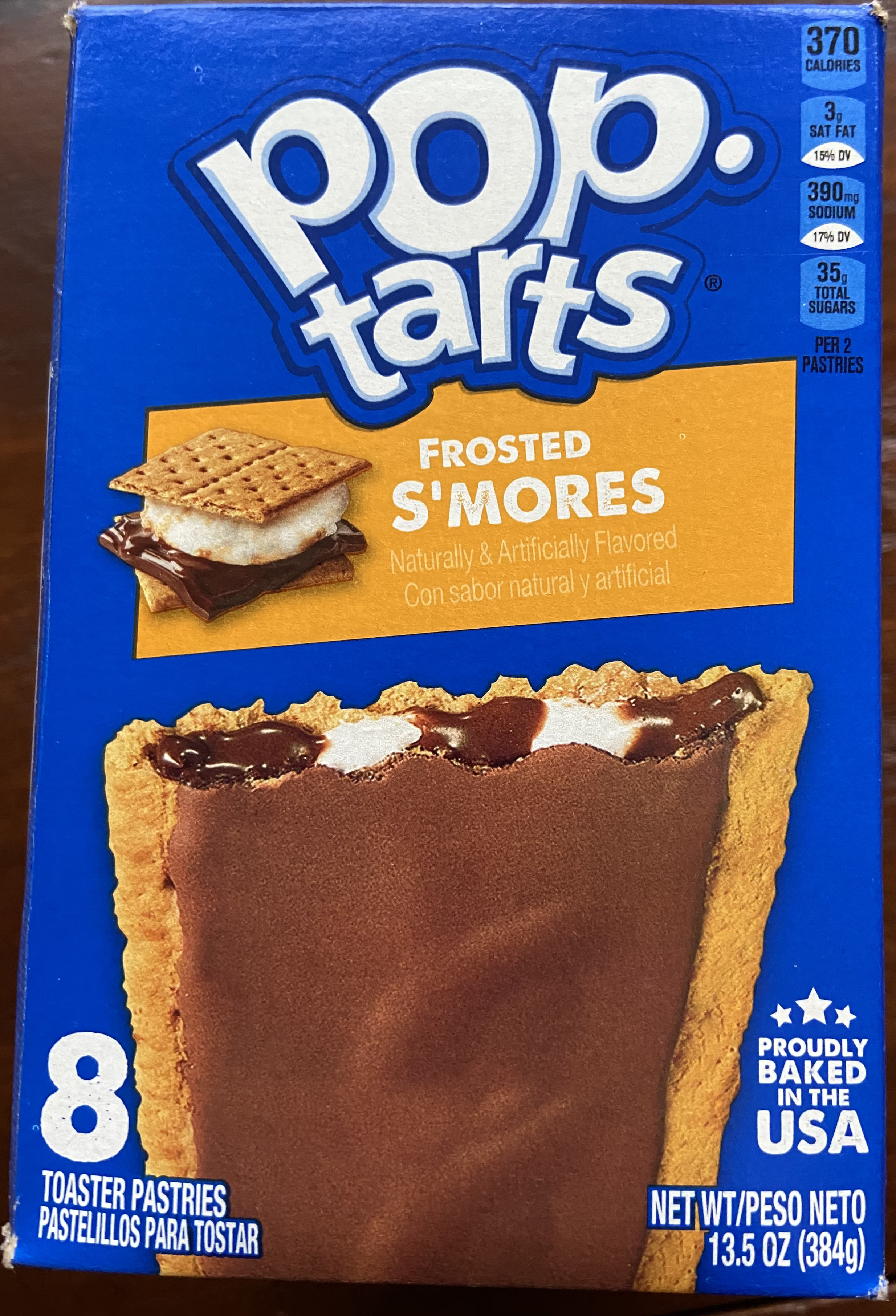
            Annabel tilted her head.  “How about Pop Tarts?”

            “For breakfast?” I asked.  Surely, my 11 and 13-year-old Grands wouldn’t choose something from a box over my pancakes.  I’ve made pancakes for my Grands’ breakfasts for longer than these two are old.

            I was relieved when Lucy said, “No, Gran.  We want pancakes for breakfast.  Pop Tarts can be snack.”  Both girls nodded.  Their blue eyes open wide.  Their blond hair shaking.

            I added Pop Tarts to my grocery list. “What kind?  Strawberry? Cinnamon?”

            “S’mores!  They’re the best!” said Lucy.

            “The ones with frosting,” Annabel added.

            I was stuck in the 1970s, probably the last time I bought Pop Tarts.   “You mean they have marshmallows and chocolate in them?  Doesn’t the frosting melt when they are heated in the toaster?”

            Again, those enthusiastic nods and the girls gave each other a high-five.

            I was shocked by the display of Pop Tarts at Food Lion.  Six feet long and seven shelves!  Obviously, Pop Tarts are a big seller to warrant such a so much space.  After I’d I counted more than twenty flavors, I wondered when Pop Tarts were first on shelves and how many kinds are available.

            In 1963, Kellogg’s chairman, Bill Lamothe, had an idea to make a breakfast toaster-ready rectangle that could go anywhere. He asked the Kellogg’s kitchen crew to ‘create an ingenious hack on toast and jam,’ according to poptarts.com.  The name Pop Tarts was inspired by the Pop Culture movement of the day, which some of us remember.

            When I suggested strawberry or cinnamon to my Grands, I remembered two of the four original flavors: strawberry, blueberry, apple currant, and brown sugar cinnamon. Frosting was added in 1967 and sprinkles in 1968 and by 1973, there were nineteen flavors which seems like enough choices, but the kitchen crew continues to create choices.

            There’s not a flavor list because the production of flavors changes during a calendar year, but there is something for everyone’s taste.  Traditional flavors are still available: strawberry, chocolate, grape, cherry, and cinnamon.  For those more adventurous, try Frosted Boston Creme Donut, Snickerdoodle, Lemon Cream Pie, Cookies and Cream, Red Velvet, or Apple Fritter.

            My Grands and I made a celebration out of our afternoon snack.  Hot chocolate with marshmallows – the more the better.  Warm, lightly toasted delicious S’more Pop Tarts.  

            We talked about real s’mores. “Remember that time in Colorado when we’d couldn’t build a fire to make s’mores?” Annabel asked.

            “It was really windy,” I said.

            “Was that when Mom and Uncle Eric roasted marshmallows over the stove?”  asked Lucy.  That was the time.  We reminisced and laughed. 

Next time, I think we’ll try Frosted Chocolate Fudge – Annabel says they’re better than S’mores.

Since my Grands talked and laughed while eating something from a box, I’ll gladly spend $3.69 for eight Pop Tarts.  Just don’t expect me to serve them for breakfast.

Memories Create Traditions

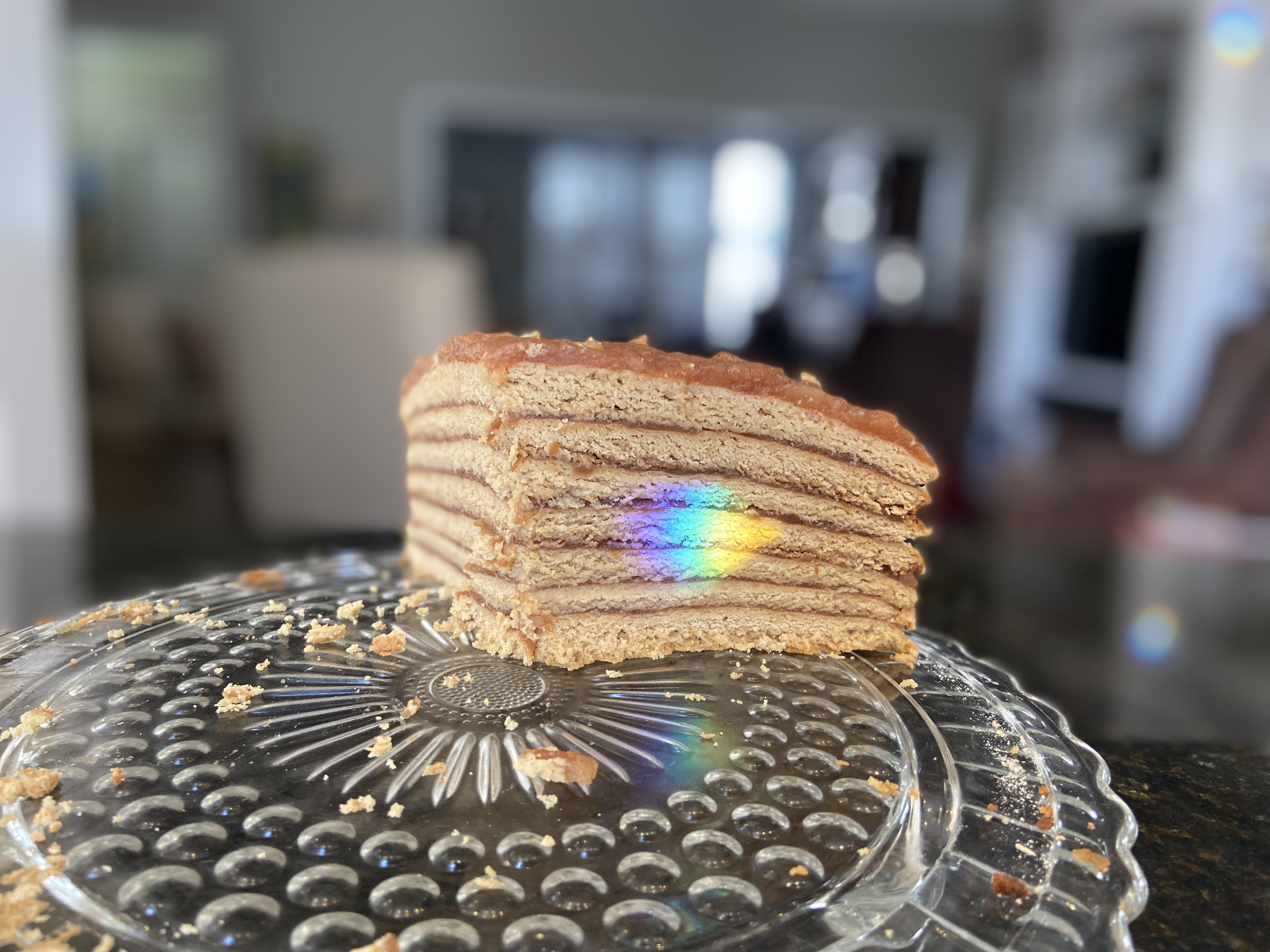
When I posted a picture on Facebook of the last pieces of a dried apple stack cake, my friends’ comments ranged from memories to compliments to requests.  Oh, how I miss my grandmother’s stack cake.  Apple stack cake is a family favorite for generations!  My mom used to make stack cakes – what a sweet memory.  Looks yummy!  Will you share the recipe?

After reading the comments and scrolling through the list of friends who hit ‘Like’ and ‘Love,’ I put this week’s topic on hold and decided dried stack apple cake warrants a column.

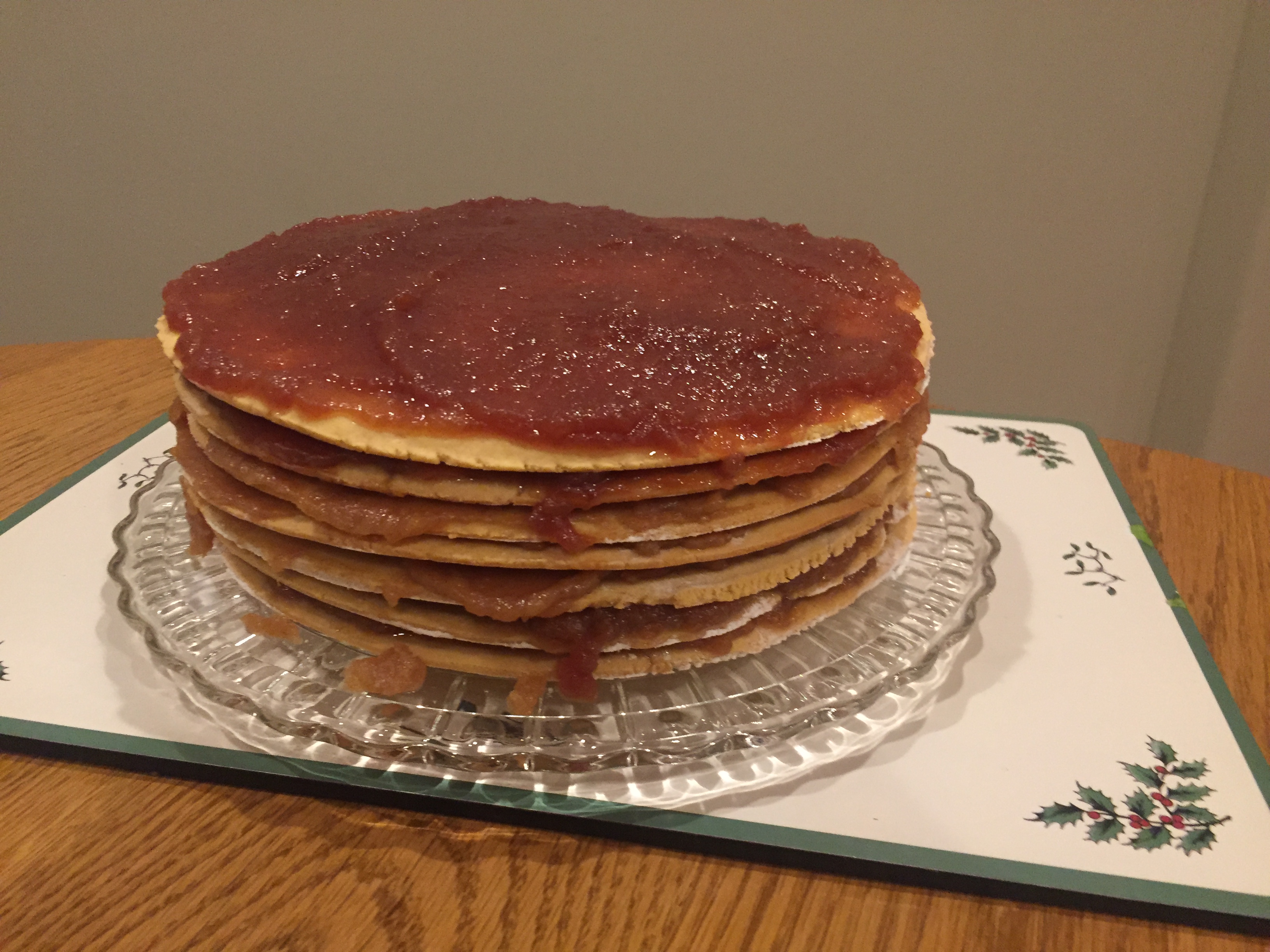
In case someone isn’t familiar with this cake, it’s a layered cake of very thin cake layers, cut ¼” thick and baked like large cookies, and dried apple filling. If you like the flavors of gingerbread or molasses cookies and apple butter, you’ll like it.  It’s not difficult – just takes time.

For those who requested the recipe, it’s online at https://susanrray.com/recipes/  I could have filled this column with the recipe, but a list of ingredients and the directions really aren’t the story of this cake that brings memories and is liked by many.

I’m not sure the recipe I use is the one Mom used because apple stack cake wasn’t always one of my favorites so I never asked her for the recipe.  Besides, she made it every Christmas so I didn’t need the recipe.   Mom died in 1991 and that Christmas was the first time I made this cake. I’m still using a recipe printed in a small flyer, found among Mom’s recipe collection, that was prepared by the National Sweet Sorghum Producers and Processors Association in Clinton, Tennessee.  

After making the cake, I wrote notes beside the Old Fashioned Stack Cake recipe: “Christmas ‘91.  Used 3 ivy leaf plate. 7 layers. 7 minutes.”  My note identified a 9 ¼” Blue Ridge plate decorated with three ivy leaves.  It was the only Blue Ridge plate that was in Mom’s kitchen cabinet and I remembered she laid it on the rolled-out cake dough to cut the layers.  The recipe made seven layers and each baked seven minutes.

That first year, I made it to connect with Mom and because Dad and Daughter really liked it.  Now, thirty-one years later, it’s also a favorite of most of my Grands and mine.  I usually make it for Christmas, but this year Son’s and Daughter’s families were here for Thanksgiving.  A young Grand smacked her lips and asked for seconds and a teen-age Grand ate it for breakfast.   

This cake gets better the longer it sits – at least for six days when I savored the last piece. I baked it several days before serving, covered it, and stored it in the refrigerator.  After the apple filling seeps into the cake layers, it becomes more moist, more delicious. 

            Aren’t there foods we like because we first ate them while sitting at our parents’ and grandparents’ kitchen tables?  

Bake the cake.  Create the memories. Continue the tradition.

(When I took the picture above, a reflection from my kitchen prism just happened to be on the cake. Another memory, another tradition: Mom always had a prism hanging in a window.)

Christmas 2021

Cooking Thanksgiving Dinner

Sometimes I wish Mom, Aunt Nell, and Aunt Doris had not been good cooks.  I wish they hadn’t made the most delicious pies and cornbread dressing and casseroles.  Then preparing Thanksgiving dinner would be easier.

Aunt Doris’s chocolate cream pie is still a high standard that no one in my family has reached.  Mom’s dressing was the best ever.  I’ve tried to duplicate Aunt Nell’s asparagus casserole.  I wonder if she added a secret ingredient that’s not in the recipe?  

If my family had never eaten Thanksgiving dinner that Mom and her sisters prepared, maybe they’d be happy with a meal advertised by grocery stores and restaurants.  Turkey, dressing, gravy, two sides, and pumpkin pie for twelve people for $114.95.  Just heat and serve.

Although it’s been more than twenty years since my aunts and Mom served Thanksgiving dinner, my cousins, sister-in-law, and I have carried on the tradition of a home cooked feast. Which makes me wonder how many hours are spent preparing Thanksgiving dinner?

That question came to mind as I stirred cornmeal, an egg, and buttermilk to bake cornbread to be made into dressing three days later.  The cornbread dried out for a few days so it could be crumbled and mixed with celery and onion, chicken bouillon, an egg, and a sprinkling of seasonings. The celery and onion were chopped and sauteed, and because a few people in my family don’t like celery I blend it with bouillon to hide the green.  One time, I omitted celery and used celery salt (omitting additional salt) and that was the worst dressing ever. 

When the dressing is mixed, I form balls, a bit smaller than a tennis ball like Mom did because we like crunchy dressing and every serving browns perfectly.  Hours – just for the cornbread dressing.  As I sometimes say to Husband, “I’m not complaining.  Just thinking out loud.”

There’s nothing to roasting a turkey.  Unless, you brine it so the meat is more tender and delicious.  Dissolve sugar, salt, and spices in hot apple and orange juice and let it cool, and place the turkey in the brine for at least 24 hours. 

Wash the salty brine from the turkey and dry it before roasting.  Husband is in charge of carving and the turkey platter is a work of art.  Each piece is evenly sliced.  Hours – just for the turkey.

Then there are the sides.  Green beans.  Home canned beans are the best, but store-bought ones can be seasoned to taste almost like backyard garden beans.  Corn.  Lima beans. Sweet potato casserole. Mashed potatoes.  Asparagus casserole. Cranberry salad and yeast rolls complete the meal

And desserts.  The crusts of Mom’s pumpkin pie and Aunt Doris’s chocolate pie were made from scratch.  Refrigerated store-bought crusts are almost as good. 

 A heat and serve meal would be easier, but when many cooks bring a dish or two, we get to enjoy the Best Meal of the Year.  The Best – that’s what Daughter says. Soon it’ll be her turn to roast the turkey and make dressing.

Does Everything Have to be Pumpkin Flavored?

Chocolate Chip Pumpkin Bread and a cup of coffee taste good these cool fall mornings. That’s black coffee, not flavored, and I learned to like the bread when I ate it with my Grands at the Great Harvest Bread Company last fall.  They called it The Pumpkin Bread Store and were disappointed when Cookeville’s Great Harvest closed this spring.

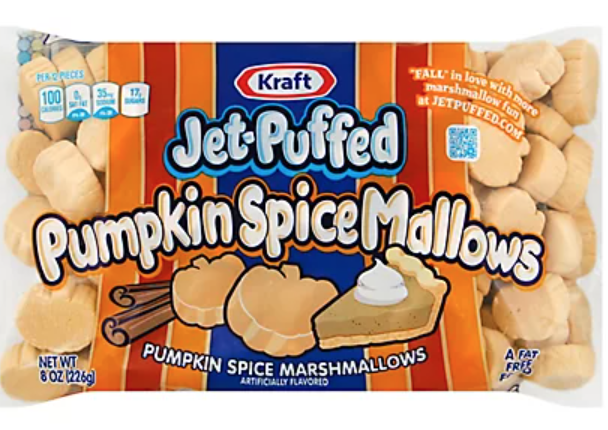
            Chocolate Chip Pumpkin Bread took me out of my food comfort zone because I’ve always liked plain pumpkin, as in pie.  I’m almost appalled by the many foods and drinks flavored with pumpkin and pumpkin pie spice. 

Nothing tastes better than pumpkin pie, topped with real whipped cream, after a Thanksgiving Day turkey and cornbread dressing feast.  Even now, I look forward to baking a pie using Mom’s recipe, which she tore from a Libby’s Pumpkin can label.  And that recipe doesn’t include pumpkin pie spice. 

Libby’s recipe was probably created before the spice was bottled, which proves to me that pumpkin pie spice is totally unnecessary. It’s simply a concoction of cinnamon, nutmeg, and cloves, and depending on someone’s tolerance of allspice and ginger, one or both can be added.

When the calendar turned to September, store shelves magically filled with all things pumpkin and coffee shops promoted pumpkin lattes.  A Facebook friend shared pictures of her fall shopping haul, and while all items weren’t pumpkin flavored, many were. Pumpkin Spice Trail Mix.  Pumpkin Spice Coconut Granola.  Pumpkin Chipotle. Pumpkin breakfast bars. Pumpkin yogurt.  Pumpkin spice craft soda.  

I can imagine most of those tastes, but pumpkin chipotle?  Smoked dried jalapeno chili peppers flavored pumpkin?

As I shopped for groceries recently, I noticed several favorite year-around foods were featured on the end caps to entice impulse shoppers, except these items were the flavor of fall.  Honey Nut Cheerios make a good snack eaten hand to mouth or with milk for a meal, but I won’t buy Pumpkin Cheerios.

Chocolate marshmallows make double chocolate s’mores; I’m almost certain that pumpkin marshmallows would taint milk chocolate Hershey bars. I really like the sweet and salty combination of yogurt covered pretzels; I’m not sure about pumpkin yogurt pretzels.

I’ve tried pumpkin recipes.  When I ate a warm pumpkin sugar cookie, I wished I’d baked chocolate chip cookies, and pumpkin cheesecake bars are a poor substitute for pumpkin pie.

After Great Harvest closed, Daughter began baking Chocolate Chip Pumpkin Bread and it’s really good, but on a recent trip I spotted a Great Harvest Bakery and packed a loaf of my Grands’ favorite bread in my carry-on flight bag. I had to do some fast talking to explain to the airport security officer that my Tennessee Grands would be so disappointed to not get pumpkin bread from the real Pumpkin Bread Store. 

When my Grands and I ate the bread, I decided it’s best eaten with people you love.  And who knows, maybe pumpkin yogurt pretzels are worth trying.  Just don’t mess with my coffee.

What’s a huckleberry?

  “I ate some really good huckleberry ice cream,” I told four Grands after one asked what I had eaten while Husband and I took a bus tour through parts of South Dakota, Wyoming, and Montana.  “Huckleberry?  Like the boy in the book?  What’s his name?” one Grand asked. 

Another Grand answered. “Huckleberry Finn.  Was it his favorite kind of ice cream?”

Before we could discuss possible connections between Huckleberry Finn and huckleberries, my Grands asked more questions.  “What’s a huckleberry?  Do we have them?  What’d the ice cream taste like? Did you eat it a lot?”

Huckleberries are small purple berries that grow wild in the Pacific Northwestern United States. They thrive in the regions of the Rocky Mountains and Yellowstone National Park, but don’t grow naturally in Tennessee.

Huckleberry ice cream is delicious and unique – a flavor combination of dark sweet grapes and cherries. I wish I’d eaten a lot.

Before leaving for this trip, several people told me to eat huckleberry ice cream so I was eager to try it. Husband and I spent the first afternoon walking around downtown Rapid City, South Dakota, where I expected to see ice cream parlors, but didn’t, and huckleberry ice cream wasn’t available at the restaurants where we ate for two days.

We made stops in Gillette and Sheridan, Wyoming, and stayed overnight in Billings, Montana, and I only found individual package ice cream treats, like in our local stores.  On to West Yellowstone, Montana, a small town, population 1090, and I spotted an ice cream truck parked on a street corner.

As Husband and I walked to a local 1950s style restaurant for supper we passed the truck, and I checked out the flavors.  Yes, huckleberry was on the list!  “That’s my dessert!” I said.  What I didn’t notice was the operating hours and an hour later, the ice cream truck was closed.

After a day in Yellowstone Park, we stayed in West Yellowstone another night.  At suppertime we walked to the ice cream truck, and  I ordered two scoops of huckleberry ice cream.  The young lady apologized, “I’m sorry.  We’re out of huckleberry.”

To go with my supper, cheeseburger and cheese-covered tater tots, and to drown my disappointment, I drank a huckleberry soda pop that tasted like a Nehi grape soda, except sweeter.  Never again.

Our last overnight stop was Jackson, Wyoming, well-known for antler arches on its town square corners and its ski slopes.  Surely, a resort town of 10,000 would also have ice cream shops on every corner.

Moo’s Gourmet Ice Cream Shop was on a side street and at the top of the flavors list was Wild Huckleberry.  I didn’t celebrate until I held two scoops in a waffle cone. Husband and I sat on a park bench, near an antler arch, and I slowly licked and savored that delicious ice cream. 

            Huckleberry Finn and huckleberries? Because huckleberries are small, the word ‘huckleberry’ was used to refer to something small or unimportant. Some scholars think Mark Twain had that in mind when he named Huckleberry Finn.

Cucumbers Aren’t Just for Eating

     For the last step to make sweet pickles, Husband and I layered cucumber slices and sugar in a four-gallon crock. By the next day, syrup formed and now a week later we have sweet pickles.  There’s nothing better than a cheese sandwich – grilled, toasted or plain – with Miracle Whip and sweet pickles made using my mom’s recipe. The only way Husband eats cucumbers is pickled, and I’m pretty sure if he could get the same flavor and crunch using something besides cucumbers, he would. I’ve eaten raw cukes since I was a kid when I sat in the middle of my family’s garden, picked them from the vine and ate them like an apple. A garden salad isn’t complete without cucumbers and cucumber sticks is a better sandwich side than chips. 

During the summer I buy cukes at Farmer’s Market, and after I learned they are nutritious – providing vitamins B1, B2, B3, B5, B6 and C, zinc, potassium, iron, and calcium – and a natural anti-inflammatory for arthritis, I gave myself permission to buy them at the grocery store when growing season ends.

Cucumbers aren’t just for eating. Gardeningchannel.com lists twenty-seven weird ways to use cucumbers, including placing slices on your eyes to reduce puffiness.  Cukes have ascorbic acid which is an antioxidant that relieves water retention, the swelling around the eyes.   Those antioxidants also relieve sunburned and itchy skin; use thin cucumber slices or make a puree to spread over the affected area.

            A cucumber face mask, puree or juice, can rejuvenate and brighten the skin and some commercial skin care products use cucumbers’ natural oils for toning and hydrating. 

            To make metal shine, use cucumbers.  The stains on my stainless-steel sink are gone after I gave it a good scrubbing.  Even tarnish was removed from my sterling silver sugar spoon. Slice a cucumber and leave the skin on.  Rub the metal to coat with cucumber juice, then rub with the skin to clean. 

            I read that cucumbers are great for removing pen and crayon markings on a wall.  On heavy paper, it simply got the paper wet and smeared the markings.  It might work on a wall, but I didn’t try it.

Another suggestion was a way to reduce the appearance of cellulite.  A paste made of cucumber juice, honey, and ground coffee tightens the skin; I can’t imagine sitting still for 30 minutes with that concoction under a tightly wrapped cloth on my thighs.   

Eating cucumbers are supposed to cure headaches and hangovers.  Maybe caused by one too many cucumber martinis? The weirdest use of cucumbers is keeping slugs away.  Would a metal pan really make chemicals in cukes create a reaction to discourage a slug infestation?

If anyone looks up and tries some of these weird ways to use cukes, let me know.  I’m not wasting any more summertime cucumbers on experiments.  At my house, cucumbers are for eating straight off the vine or pickled. The pickle recipe is available at https://susanrray.com/recipes/