

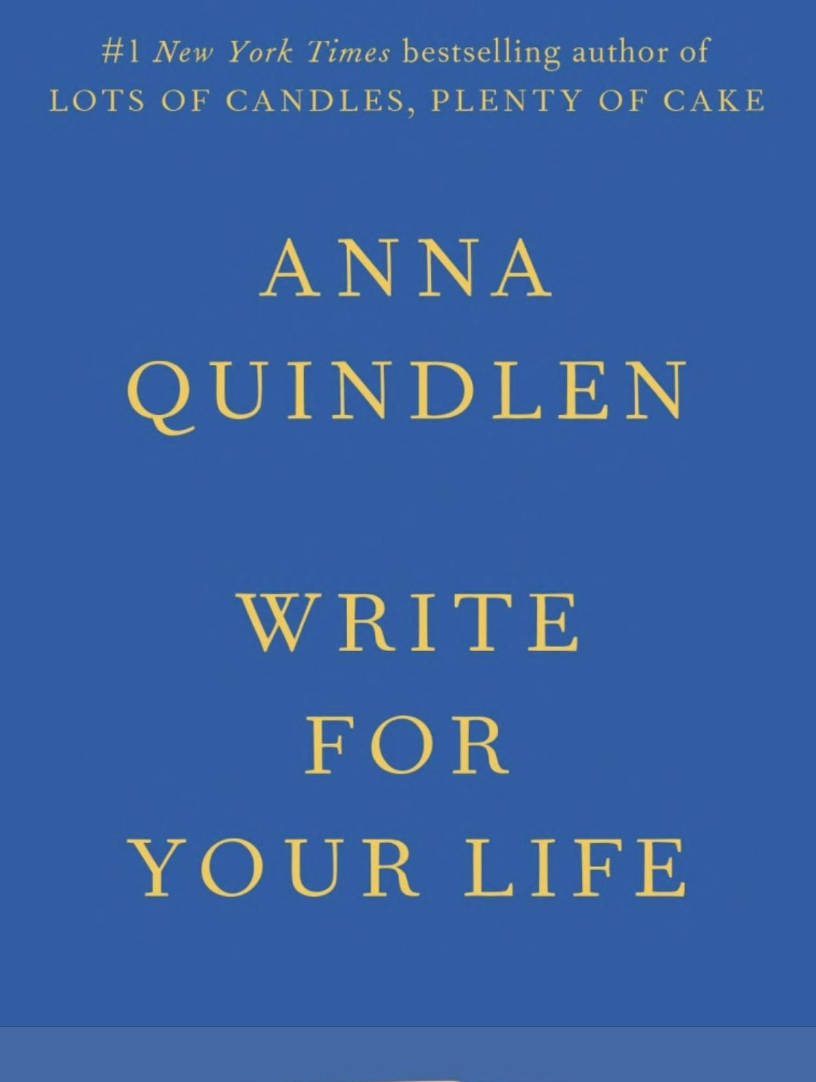
Sometimes I read a book that I want everyone to read. A book that’s positive, offers hope, and encourages. A book filled with quotes, practical advice, and humor. A book in which I’ve turned down page corners, underlined sentences, and filled with post-it notes.
Write for Your Life by Anna Quindlen is such a book. Maybe you recognize Quindlen’s name for her best sellers Still Life with Bread Crumbs and Object Lessons or one of her other six fiction books. Her non-fiction books speak to wide audiences from young to old, and she won the Pulitzer Prize for Commentary in 1992 for her op-ed column, Public & Private, in the New York Times.
Quindlen’s successes give credence to Write for Your Life. She says this book is for those of us she calls “civilians,” people who want to use the written word to become more human, more themselves. She states that there has never been a more important time than now to record what we are thinking and feeling. Writing connects us to ourselves and to those we cherish.
This is not to suggest that we write a book or a short story or even a newspaper column. Think of writing to yourself or those you love most. A journal, a diary, free writing – call it what you want. Quindlen says, “Write your daily story.”
The book begins by telling of a girl who received a diary for her thirteenth birthday in 1942. On the first page the young girl wrote, “I hope I shall be able to confide in you completely and I hope you will be a great support and comfort to me.” We’ve read her writings in The Diary of Anne Frank, first published in 1947.
Quindlen reminds us, that Anne Frank wasn’t writing a book. She was talking to herself in the same way any of us can. Day after day, she wrote her thoughts and feelings.
If I weren’t already hooked, the author states that writing is the gift of your presence forever. “Think of it this way: If you could look down right now and see words on paper, from anyone on earth or anyone who has left it, who would that be? And don’t you, as do I, wish that person has left such a thing behind? It doesn’t really matter what you say. It matters that you said it.”
I treasure all writings left by my grandparents and parents. Even the scribbles on bank deposit slips and notes on birthday cards. And while I treasure saved letters, those aren’t their daily thoughts. How I wish I knew their feelings, their daily lives.
For those who feel uncomfortable putting pen to paper or your fingers on a keyboard, Quindlen lays out examples and says “Don’t get it right, get it written.”
Take ten minutes to put today’s thoughts, feelings, plans, and activities on paper. It’ll clear your mind and leave your legacy.
And read the book.
Filed under: Writing | Tagged: Anna Quindlen, write, Write for Your Life | 2 Comments »
 Susan Writes