

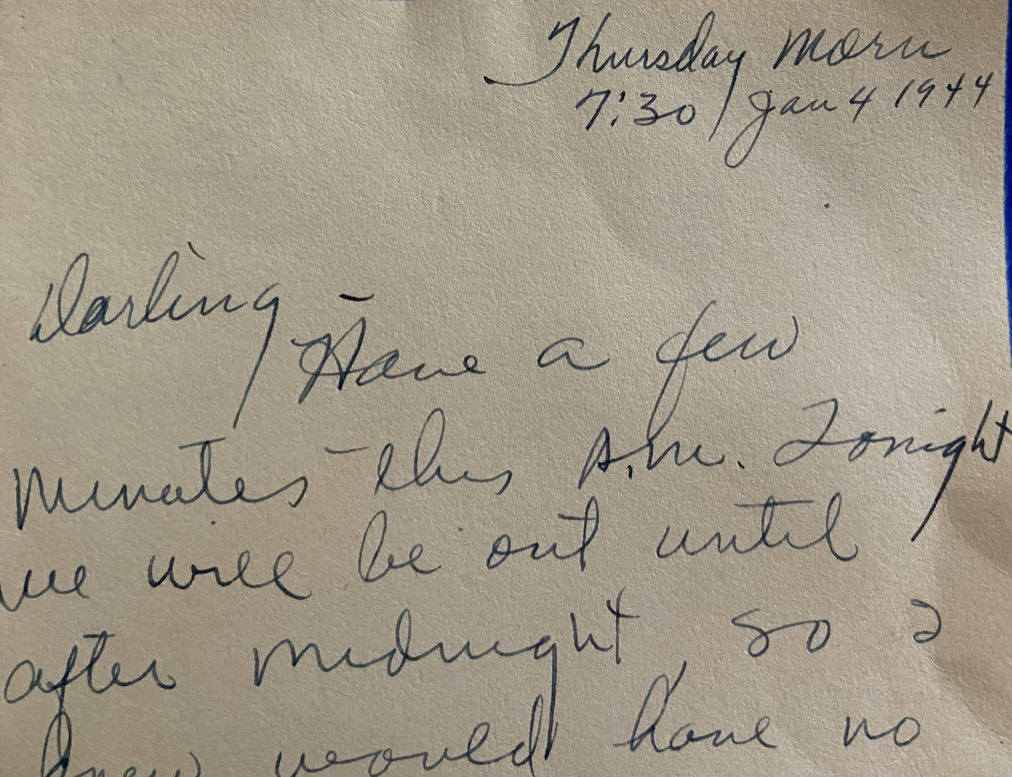
On Thursday, January 4, 1944, at 7:30 a.m. Dad wrote to Mom. “Didn’t get a letter yesterday. Guess you didn’t have time since you are so busy canning meat. It’s a little greasy and messy, isn’t it?” The letter’s return address is Camp Bowie, Texas.
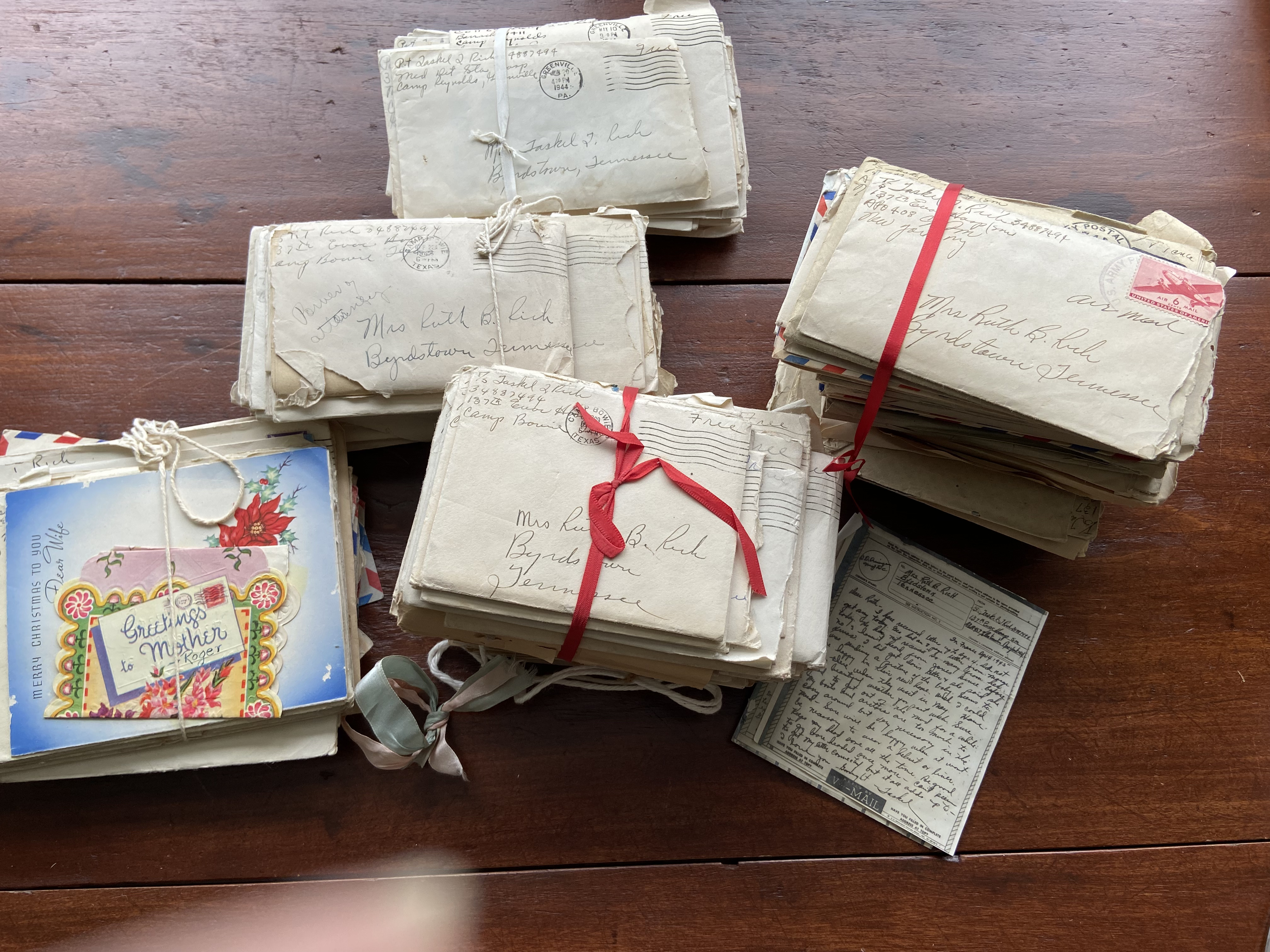
In last week’s column, I shared that Daughter and two Grands helped me sort the many letters that Dad wrote Mom while he served in the Army from October 1943 until April 1946. These letters give glimpses of 2 ½ years.
Dad wrote about daily life: food served, letters received from family and friends, fellow soldiers he met who had lived near his Byrdstown, Tennessee home town, weather, frustrations of letting the hem out of pants to make them long enough. And he always asked about Roger, my brother who was almost one when Dad enlisted.
In one January 1944 letter, Dad wrote that he hoped Mom was feeling fine after having ‘those old tonsils removed’ and that her headaches disappeared as a result. For about two months, letters were rerouted from Byrdstown to Albany, Ky, and Akron, Ohio, where Mom’s two sisters lived. So, Mom and Roger must have stayed with her sisters after her tonsillectomy.
From an October 1944 letter, I learned that Dad worked as a dentist assistant. A job that was envied by others because he worked shorter hours and had time off.
Dad wrote, “Do what you like with the roll top desk. Paint it or anything. Big job to sand it down tho and get it looking decent.” Someone made it look decent. It was Dad’s office desk at the service station he owned in the early 1950’s. Without the roll top, it was Mom’s back porch office desk. For many years, my brother and sister-in-law used it and two years ago, it was moved again – to my oldest Grand’s room.
February 1945, Dad mailed a signed Power of Attorney form.
Letters written in March show an APO address: New York, NY. He wrote, “I am still
very much in love with a certain beautiful young lady and this loneliness is only natural.” One heading reads At Sea. Another is Somewhere in France.
Dad tells of travelling by truck convoy through several French towns and seeing some rather beautiful farm county. People along the way were eager to get the cigarettes and candy thrown to them.
April 1945, Dad wrote from Somewhere in Germany. He assured Mom that he wasn’t in danger, far from the front, and working as a carpenter. An August letter reads, “We heard today about the new atomic bomb and our paper says something about a plant near Knoxville.”
I’ve skimmed letters through March 1946, including those returned to Mom because Dad was on his way home.
My favorite parts are the greetings and closings. Dear Darling. Hi Sweetheart.
Good night, Dearest I love you. I love you and always will.
I share these glimpses to encourage others to get letters out of boxes. Such writings make us who we are.
Filed under: Family | Tagged: Dad's letters, letters | 1 Comment »
 Susan Writes