• Recent Posts

  • Archives

  • Categories

  • Meta

Sharing Granny stories

Elizabeth Rose, a storyteller at Storyfest last Saturday, reminded me that people never really die when we tell stories about them. Although Granny, my paternal grandmother, left this earth in 1982, she lives on when I share her with my Grands.

            Granny dipped snuff, quilted, and raised a garden. She watched Saturday night wrestling, and sometimes when it was too rough she’d cover her eyes with her hands and peek through her fingers. She knew all the characters, their flaws, strengths, and transgressions, on The Edge of Night, a weekday soap opera that aired from 1952-1986.

And Granny raised chickens. Every spring she bought baby chicks from the Farmer’s Co-op and they lived in cardboard boxes on the closed-in back porch until they were strong enough to thrive in the henhouse.

Some chicks grew to be laying hens and some went in the freezer on chicken killing day. I have no idea how Granny determined which three month old chickens lived or died, but she chose the fryers. She’d grab a chicken, hold it tightly, and with a quick twist of her wrist, she’d wring its neck. Dad then tied a string around the chicken’s feet and hung it on our metal clothesline until Granny was ready to dip it into a black kettle of boiling water to loosen the feathers so they could be picked off.

The best Granny story was one my brother, Roger, told. Granny was a cook at a Byrdstown restaurant and walked home after work. She wore a white nylon uniform and a bib apron, tied around her neck and waist. She walked home after work and she’d stop at the hen house to gather eggs.

Roger often ran out the back door of our house to greet Granny. One day, when he was about 9 years old, he noticed prickly dried sweet gum balls on the ground, and Roger thought it’d be funny to surprise Granny and stick her with a sweet gum ball. He hid behind the hen house when she went inside.

Granny held up the bottom of her apron to form a pouch, reached under the sitting chickens to get the eggs, and placed them in her apron. She usually gathered 6 or more eggs. As she walked out of the hen house, Roger crept behind her.  He stuck a gumball right through her thin uniform on her behind.

Granny screamed. She threw her hands high above her head. She jumped and stumbled, but she didn’t fall. Eggs flew into the air, then hit the ground. When Roger told the story, he’d imitate Granny’s screaming and jumping and tears of laughter ran down his cheeks.

Granny and Daddy didn’t think much of my brother’s antics. Roger said Dad made sure he never did surprised Granny again.

Telling stories also leads to questions. How did she get the chicken feathers off? Did you ever gather eggs? What’s a gum ball?

Everyone can tell family stories. Try it and keep those you’ve loved and lost alive.

####

Put Litter in Its Place


            If there is a six letter bad word, it’s litter. Litter. Trash in a public place. Paper, cans, and bottles that belong in a landfill or recycling bin. I hate litter anywhere and everywhere and especially along the right of way. Always have.

When I was a kid, before protecting our natural environment were social and political issues, Mom and Dad made it a family issue. Part of our weekly yard care, in addition to pushing a lawn mower and clipping grass around shrubs with hand clippers, was picking up trash along the road near our house. And Mom and Dad taught me that nothing could be thrown out car windows. We had a car trash bag.

I carried on the trash bag practice with my children and their friends knew when I was the carpool driver all trash went in the bag. Except once when a carload of kids was riding in my Ford station wagon with flip-up back seats and in the rearview mirror, I saw a child toss a candy wrapper out the back window. We were on a neighborhood street, not a major highway.

I stopped the car on the wide shoulder and everyone, the litter culprit and those innocent, got out of the car and we picked up every scrap of trash we could find. My two school-age children were embarrassed and I should’ve handled the situation without using my teacher voice, but I was angry.

Now I walk from my house to the YMCA on Raider Drive a couple of times a week and I’m shocked at the amount of litter along a heavily traveled street that leads to a public school and a place to exercise.

Recently, while my three oldest Grands, ages 11, 10, and 8, visited, I told them we were going to do a service project. We’d pick up litter along the road close to the Y. Their responses were typical. How much will we get paid? (No money. Just the satisfaction of doing something good for our environment.) Do we have to? (Yes.) I’m not touching somebody else’s trash. (We’ll wear plastic gloves.) How long do we have to do it? (Until the job is done.) Can we have a treat afterwards? (Maybe.)

Reluctantly, my Grands pulled on gloves, took the trash bags, and decided we should work in pairs. One person, to hold the bag open and the other, pick up. A chore that would’ve taken me all morning was completed in twenty-two minutes. One Grand set her stopwatch.

After we finished, I liked what I heard. That wasn’t near as bad as I thought it’d be. It was almost fun. We found at least 25 apple drink aluminum cans. Why would somebody throw out aluminum cans they can recycle? Don’t they know plastic bottles can be recycled, too? They must not have a car trash bag.

And the last question: Gran, we don’t have to do this next week, do we? I certainly hope not.


Easter Menu and Bunny Cake

 “What do you want for Easter dinner? Anyone like to suggest a new menu?” Husband’s sister sent this message. She organizes family gatherings and makes sure we don’t all take potato salad.

Easter dinner is actually lunch, served sometime around noon. True southerners know this. I’m surprised Sister thinks anyone would like a new menu. What’s Easter dinner without ham and rolls and potato salad and broccoli salad and deviled eggs and an Easter bunny cake? Husband’s siblings, with children and grandchildren, gather for a family egg hunt and dinner. And maybe the menu can change, but no matter what, I’m baking a cake.

Two weeks ago, my 8-year-old Grand asked, “Gran, when are we going to make the Easter bunny cake?” Not, will we? Not, can we? When? I’ll bake a two-layer cake in round pans. And then the Grands, who want to, will help ice and decorate it. Ten years ago, when our oldest Grand was almost two, I invited him to help spread icing and make the bunny’s face. I never imagined that something so simple would become a tradition.

You know the bunny cake that has a big round face, long ears, and a bowtie. Every year I pull out the 3 x 5 index card that has a small picture of the finished cake and a diagram of how to cut one layer into almost thirds. For the bunny’s ears, I cut two elliptical shapes from each side, leaving a bowtie shape in the middle.

The picture shows a round bunny face, covered with white icing and coconut. Short red, narrow licorice candy stings form the mouth and whiskers. A green jellybean for the nose. Two pink ones for the eyes. Pink tinted coconut colors the ears. And about a dozen jellybeans decorate the bowtie. Our bunnies are sloppy, glitzy cousins to this one.

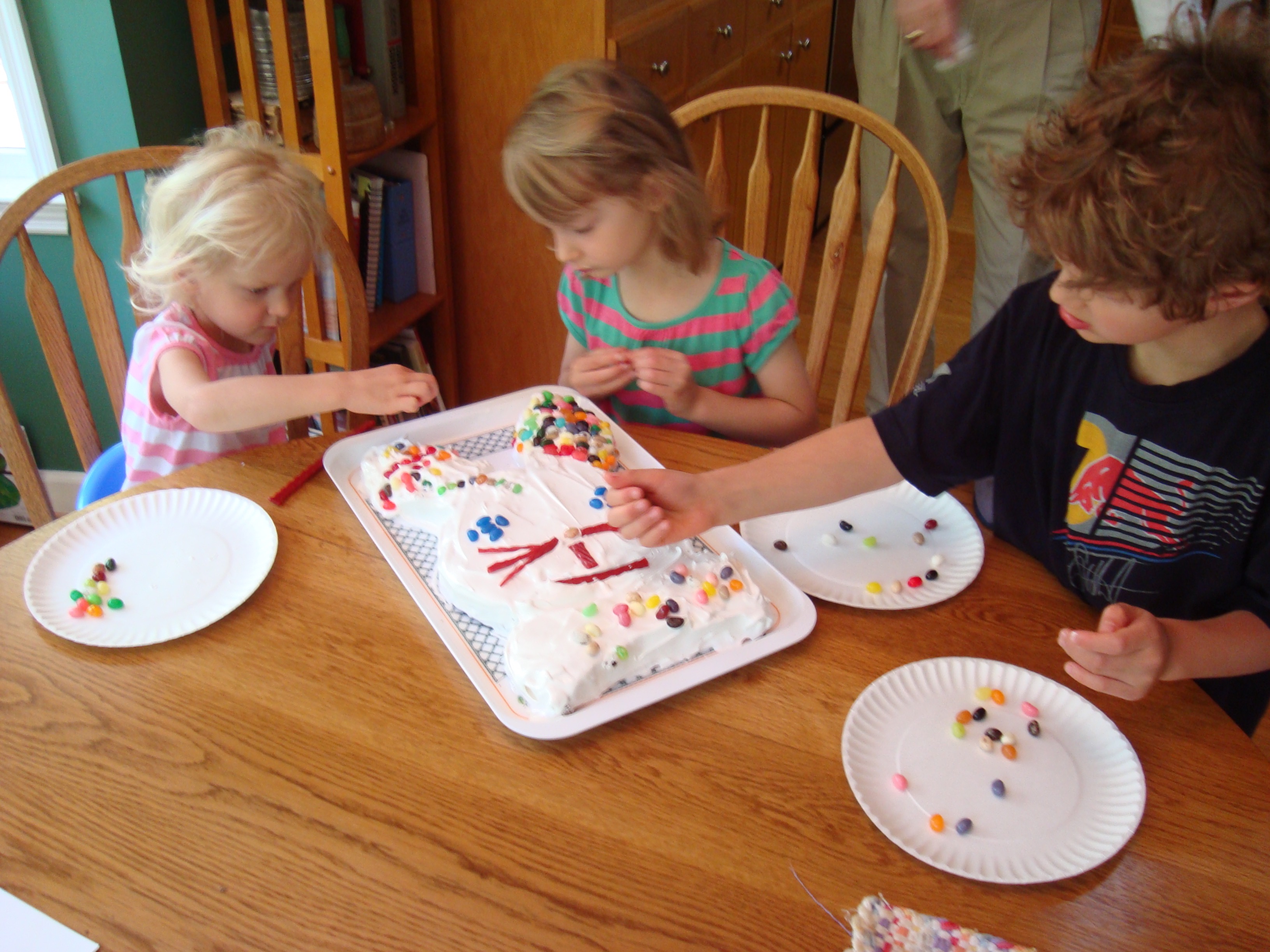
My Grands don’t like coconut. And I provide many jelly beans. After all, when three or four Grands want to help, the bunny is divided into parts so that everyone has the freedom to decorate one part. My Grands have created a rotation and they know whose turn it is to decorate the favorite part, the face. Others choose an ear or the bowtie. Our bunny’s ears and bowties are laden with color. Sometimes in a pattern. Sometimes random designs. Sometimes a single color. Always completely covered with candy and the ears never match.

Sometimes our bunny smiles. Sometimes frowns. Sometimes has an open mouth. He’s even had tears. What else would you call yellow jellybeans below red eyes? He’s had eyebrows and purple jellybeans whiskers and bugs in ears. Black jellybeans do look like bugs.

“Gran, don’t forget. The bunny is chocolate. Not that yellow cake,” I was told. One year, I absentmindedly baked a yellow cake. You just don’t mess the flavor of the bunny cake. But maybe we could change the other Easter dinner dishes. Anyone like to suggest a menu?

Happy Birthday!

It’s birthday season in our family. All eight Grands were born between March 17 and June 8. All spring babies. And that means birthday cakes, candles, and singing “Happy Birthday.” The perfect picture is the birthday boy or girl blowing out the candles while everyone else sings. So how did this tradition begin? Why do we have birthday cakes? Why candles? Who wrote “Happy Birthday?”

Birthday cakes were traditional for Ancient Romans. They celebrated someone’s birth with pastry and one theory about birthday candles goes back to that time. People brought cakes adorned with lit candles to the temple of Artemis, goddess of the hunt. The candles’ glow was like the glow of the moon, a symbol associated with Artemis, and it was believed that the smoke carried prayers to the heavens. Today’s tradition of making wishes before blowing out birthday candles may have come from that belief.

Or maybe the tradition of birthday candles can be credited to the Germans. In the 1700s, the Germans traditionally placed one lit candle on a cake to celebrate children’s birthdays. The candle symbolized the light of life. In 1746, a Count celebrated his birthday with an extravagant festival. According to an article in Mental Floss, published January 2014, “there was a Cake as large as any Oven could be found to bake it, and Holes made in the Cake according to the Years of the Person’s Age, every one having a Candle stuck into it, and one in the Middle.”

It’s no surprise to me that “Happy Birthday” was written by a schoolteacher. Teachers have always come up with little ditties to lighten the work of a school day. In 1893, a Kentucky kindergarten teacher, Patty Hill, and her older sister wrote the original lyrics: “”Good morning to you / Good morning to you / Good morning, dear children / Good morning to all.”

Later, in the early 1900s the lyrics were changed to become our beloved birthday song. A song sung around kitchen tables, in banquet halls, at the grandest of parties. In movies and radio. And then, in 1934, the Hill sisters secured a copyright over the song if it was sung for profit.

In 1988, after a series of acquisitions, Warner Music became the owners of “Happy Birthday” and reported earning $2 million yearly. Half of those royalties went into The Hill Foundation, set up in the sisters’ honor. But there were rumblings and arguments that the song belonged to public.

In 2013, a filmmaker filed a lawsuit against Warner Music over the copyright. Two years later “Happy Birthday” was declared public domain and royalties for its use would no longer be paid to Warner Music. “Happy Birthday” should belong to the public. I never imagined it otherwise. It’s the most sung song.

I’m thankful to Ancient Romans, Germans, and a kindergarten teacher who all contributed to making our family birthday celebrations fun. What would a birthday be without cake, candles, and singing?

Travel. New Experiences. Family.

“So, Gran, what are ya’ going to write about this week?” Lou, age 10, asked.

“You mean for the paper?” I said.

“Yeah.”

“Hmmm. I’m not sure. Do you have any ideas?”

“Well, yeah. About our trip!” My Grand raised her eyebrows and tilted her head, emphasizing that surely this week’s topic would be her trip with Husband and me to visit Son and family. Lou’s uncle, aunt, and three young cousins, ages 5, 3, and 1, who live 1300 miles away.

“How about you write this week’s column?” I said.

“Gran, I wrote one for you. The one about the big yellow duck, remember? You do this one.”

Weeks after returning home, Lou is still reveling in the experience of flying and being the big cousin whom little cousins wanted to sit beside at the supper table. Of being the first of her family to spend the night at her uncle’s and aunt’s home. (Her dad and brother visited, but not overnight.) Watched a St. Patrick’s Day Parade. Traipsed a rocky path and skipped rocks in a branch of the Poudre River and kept a smooth egg-shaped rock for a souvenir.   Spotted a herd of mule deer at Rocky Mountain National Park. Coached cousins turning backward somersaults. Read bedtime stories and kissed goodnight. Ate a bakery chocolate chip, cream-filled, cookie sandwich. Pretended to gobble one-year old cousin’s meal of plastic carrots and fried eggs.

Last week, Lou looked at me with a somber, serious expression. “Gran, thanks for taking me.” Those five heartfelt simple words brought tears to my eyes. She appreciated. She had fun. She recognized an once-in-a-lifetime gift. Never again would boarding an airplane and flying be the experience it was this first time. Never would visiting her uncle and aunt and cousins be as exciting. And, next time, the snowcapped Rocky Mountains won’t look so tall, so huge.

I’d be lying if I said that taking Lou to visit Son and family was fun just for her. I loved it. Even the ninety-nine million questions she asked before and during. Is security (at the airport) scary? What does it feel like when the plane starts? Is it loud? When will we get there? What will we do there?

When she sensed that she was reaching her question limit as we flew over Missouri, she suggested a game of hangman. (I would guess her message by naming letters to replace blank lines, much like Wheel of Fortune.) Her messages were questions. What time will I have to go to bed? What will we eat for breakfast? Will Dean (her 5 year-old cousin) have to go to school?

Lou made me laugh. She wiggled her 65-pound body into her airplane seat and declared, “I’m squished!” She sat with eyes glued to the airplane window. “Look! Those little, tiny things are cars.” “Can you see that? Another plane! Right there.” “So that’s what the top of clouds look like.”

Travel. New experiences. Family. Yes, Lou, that’s a column.


Yellow Spring Blooms – Not all good

Yellow announces spring. Forsythia, with long flowing branches covered in tiny horn-shaped blossoms, promise warmer days. If I had only one bush in my yard, it’d be forsythia, never trimmed except for dead branches and those that cross another branch.

Bright golden daffodils scream loudest. A. A. Milne wrote “A house with daffodils in it is a house lit up, whether or no the sun be shining outside.” Milne also said, “Daffodils in a green bowl – and let it snow if it will.” Maybe that’s the origin of the warning to watch out for snow on daffodils.

Some daffodils now hang their heads after enduring snow showers and freezing temperatures. A few gave up and fell to the ground promising yellow next spring. I drive out of my way to go by a house on Hudgens Street that has a bed of daffodils with orange centers. It’s my “spring fix” every day.

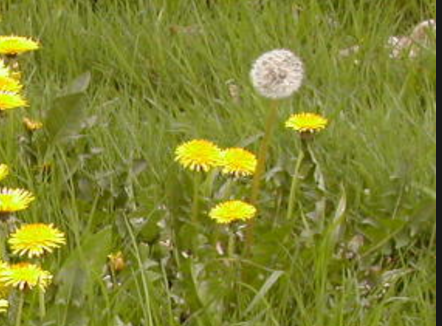
As much as I love yellow spring flowers, there is one I hate. A round, one-inch, flat flower grows in the center of the world’s ugliest plant. Yellow flowers that bloom at the same time as forsythia and daffodils. Yellow flowers that dot lawns and fields. Yellow flowers that become a child’s toy to blow.

I hate dandelions. Hate the sprawling ground-hugging prickly leaves. Hate the white, fuzzy seeds that fly. Dandelions challenge me to dig them up. There is nothing reasonable about how much I hate these yellow flowers. They are just a weed. A daisy’s cousin. But they spread like wildfire when those round tufts of fluffy seeds are carried by wind or someone blowing on them.

I think I blew dandelion seeds once, as a young child. Mom took the stem from my hand and whatever she said made such an impression that I never did it again. And although it wasn’t said, I knew Mom thought a yard filled with dandelions belonged to someone who was lazy and had no pride. Digging up dandelions was one of the few chores that I got paid for. I quickly learned that I had to dig up long taproots. No roots, no money.

During a weekend teacher environmental conference many years ago, I was given a bucket and told to collect my lunch from the field. A field of weeds.  Some people marveled at the tender dandelion leaves they picked. And they dug the roots to brew tea. I couldn’t do it. Why would I want prickly leaves in my mouth? (I did discover that clover is quite tasty and tender.) And I’ll stick with Earl Gray tea, thank you.

Supposedly, there’re benefits to ingesting dandelions. Improved digestion. Laxative. Relieve joint pain. But there are countless other things I can eat and drink that will give the same results. And I’d never spend $6.49 for sixteen dandelion teabags!

I treasure yellow daffodils and forsythia blooms. There’s only one good thing about dandelions: I get to dig in the dirt.

Password Crazy


Elaine lined up tiles from Qwirkle, a board game, and announced, “That’s my password, Gran!” Qwirkle tiles are stamped with six different shapes, in six different colors. My Grand’s password was an orange square, a green rectangle, a red circle and then four more tiles with different colored shapes and she grouped them, 3-1-2-1. “They have to be like this. Not in one long line.”

I shook my head. Since when did a five-year-old look at shapes and colors and create a password?  And Elaine’s password of seven completely different tiles reminded me of some of my passwords.

Remember the first time you chose a secret word or phrase? It probably included a birthdate, or at least, a birth year. It may have included your name or nickname. Or a family member’s name. And maybe, like me, you used the same password for everything. From online shopping to games to whatever.

Now I’m advised by technology experts to have different passwords for each application and change them frequently and don’t use anything that is easy to guess. Like birthdates and names. So I need to come up with something clever.

Fernando Corbato invented computer passwords in the early 1960s, and he says that passwords have become a “kind of nightmare,” according to an article on businessinsider.com. A nightmare is right. I’m lost in a tunnel of symbols and numbers and letters. Capital letters. Small letters. Corbato admitted that he has a crib sheet, also know as a cheat sheet, so I’m in good company with my handwritten list I keep right beside my computer and the one I keep in my billfold and the one on the notes on my computer desktop screen.

But my crib sheets create problems. Like one in four people I reset at least one password once a month. Not for security, but because of errors. Sometimes the passwords on my lists don’t match and by the time I’ve tried all of them and don’t enter a capital S or don’t type numbers in the correct order, I get a message that I need to reset my password. When I try, messages say the password isn’t strong enough or I can’t use the same one I’d used before. So, in frustration, I choose a phonetic way to spell a word or numbers that make sense at the moment and then I forget to write the new password on all of my lists or I don’t write it correctly.

I’m ready to go with the most common password of all time: 123456. Or one of the two most common words: QWERTY or password. Or one of the more creative top ten passwords: abc123. Surely, I could remember one of these.

If experts are right, Elaine won’t need passwords. Facial recognition or fingerprints will replace the need for a string of letters and numbers. Technology life will be simpler. I just hope my Grand keeps playing board games and never loses her creativity.

####


Why play team sports?

It was the last game of the season. The last time this basketball season that I’d sit beside my Grand’s other grandmother and we’d chitchat about the five young children and their parents we both love. Our 11-year old Grand knocked the ball out of his opponent’s hands and dribbled down the court toward his team’s goal. “Oh, I hope he hits the shot,” I said.

David threw the ball high. It bounced off the backboard and swished through the net. His sister, two years younger, stood and cheered as if her brother had scored the winning basket in the NCAA* championship game. David and his teammates ran back to the other end of the court to play defense. My Grand looked over his left shoulder and pointed to a teammate to move closer to the goal.

What was in the article I’d read a few days before? A list of the benefits of team sports. Confidence building. David had gained the confidence to steal the ball and risk dribbling for a layup. Something he didn’t do during the first games of the season.

Connect with his teammates. Were David and others in position on the court to play defense? On offense they signaled with nods and hand pointing. Sometimes they connected and successfully scored. Sometimes a pass went out of bounds.

Encourages family involvement. My Grand’s family – parents, grandparents, siblings – came together to support his team. To cheer the team on. To celebrate good plays and wins. To commiserate mistakes and losses.

Provides physical exercise. Practices with the team.   At home, shooting baskets and dribbling and playing pick-up with parents and siblings.

Develops relationships. With players and coaches. Children can form friendships as teammates that carry into adulthood.  And a coach, whether volunteer or paid, is always known as “coach.”

Contributes to stronger academics. It has been documented that children who play team sports are likely to excel in academics. Why? Do they learn to manage time? Are they required to achieve an academic standard to participate in sports?

Teaches respect. Respect for people of authority: referees, umpires, coaches. When the referee blows the whistle and calls a foul on a player, there’s no arguing with his call.   Respect for other players. The game ends. These young 5th and 6th grade boys form two single file lines. Opponents walk past each other with their hands in the air. High-fives just like those of basketball players in high stakes games.

I love team sports. I’ve watched my Grand grow as a ball player, as a person, from game one to the final game. And since he’s learned more about basketball, it’ll be more fun to watch televised games with him. Just in time for my favorite sports month!

Together we’ll take in March Madness, a whole month of NCAA basketball. And think of those college players’ rewards. Team players reap benefits and learn, even when they are no longer children.

*National Collegiate Athletic Association


Lost and Found

screen-shot-2017-03-02-at-7-43-00-amI do all I can to be an average American. Like spending 55 minutes a day looking for things I own, but can’t find.

My long black coat sweater would have been perfect to wear to the funeral home. I changed from black sweat pants to black dress pants. Brushed my hair and teeth. Went to the closet to put on my sweater. It wasn’t there. It should’ve been hanging beside my red sweater. I quickly surveyed the hanging clothes in my closet, and then I touched every coat hanger near where that black sweater usually hangs. It wasn’t there.

I glanced at something black that was folded and lay on the edge of the bathtub. The sweat pants I’d just taken off. I looked in the hallway coat closet. It wasn’t there. I grabbed a tan jacket and headed to the funeral home.

My mind wandered during the funeral service. I really liked that sweater coat. I’d worn it with blue jeans for grocery shopping and dressed it up for church wear. And I’d bought it as a souvenir on a trip. How could I be so careless? Where did I last wear it?

When I returned home, I did another search through closets. Then I remembered. A few days before, I had attended a club meeting at a friend’s home and later went out for supper. I called Jennie. Did I leave my sweater at her house? No.

I called the restaurant. After I briefly explained that I’d misplaced something and hoped it was there, a sweet young woman said, “Oh, I understand. We have lots of lost items.” I described my sweater. “There are several black things behind the cash register. It’s probably here. I’ll look and be right back,” she said.

I hit the speaker on my phone and put on my tan jacket and gathered my purse and car keys. Smugly, I waited to hear exactly where to retrieve my sweater. Thank goodness, the restaurant was only a couple of miles away.

“Well, there are three black things. Two sweaters. One is a man’s. One, a woman’s short sweater,” the sweet young woman said.

I wasn’t ready to take no for an answer and asked, “What about the other black thing?”

“It’s a lightweight golf jacket.”

After mumbling thanks and hanging up the phone, I slumped into a living room chair. “What’s going on?” Husband asked. I shared the whole two-hour story. Blah, blah, blah. From getting dressed to go to the funeral home to the lightweight golf jacket.

Husband nodded, turned, and walked out of the living room. Frustrated and mad at myself, I didn’t move. Minutes later, Husband held up my black sweater jacket. “This one?”

It was exactly where I’d left it. Draped over the side of the bathtub beside the black sweat pants. Isn’t that where most lost things are? Exactly where we left them?

At least, I’d spent twice the average 55 minutes searching so maybe the next day I wouldn’t search for anything. Wishful thinking.

Let’s not Lose Letter Writing


screen-shot-2017-02-22-at-6-17-10-pmWhen Husband and I moved into our new house recently, I carried four boxes labeled “Letters” upstairs and stored them on the closet shelves in my writing-sewing-everything-room.

I glanced in one open cardboard box. Thin red ribbons tie together stacks of airmail letters. From Dad to Mom while he served in the Army during World War II and Mom was home in Byrdstown, Tennessee, caring for their toddler son and living with Dad’s mother. I’ve had this box since Mom’s death in 1991. Dad said, “You take those. Your mother kept them all these years.” And I’ve kept them for twenty-six years.

Although he was a teacher before being drafted, Dad served as a medic. One letter heading reads, “Somewhere in Germany. April 17,1945.” Dad wrote, “Notice the new APO number and address. I have seen three European countries: France, Belgium, and now Germany. We are in a group of buildings formerly occupied by a civilian hospital and we are certainly lucky to get such a set up. I can’t believe it is true after expecting to sleep in pup tents and have the hospital in tents. That could change anytime, but I’m keeping my fingers crossed. Sure is nice to write under the old light bulb once more.” He described the countryside of Belgium and Germany and then wrote words Mom must have cherished. “Darling, I am in no danger. Remember I love you very much and am just waiting for the day we can be together again.”

The envelope is stamped FREE. On the bottom left corner is a small rectangular black stamp with the words “Passed by Amy Examiner.” William G Healy, 1st Lt. scrawled his name to indicate that he approved Dad’s letter. So much history and love in one letter.

I’ve fill three legal-sized envelope boxes with letters I’ve received. Some newsy letters. Some love letters. Some required writings from my children when they were young and at camp. Some surprise letters. Some from former students.

Tommy was in my 6th grade class, 1991-92. In a letter he wrote on May 5, 1993, after his 7th grade, he wrote, “About school, the most important thing that happened was in math. My teacher Mrs. Holland said it was the most extraordinary change she had see in all her 23 years of teaching. I brought up my math grade 26 points, from 64 to 90.”

Until two months ago, I hadn’t seen Tommy since May 1992 as he walked out of my classroom. While visiting Daughter, I stood in the kitchen when a heating service man walked through. I nodded in greeting. He took three steps and stopped. “Mrs. Ray?” he said. He held out his arms and we hugged. A tight hug. Tommy had been a student I wished I could’ve brought home. A kid I often wondered about. Was he okay? He is. Better than okay.

Letter writing. Let’s not lose it. Who would like to receive a letter from you?