• Recent Posts

  • Archives

  • Categories

  • Meta

When Gran Folded in the Chair

A long-time favorite feature in Reader’s Digest magazine is Laughter, The Best Medicine.  It’s aptly named.  According to Mayo Clinic medical experts, laughing increases our intake of oxygen, stimulates our heart and circulation, and muscles relax immediately.  And there are long-term effects:  improved immune system, pain relief, lessen stress and anxiety, and better self-esteem.

            A giggle and chuckle can turn into uncontrollable laughing. You’ve done it – laughed so hard you couldn’t talk.  Couldn’t catch your breath. Tears rolled and laughter overtook breathing.  Couldn’t talk.  One such time that I could only nod and inhale sharply to get a breath was in June, near the end of the best week of this summer.

I wrote about the Heart Hugs when Son’s and Daughter’s families and Husband and I spent a week together at a Florida beach. I told about our Grands playing and the fun things we did, but the funniest happening was the most unexpected. 

It’s what one Grand remembered recently while we ate breakfast together.  I often read poems with our Grands and that morning a poetry book lay on the kitchen table. My Grand flipped pages searching for her favorite poems; she giggled and then asked if I’d saved the poem that I wrote while we were at the beach.  I did.

“First,” she said, “I want to read Daddy Fell into the Pond.”  What a fun poem to read aloud: Everyone grumbled. There was nothing to do and nothing to say.  It was the end of a dismal day.  But everything changed when Daddy fell into the pond. 

Alfred Noyes wrote about a dad, and I copied his style to write what happened when I didn’t sit as I expected in a lightweight low-seat beach chair.  I just wanted to sit with Husband and my Grand’s parents and watch the Grands play as the sun set.

When Gran Folded in the Chair

Younger Grands splashed in the ocean

Dug holes in the sand.

Big Kids floated on the waves.

Parents relaxed, standing and seated

Near the water’s edge.

It was the calm end of a beach day

THEN Gran folded in the chair!

Daughter leaped

Are you okay?

Alarmed teenage Grands came to help.

With knees to chin,

And bottom on the sand,

Gran hee-hawed, nodded, closed her eyes.

Daughter laughed and slapped her knees

WHEN Gran folded in the chair!

Pop said Quick, get a picture, quick!

Daughter 2 dutifully complied.

Daughter and Gran lost their breaths

Laughed uncontrollably.

All around, young and old

Stopped and looked.

There wasn’t a person who didn’t respond

WHEN Gran folded in the chair!

Even now, I chuckle.  For a good dose of laughing medicine, I look at Daughter 2’s pictures. Maybe I’ll send When Gran Folded in the Chair to Reader’s Digest, but the pictures – those are private.

One More Snake Story

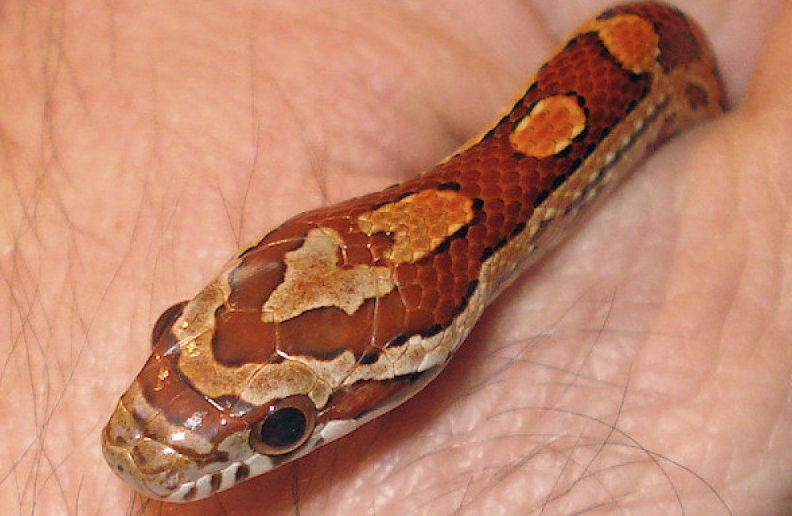
Cosmo was a perfect 5th grade classroom pet. After graduating from college, Daughter bought herself a gift, a corn snake, and shared him with her students.

Because corn snakes are generally docile and don’t get very large, they are good choices for pets.  Cosmo lived in a large glass tank with a fastened mesh lid.  He required clean water, wooden bedding, and an occasional frozen, then thawed, pinkie mouse.

             Cosmo was small when Daughter got him.  He moved slowly stretching his body along your forearm and winding his way into your hand.  He stuck out his tongue – a slow flicker to smell.

            Cosmo often spent weekends at students’ homes, with their parents’ permission, but during a long Christmas school break I offered to keep him while Daughter went out of town.  All went well.  I brought him from his upstairs bedroom when friends visited.  Cosmo behaved perfectly, even encouraging one friend who feared snakes to touch him.

            I checked Cosmo daily, and as I said, all went well – until the day Cosmo wasn’t in his tank. I searched the room. Bookshelves.  Door and window facings. Closet shelves.  Inside drawers.  Bathroom cabinets.  I stripped the sheets from the bed that was close to his tank.  Cosmo had disappeared, or rather escaped because I must have not fastened the lid on his tank.

            Husband and I searched throughout our home; we cautiously opened all drawers and cabinets.

Weeks passed.  When I took a shoebox off the top closet shelf, I prepared myself to see a two-foot long black and gold friendly snake.  Every night I folded back all the bedcovers before going to bed.  The worst experience would be for Cosmo to crawl up my leg while I slept. 

Only Husband, Daughter, and I knew a snake was on the loose. After all, who would visit if they knew? 

Winter turned to spring.  Surely, Cosmo had found his way outside.  We stopped searching for him, but were always aware. I hoped he wouldn’t come out of hiding while we had company. 

Then early one Sunday morning, Cosmo appeared – wrapped around a commode lid. I slowly reached toward him.  He hissed and struck.  He held his head high, challenging me to try again.

I woke Husband and whispered, “I found Cosmo.  He’s around the upstairs toilet seat.”  Husband opened one eye and said, “Okay.”

I called Daughter who lived a mile away.  She said, “Good. I’ll come get him after church.” (Later, she apologized for not coming immediately.)

My years of seeing how snakes were caught at Camp Country Lad paid off.  Putting both hands inside a pillowcase, I pried Cosmo off the toilet and placed him inside this big cloth bag.  He hissed.  I held firm; then tied a string around the pillowcase opening.

Daughter picked him Cosmo and gave him to a friend who’d said that someday he’d like to own a corn snake. 

The prevailing theory is that Cosmo lived in our attic eating the many small critters that hide away in such places.  And perhaps, he drank toilet water regularly. 

Everyone has a Snake Story

Everyone has a snake story.  A snake encounter or sighting.  Dead or alive. But no story can be more bizarre than the recent one about a 65-year-old Texas woman, Peggy Jones, who was mowing her yard and a snake fell out of the sky.

            The four-foot-long snake wrapped around Ms. Jones’s forearm.  She flung her arm; the snake coiled tighter. Then a hawk attacked the snake – its prey that must have fallen from its talons. The snake clung to Ms. Jones’s arm.

            The hawk tried to retrieve its meal.  Finally, after several attempts, the hawk carried the snake into the sky and Ms. Jones was left with a bloody, bruised arm. Her husband, who was on a riding lawn mower and didn’t see what had happened, took Ms. Jones to the emergency room. 

            In a New York Times article, Mrs. Jones was quoted: “I consider myself to be the luckiest person alive.  I was attacked by a snake and a hawk and I lived to tell about it.” 

            Surely, no one can top that encounter, but this story makes me think of my snake stories. 

            About a year ago, I wrote about a small green garter snake hiding inside a pair of work gloves.  I put on the gloves while my two children, ages 9 and 11, and I were putting together a trampoline.  Garter crawled up my arm. I wasn’t scared, but I was so startled that I screamed a four-letter word that I rarely say.  Son and Daughter still remind me of that moment.

            That wasn’t the first time a little green snake had shocked me. I was about 10-years-old when I was picking green bell peppers and a plant stem moved – right into my hand.  I screamed and threw the snake onto the ground, and Dad ran to me. 

When he saw that I wasn’t hurt, just scared, both he and I held the squirming snake. Then we carried it away from our family garden and released it into the woods.  I remember Dad’s on-the-spot lesson about poisonous and non-poisonous snakes and the value of snakes living around our barn to eat rodents. 

            During my elementary school teaching years when a snake was presented in a lesson to students, I held it and encouraged students to touch or hold it.  But I didn’t want a snake in our home so every time Daughter asked for one for Christmas, she didn’t get it.

            Years later, Daughter bought Cosmo, a corn snake, when she taught 5th grade Science. Cosmo was a classroom pet, accustomed to people, and visited students’ homes over weekends.  During a Christmas school break, Daughter asked that Cosmo stay in our house while she took a trip and I agreed.

            Caring for a snake is simple.  I checked on Cosmo regularly, fed him a frozen, then thawed, mouse once a week, and all went well until the day Cosmo wasn’t in his glass house.

            A snake story for another column.  But know that Cosmo wasn’t carried away by a hawk.

When parents and teachers are teammates

The honeymoon is over.  Not the typical adjustment time after a marriage ceremony, instead, the honeymoon at the beginning of a school year.  All typically goes well for students and teachers and parents those first days, but now a week into the school year, problems may surface.

Wearing my retired teacher hat, I fondly remember parents who helped their children learn and helped me teach.  Parents and teachers are on the same team, one to encourage children to learn academic skills, practice positive social behavior, and become independent.

Keep communication open and honest.  You’ve heard that joke about teachers saying they won’t believe everything they hear about home if parents won’t believe everything they hear about school. It’s not really a joke.

            Parents, when a child reports something that doesn’t ring true, get the whole story.  Email or call the teacher, before calling the school principal or another parent, and be patient. Keep in mind that unless the problem is life threatening, the response may not be immediate. 

Elementary teachers respond to at least twenty students’ parents; middle and high school teachers, five times more.  Remember that many teachers are parents; they need the time and the grace to parent their own children.

However, communicate immediately when there are changes, positive or negative, within a family or among friends, that affect a child.  If a student is to be picked up after school by a someone who doesn’t usually pick them up, tell the teacher.  Any change at home, even the excitement of getting a new pet, can affect a child’s behavior and learning. 

Know that children behave differently at school and home.  I take off my teacher hat and don a momma cloak to remember the afternoon Son announced, “You’re going to get a phone call from Mrs. R.  A bunch of us shot rubber bands toward her while she wrote on the board.”  

After Mrs. R identified herself on the phone, I confirmed that Son had been honest and then supported her in whatever punishment she determined.  Middle-school age students, reacting to peer pressure, may be the most notorious for negative school behavior.   Some parents have eaten words:  My child would never do that.

Reading is the backbone of learning. It’s true that children learn to read and then read to learn. Parents and teachers who want students to be successful readers let children see them read, and they read aloud with children. They discuss what has been read to encourage understanding.

Children need to own their successes and failures.  School work, including homework, is a student’s responsibility.  Parents need to provide time and space for children to work and guide understanding, but not give answers.

When parents and teachers communicate and are teammates, students are more likely to learn math and science and social studies and how to handle life’s problems.

             Be teammates. Communicate.  Read. Allow independence. Turn a honeymoon into a year-long positive relationship.

Said Like a True Southerner

You look really good for your age.  I’ve never forgotten that comment made by a young college co-ed.  I was thirty years older than she, but not even 50 yet.

When her friends glared at her and simultaneously inhaled, she grinned.  When one said that she liked the food I’d brought for the gathering and asked for the recipe, no doubt an effort to fill the silence in the small kitchen, she nodded. 

This child probably thought she’d paid me a compliment.  I wish I’d known her well enough to take her aside and washed her mouth out with soap.  Borax would’ve been appropriate to remove the words ‘for your age.’

Maybe you’ve heard similar comments.  He has a thick hair for his age.  She dresses nicely for her age.

Recently, I read an article stating that we Southerners, especially women, are masters of backhanded compliments.  Phrases that are less-than-gracious flow like warm molasses.  I regret to say that we women are known for tossing around words that should have been stifled.  Just last week, I cringed when I heard, “Is that a new haircut?  It looks so much better.”   

            And unfortunately, while listening to our aunts and mothers and their friends, we learned, and later repeated, a few subtle phrases to interject before changing the topic of a conversation.  I love how you say what you think.  Well, that’s one way to look at it.  That’s different and maybe it works for you.  Well, aren’t you sweet? 

            But one less-than-gracious phrase outranks all others and we Southern women keep it on the tip of our tongues.  We roll it with sugar and honey.  It oozes from our lips no matter where we are or who is with us. 

We say it anywhere, anytime.  During Sunday afternoon concerts and Saturday morning kid’s soccer games.  Summer, winter, spring, and fall.  About young and old. 

            I remember a winter school day when a few of us teachers were hurriedly eating lunch while sitting knee-to-knee, shoulder-to-shoulder around tables in the faculty lounge.  Conversations darted from how cold our classrooms were to how to get the best deal on a new phone to a guaranteed weight-loss diet to complaints about one more form to fill out.

            Mrs. W stood, walked toward the lounge door, and looked down at her feet.  With a loud shocked voice, she said, “Oh, no!” 

            The room went silent and every eye followed Mrs. W’s gaze.  She wore almost matching shoes – both flats.  Both slip-ons.  One with a small bow; the other plain.  One brown; one navy blue. 

            When Mrs. W laughed, we laughed too.

 She left the room and we dear teacher friends shook our heads and let those sugar-coated words roll:  Bless her heart. 

We Southern women have been accused of saying whatever comes to mind about whomever and adding heart blessings to cover our words.  Maybe it’s too late, but here goes.  To that young woman who is now the age that I was:  You didn’t know better. Bless your heart. 

Celebrate Birthdays!

When my Grands put candles on a birthday cake this week, maybe they should put red ones for decades and blue ones for individual years.  Even then, it’ll be a lot of candles and after they’re lit, I’ll make a wish and blow quickly.

            Why do some people say, “Oh, don’t do anything special for my birthday.  It’s just another day”? It’s never just another day for parents when their child is born, and birthdays certainly aren’t an ordinary day to children. No matter the age, birthdays should be celebrated with cake and ice cream and candles and singing.              When my young Grand asked why we have birthday cakes and candles, my initial thought wasn’t good enough.  Surely there’s a better reason than because we always have.

            Burning candles can be traced back to the Ancient Greeks who burned candles as offerings to their gods and goddesses.  Round, moon-shaped cakes were carried to the temple of Artemis, the goddess of the moon and the hunt; candles on those cakes symbolized the glow of the moon.

            It’s believed that in the 1400’s German bakeries marketed sweet cakes for birthday parties, known as Kinderfests, for young children.  Lighted candles, the number equal to the child’s age and an extra one, were placed on a cake on the birthday morning and kept burning all day until after the evening meal.  (I wonder how tall those candles were and if they were ‘switched-out’ during the day?)

            Candles represented the light of life.  The extra candle was for good luck or one to grow on.  One to grow on reminds me of my grandparents’ birthday spankings, which were really love pats, and always ended with one to grow on.

            Why do we blow out the candles?  It was a superstitious belief that the smoke from the candles carries wishes to the gods.  Now, it’s a tradition that’s been around for more than 600 years. 

            So, we can thank Ancient Greeks for traditional round cakes and lighted candles and German immigrants for bringing these traditions to our country.

            Before blowing out the candles, we sing ‘Happy Birthday.’  It’s probably the most sung English song in the world, according to an article in Reader’s Digest.  The tune for ‘Happy Birthday to You’ was originally composed in 1893 as ‘Good Morning to All’ by a kindergarten teacher, Patty Hill, and her sister, a pianist and composer, in Louisville, Kentucky. 

            Miss Hill sang, “Good morning to you, Good morning to you, Good morning, dear children, Good morning to you,” and her students sang “Good morning to all” in response. It’s not known where or when the birthday lyrics originated, but they were published in a piano songbook in 1912 to the tune of ‘Good Morning to All.’

A birthday, no matter how many candles are on the cake, is a happy time to celebrate.  Maybe my family will adopt the tradition of an extra candle.  I like the idea of good luck, and my Grands will like one to grow on.  

Being Bored is Okay

It’s okay to be bored.  Really, really bored with nothing to do.  Not reading or listening or moving.  Being quiet and still.

            For months, I’ve had a note to write a column about it’s okay for children to be bored, but after research, I realize being bored is for everyone – young and old.

            Boredom is usually thought of as a negative, as defined in Webster’s dictionary:  feeling weary because one is unoccupied or lacks interest in a current activity. 

            But, think of boredom as a positive: giving the brain a rest.  We know our bodies need rest to function well. Brains need rest, too.  Professionals who study the brain encourage making time to sit and avoid all external stimuli.  Time to think or to clear all thoughts. 

            Don’t expect boredom to be easy.  We have daily to-do lists and we usually plan what to do next.  For me, there are cookies to bake, books to read, words to write, stitches to sew, cards to play, people to visit, and adventures with Grands. 

            Last week, I sat in my van in an empty school parking lot for twenty minutes while one of my Grands practiced soccer – a perfect time to rest my brain.  But I didn’t.  I picked up my phone, checked text messages, read the headline news, and scrolled Facebook.  Another waiting time, I walked the perimeter of the school building while listening to a podcast. 

            And we don’t appreciate children being bored.  ‘There’s nothing to do’ was a signal for my mom to list chores:  dust furniture, take out the trash, pull weeds, clean windows. 

             I read an article by a child psychologist who recommends that parents keep a box of creative materials, such as markers, colorful paper, small boxes, glue, and card games, for when children say they’re bored. Yet, in the same article, she recommended that children be allowed time to do nothing.

My response to my children’s boredom was simple:  Go outside.  If a small shovel is available, most children dig.  If there’s a tree, they climb.  If there’s a ball, they play.  But when my kids lay spread-eagle on our trampoline looking at the sky, I didn’t realize they were resting their brains, I just thought it was good down time. 

There is a cultural stigma to boredom.  Maybe that’s why parents fill every minute of their children’s day with activities.  It’s important that kids be bored to simply think or to mindlessly do nothing.  Owning one’s thoughts builds confidence and self-esteem. 

Give kids and yourself permission to be bored. Boredom fosters creativity and problem solving.  One authority suggested that we often come up with good ideas while taking a shower – while alone and our minds tend to wander. 

An article from https://www.mayoclinichealthsystem.org/ states ‘Don’t be afraid of boredom. It’s a normal part of life. Try not to dismiss or dislike it. Instead, try to view is as an opportunity to restore your brain and develop solutions to problems.’

Welcome boredom.  Rest your brain.

When Clothes Tell a Story

I heard them before I saw them that June morning.  At 6:45 a.m., seven young women laughed and talked while they stood near the front desk at a Hampton Inn.  They wore backpacks and had suitcases, but it was their clothes that caught my attention: matching navy-blue tops and shorts and slide-on fuzzy slippers. 

When I was twenty-something years old, nylon button-up-the-front tops and matching shorts were pajamas, but for these young women their attire seemed to be their daytime clothes.

And then, two others joined them.  One wearing identical blue attire and one wearing identical clothes and slippers, but hers were white, and she wore a garland of white silk flowers on her head.

Their clothes told their story.

The eight bridesmaids circled around the bride as they whispered and laughed; then all turned and headed out the door to the parking lot.  I wondered if the Pelham, Alabama Hampton Inn was an overnight stop for their bachelorette party? Were they headed to a gulf coast beach or to Nashville, the bachelorette capital of the world? 

            He wore a gray t-shirt with words written in all caps:  VANDERBILT UNIVERSITY.  “Are you a Vandy baseball fan? You know they play a regional game on TV tonight,” I said.  The team was the SEC (Southeastern Conference) tournament champions.

            Standing by the hotel’s coffee urn, the man frowned and turned his head aside, obviously confused by my question. “Your shirt,” I said.  “I thought you might be a Vandy fan.” 

            He looked down and then shook his head.  “I don’t know anything about Vandy sports, but Vanderbilt hospital and its doctors and nurses are excellent.  My sister had a liver transplant there and I visited her often while she was in the hospital for seven weeks.”  His shirt told a story, but not the one I expected.   

            In a rush, a man, with short gray hair and a clean-shaven face, filled a Styrofoam cup with coffee and a plate with packaged powdered sugar mini-donuts, an apple, and pineapple chunks and left the lobby.  Holding his slim body tall, he looked like a button-down shirt and creased khaki pants guy, but he wore an oversized t-shirt, with no printed words, and plaid flannel pants.

Pants like the ones Husband calls his lounging pants and doesn’t wear them outside our house.  If I’d had time to hang around the hotel lobby, maybe I’d seen him leave the dressed as a professional like I expected.

When I returned to my hotel room, Elsie asked, “What’s ya been doing, Gran?”

“Drinking coffee and people watching,” I told my 16-year-old Grand.

“So, what’d you find out people watching?”

“That people tell a lot about themselves by the clothes they wear.”

Elsie grinned.  “Like your shirt?”  I look down.  One word was printed on my gray t-shirt:  Blessed.

I smiled and nodded.  “And like yours.”  Her shirt had been a Christmas gift.  Under a stack of books were two sentences: That’s what I do. I read books and I know things

Swollen Lug Nuts: Part 2

In last week’s column I wrote about taking my van to be serviced and the tires rotated. I was told that the tires couldn’t be rotated because the wheels had swollen lug nuts.  The service technician explained that if the lug nuts were taken off, they probably wouldn’t go back on.  New lug nuts were needed. 

            I’ve never studied the workings of motor vehicles, but I knew lug nuts are made of metal and fasten the wheels on my van.  How could metal swell?

            When I repeated the service tech’s explanation to Husband, he grinned and raised his eyebrows and thought I’d misunderstood the problem.   

             I posted last week’s column on Facebook and it turns out Husband and I weren’t the only ones bumfuzzled by swollen lug nuts.  Friends wrote, “Well, I never!” and “I’d think they (the service department employees) were taking advantage of me,” and “That’s a first for me!”       

            One wrote, “Maybe because we’re a medical family, it sounds more like a physical diagnosis!” 

“That’s hilarious!  Never hear of them,” another said.

Laughter was the immediate response when Husband and I told the story to friends, except one who thought he knew all about cars and declared that lug nuts are made of steel and one-piece and can’t swell and never need replacing.  He was sure I was being hoodwinked. I was happy to share what Husband and I had learned.

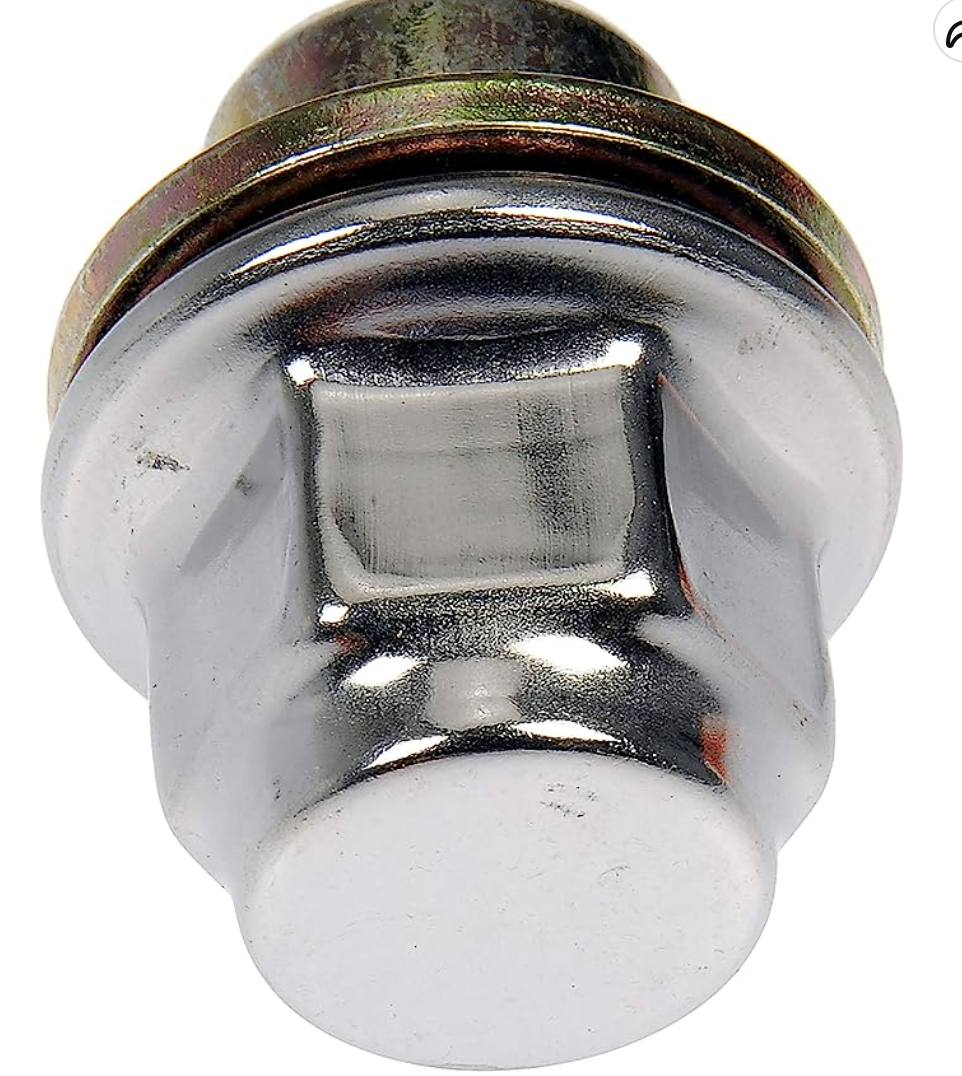
In the 1980s some vehicle manufacturesswitched from one to two-piece lug nuts.  According to online experts, two-piece wheel nuts, a chrome decorative cap and a steel nut, help prevent wheel runoff crashes and customers like the look of shiny chrome better than dull gray steel.

Moisture can get between the between the cap and nut and the steel begins to rust. The rust pushes against the chrome covers and enlarges them.  The Toyota service manager told me another reason for swollen lug nuts is that after many years of removing and tightening lug nuts to rotate the tires, the chrome coverings can become deformed.  “It’s not a good design,” he said.

It’s safe to drive with swollen lug nuts.  The problem is getting a lug wrench on a swollen nut to loosen and tighten it.  My Facebook friend Karen wrote that during a rainstorm, her daughter hit a curb and popped a tire.  But the flat tire couldn’t be taken off because the lug wrench wouldn’t fit on the swollen lug nuts.  The car was towed and the lug nuts were replaced.  “Not an inexpensive endeavor,” Karen wrote.

Another friend shared: “Being in the tire business, I can tell you that this is a fairly common occurrence.  Lug nuts, like everything else, are not made like they used to be.  Replacing them can be expensive.”

Thanks to the good folks at our local Toyota service department, the wheels on my van are now secure with new lug nuts. And the cost?  The story and laughing made the cost worth every cent.

A Swollen What?

During the twelve years that I’ve taken my van to be serviced, I’ve learned the routine.  Tell the service technician the current mileage and explain any problems, and that I’ll wait.

            I look for a quiet place to read a book, make a phone call, watch people, and sometimes write notes for a column. Maybe because my dad owned a service station when I was a kid, I like the smells and feel of a car garage and dealership.

And I like the uninterrupted hour – unless there’s a repair needed and then the service tech explains what needs to be done.  I’m not completely ignorant of vehicle terms. Dad allowed me to drive alone only after I could change a tire and check the oil, and he told me about anti-freeze, belts, hoses, brake pads, filters, and windshield wipers. 

            Recently while getting my van serviced, Bryan, the service tech, found me in a corner of the sales department.  He noticed air pods in my ears and spoke quietly: “Don’t get off the phone. This’ll just take a minute.”  Bryan moved a chair close to mine, sat down, leaned forward, and put his elbows on his knees.

“We can’t rotate your tires today because you’ve got swollen lug nuts.”

Rotate tires, I understood. 

Swollen lug nuts, I didn’t.   

I told my friend on the phone that I’d call back.  I frowned and said, “Okay.”

“So, your lug nuts are swollen and if we take then off, we probably can’t get them back on the wheels.”

When Dad taught me to change a tire, I’m sure he told me to use a lug wrench to remove the lug nuts, and that’s probably the last time I’ve heard the words lug nuts. 

“Okay,” I said.

“So, all four tires have swollen lug nuts. We don’t have that many. I’ll have to order them.” 

“Okay.” I tried to get a mental picture of a swollen lug nut. 

“That’s the cost to order them.” Bryan circled a dollar amount on a paper clipped to his clipboard.

“Okay,” I said for the fourth time.

“Well, you might check the cost somewhere or discuss it with someone. Driving with swollen lug nuts for a while isn’t a problem.”

 “So, you’re saying I might want to discuss with my husband about ordering lug nuts somewhere?”  I asked.  Bryan nodded.

Husband was leaving our house just as I got home.  “Wait,” I said. “I didn’t get the tires rotated because the van has swollen lug nuts.”  He raised his eyebrows, grinned, but didn’t laugh out loud.   

The next day Husband told me that he and our 18-year-old Grand, a car guy, had laughed and that he’d said, “Surely your gran didn’t hear right and misunderstood.” 

            But Husband googled swollen lug nuts and then called Bryan to ask, “What’s the problem with

the tires?”  Husband admitted that I’d heard correctly.

No matter the cost to replace my van’s lug nuts, it’s worth every penny.  Who else has a story about swollen lug nuts?