• Recent Posts

  • Archives

  • Categories

  • Meta

Common Sense in These Days

I can almost see Papa raise his bushy, white eyebrows and hear him say in a quiet monotone, “Well, now, it’s time to use some common sense.”  Papa’s calm demeanor and patience carried our family through extremes: trials and happy events.  When one of his three daughters was a bit out of sorts, Papa was the voice of reason. 

            Bombarded with warnings and information about a contagious disease, Papa would’ve said, “Well, then, don’t get around people.  Do what you can to not get sick and make good use of time at home.”

            Like everyone, I’ve read suggested ways to avoid the coronavirus disease.  Did anyone else remember hearing all these before, many years ago?  At home?  At school?  Even in Sunday School class?

            Keep your hands to yourself.  Don’t pick your nose. Don’t put your fingers in your mouth.  Don’t rub your eyes.  Wash your hands, with soap!  Wash before you eat, after using the bathroom, after being outside, after being at a birthday party. Cover your mouth when you sneeze or cough. Use a tissue or put your mouth in your elbow, not your hand.  Aren’t these habits our parents taught us and we taught our children and teachers repeat daily?

            Because the time between catching the virus and showing symptoms of the disease is estimated between one and 14 days, it makes sense to stay away from people.  But we need groceries, so wash your hands before and after you shop.  Wipe down the grocery cart with an alcohol wipe and don’t touch anything you don’t have to touch.

             As Papa would have, I’m trying to see these days of staying home as opportunities. Time to finish a quilt.  Update picture albums.  Clean out my kitchen cabinets of things I haven’t used during the past three years since moving to this house.  Finish a few writing projects I started a long time ago.

            On Facebook, a friend listed movies for middle school age children to watch during Spring Break and I could certainly enjoy a few evenings watching some favorite movies.  And I’d really like a day to read all day.  I don’t have an excuse to not exercise because I can bend and twist and lift at home or go for a long walk outside.

            I understand the rational for cancelling sporting events and conferences and meetings, but I’m really missing March Madness.  Basketball is my favorite spectator sport and I looked forward all year to watching the games.  How disappointed the players must be and the many businesses that support the cancelled events are suffering.

            Daily life as we know it has changed, and, unfortunately, some of us will be sick.  I hate everything about the coronavirus.  The precautions.  The sickness.  The cancellations.  Its effect on the economy.             But as Papa would’ve suggested, I’m striving for common sense: trying to make decisions to live in a reasonable and safe way.  And I’m hoping for a silver lining – there must be one.

Everyone Knows Someone

Everyone knows someone.  We know people who are grieving because they will never again hug someone they loved.  They mourn the death of their child or parent or niece or cousin or friend.

            Everyone knows someone whose home was destroyed.  Whose home was blown away.  Who walks among the rubble where their house once stood.  Whose beds and pillows and pictures and Bibles were carried miles away.  Who have said, “I’m okay. None of us are hurt. We are blessed.”  

            Everyone knows one of the first helpers.  A neighbor whose home was left standing and gave immediate shelter to others. Who wrapped towels around bleeding wounds.  Who held a frightened, crying child.  Who put shoes on bare feet. 

            Everyone knows a paramedic or deputy or fireman who was a first responder, trained to give emergency medical care. Who worked non-stop through the early morning hours, through the day, and into the next night.  Who carried victims.  Those who said, “I’ll never be able to erase the pictures from my head.  It was horrific.”

            We all received phone calls and texts from out-of-town family and friends and were asked, “Are you okay?”  I answered, “Yes. We’re okay.”  More questions led to my explaining that our home and our families’ homes aren’t near where the tornado hit. When I talked by phone with a close friend she heard my deep breath and asked, “But what?”

            Jessica was a Capshaw student and I’ve known her parents for 40 years.  From my teaching days, I remember Jessica as a 4th grader. A happy little girl with a big smile and who was everybody’s friend.  Although, our paths rarely crossed during recent years, I recognized Jessica at city hall where she was the receptionist.  She was still smiling. She served her community as a fair board volunteer and was active in her church.  The tornado took her life.

            Tom and Kay are friends from Husband’s and my college days.  Tom was Son’s first basketball coach.  I taught their daughters and followed their successes through college and now as adults. Every time I’ve said to Kay, as a greeting, “How ‘r you?”, she has responded, “Better than I deserve.” Tom and Kay’s home was completely destroyed.

            Amy was one of Daughter’s junior high school friends.  Once when she was at our house, I looked out our second story window and Amy waved from her perch in a tulip poplar tree.  I forced myself to smile, pointed down, and was relieved when her feet touched the ground. Houses around Amy and her husband’s house were leveled, but theirs was spared so they sheltered neighbors before emergency workers arrived.

            Millard was Son’s school friend.  He was always respectful, always kind, as a young boy and as a teen-ager.  Millard is a paramedic.  On Facebook, he shared the prayer he said while carrying a lifeless child in his arms.             We all know someone who is suffering after last week’s tornado.  That’s why we’re not quite okay and we help whoever and however we can.

Friends Getting Us Through

“It’ll be a short hike,” Pam announced to us twenty-four women.  We were near the Smoky Mountains for a three-day women’s church retreat.  I listened to the Saturday morning options: a hike, shopping at the outlet mall, or relaxing in the lodge where we were staying. 

            Wearing a splint on my right thumb and arm made me even more unbalanced than I usually am, but I really wanted to be outside in the woods.  “You’ll be fine. The park lists it as an easy hike.  If you need help, we’ll help you,” friends told me.  So, on a cloudy 40° F February morning, I put on the warmest clothes I had packed and double knotted my walking shoes.

            We walked across a gravel parking lot to begin the Noah ‘Bud’ Ogle Place nature trail. A small log cabin marked the beginning of the 0.6-mile trail near the Le Conte Creek. The first trail marker indicating the old road from Gatlinburg gave fair warning: rocks and ruts.  Tall trees, barks covered with moss on the north side, sheltered an open space where Bud and Cindy Ogle built a home and began farming 400 acres in 1879.

            Taking in the smell of the woods and stopping to feel the moss, I heard someone say, “Hold onto the rail and be careful. This little bridge is damp and slick.”  The bridge was a worn twelve-inch plank over a six-foot wide creek. The log rail wiggled as I took baby steps sideways over the water.  After crossing the bridge and tip-toeing around water-filled ruts and slick rocks, we twelve hikers naturally divided into three groups.  Those who were sure on their feet.  Those who needed a helping hand.  And those who went back to enjoy nature at the log cabin.

            I wanted to continue, but thought I probably should turn around.  “Come on. You can do it,” Cindy encouraged me. “You can hold my shoulder.” As we walked, Cindy stayed one step in front of me while I looked at the ground to avoid tripping over tree roots and small pointed rocks.

            Large stumps and rotting logs covered the woods.  A sign told us that the largest logs were the remains of chestnut trees, one of the most used trees by early pioneers. Chestnuts were a staple food and could be traded for shoes and household items.  The timber was rot-resistant, light-weight, and strong for buildings.

            Cindy held my hand as together we made our way over and around a pile of boulders.  Standing in the middle of an evergreen forest, mostly hemlock, we felt raindrops. The trail brochure described this forest as a place where souls of people come for renewal of spirit.

            It was a short hike, but not so easy for me. As I began writing this column, I wavered between focusing on my friends’ encouragement and help or the serenity the Great Smoky Mountains. Then I realized that because friends helped, I could enjoy nature.  I appreciate both.

You Got a Pencil?

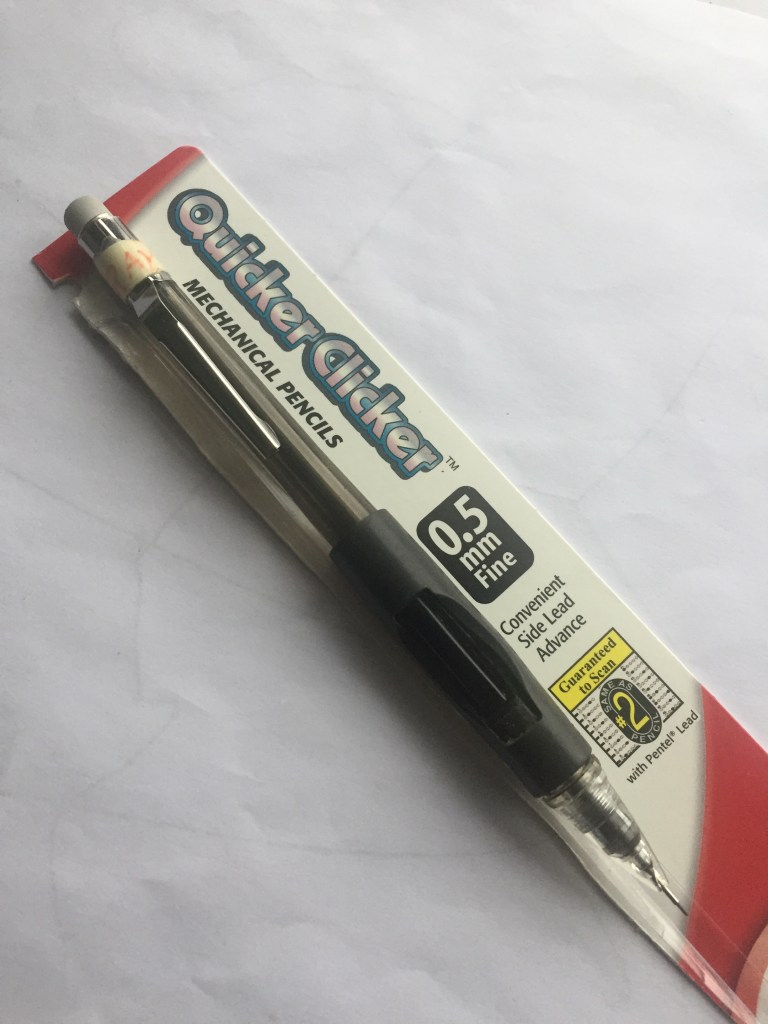
“I’ll keep score. You got a pencil?” my friend said as four of us sat down to play Canasta.  I handed her the pencil that lay on my kitchen desk.  A gray mechanical pencil.  She looked at it carefully, raised her eyebrows, and then looked at me.  I knew her question.

            I chuckled and said, “Don’t you have your name on your favorite pencil?”  My friend shook her head slowly.  “That’s from my teaching days.  I taped RAY (in red, no less) on it so when I misplaced it, I hoped someone would find it and give it back.”

            I retired from teaching eleven years ago and this pencil goes back as least twenty years.  It’s a perfect pencil. A Pentel Quicker Clicker with 0.5 mm lead. (I know these details because I recently lost one like it that I kept in my purse and I bought two new ones for $8.00.)  It fits my hand perfectly and is always sharp.  A quick click with my thumb advances the lead and I continue writing, not even stopping to lift it from paper, nor do I lose my train of thought.  It’s written lesson plans in two-inch square plan books, to-do lists, grocery lists, column first drafts, and worked a few Sudoku puzzles.

            Even as a kid, I had a favorite pencil. Yellow, a number two, and hexagon shape, never a round pencil that would roll off my desk.  A yellow, #2 was all I knew so when my dad asked for a #1 pencil, I questioned him.  A #1 writes darker and he could see the letters he wrote in the newspaper crossword puzzle better. 

            Through the years, I mainly used traditional yellow pencils. But when I taught elementary students, I stocked a classroom pencil holder with all sorts of pencils, including round ones with holiday décor, and a classroom student chore was to sharpen those pencils every morning.  If a bright red round pencil encouraged a kid to write, so be it.

            How did pencils come to be?  We say a pencil has a lead core, but it doesn’t.  An ancient Roman writing instrument, called a stylus, was made from a lead rod and the word lead stuck.  Pencil cores are non-toxic graphite rods.  Graphite was first used in the mid-1500s in England because it left a darker mark than lead.  Graphite rods were initially wrapped in string and later inserted in hollowed-out wooden sticks, and the first wooden pencils were created.  In the mid-1600s, the first mass-produced pencils were made in Germany.

            A patent for mechanical pencils was granted in 1822, but the push button mechanism wasn’t developed until fifty years later.  Eventually, metal and wood casings gave way to plastic and a holder for an eraser was added.            

For the past six weeks, while I wore a cast or splint following thumb surgery, I missed grabbing my pencil and making a quick note.  It feels good, almost a comfort, to hold this simple instrument between my thumb and index finger and write a grocery list.  

Trivial Holidays ‘til Spring

Spring begins Friday, March 20, twenty-nine days from now, and winter drags. So, as I did a few years ago, I’m searching for holidays to celebrate.  Yes, St. Patrick’s Day is March 17, and that’s a time to wear green, pinch those who don’t, and drink from a frosty mug.  But there are many unofficial days to celebrate.  What better time than now?

            Did you know anyone can make up a holiday?  Adrienne Koopersmith, the undisputed champ of creating holidays, calls herself “America’s Premier Eventologist.” She’s created more than 1,900 holidays, during the past 30 years.  Timeanddate.com lists fun, wacky, and trivial holidays for every day, and I’m choosing Wednesdays.

            Today is Chocolate Mint Day, as in Girl Scout Chocolate Mint cookies. Or how about a chocolate mint latte? Chocolate pudding flavored with mint would be yummy, and so would a big bowl of chocolate mint ice cream.  Did you know there is a mint chocolate herb whose leaves actually taste like chocolate mint?  Add that to your chocolate cake recipe.

            February 26 is Tell a Fairy Tale Day.  Find a child and tell your favorite childhood fairy tale.  My Grands will hear Goldilocks for the ‘umpthteenth’ time.  Forty years ago, my mother made three stuffed bears, Papa, Mama, and Baby, for my children, and she gave them a Little Golden Book of the story.  The bears sway and bounce their way through the woods and their little home and Goldilocks runs.  Or you might host a fairy tale party.  Guests could dress as their favorite character and bring foods from favorite stories.

            March 11 is Oatmeal Nut Waffle Day. Yum!  These would be more nutritious than regular waffles because oat grain is high in protein, mineral, and fiber.  I’ll eat my oatmeal pecan waffles, topped with blueberries and syrup.  Remember, waffles aren’t just a breakfast food.  The combination of waffles and chicken would be even better with oatmeal nut waffles. 

            March 4 is March Forth and Do Something Day. This day encourages people to do something new to enrich their own or other peoples’ lives.  Its name is a play on the date, March fourth, which sounds like march forth, to move forward or into action.  So, march forth and do something.  Something that helps someone else.  Something that you’ve always wanted to do or said you would.

            March 18 is Awkward Moments Day to celebrate or forget those embarrassing moments that we’d like to forget, but are probably funny.  Laugh about those times with family and friends.  Like the time I thought I looked my best wearing a floor length new summer dress and new white patent shoes at a wedding reception.  While the band took a break, I walked across the empty dance floor to refill my punch cup and right in the middle of floor, I slipped and landed on my bottom. 

            Just four more Wednesdays until spring. That’s time to celebrate many trivial holidays and make up a few of our own.

Bring on More Snow

“You may have two cookies, “I told my 5 1/2 year-old Grand.

“Two? Can’t I have more? Four?” Micah asked. I bit my lip to not say, “Be happy for what you get.” Instead I said, “It bugs me when you ask for more. How about saying, ‘Thanks, Gran?’ Then after we both eat two, we might have another one.”

As I write this on Friday, the tree branches and shrubs are covered with snow. White flakes stick on the grass, but immediately melt on the roads and sidewalks. Like my Grand, I want more.

I want enough snow to completely blanket the ground. Enough for Micah to sled down hills on top of snow instead of sledding on snow mud as he did today.  Enough to build a big five-foot tall snowman in the middle of his family’s snow covered yard, not scrape together all the snow in his yard to build a tiny two foot, skinny Frosty.  The last time we had a really big snow Micah was less than two years old.

It’s time to do all we can to bring on more snow for all kids, big and small, and some my Facebook friends shared ideas.  Clean your car really well, inside and out. Plan an out-of-town trip. Wish for an arctic blast and a moist low pressure system from the south at the same time.

I turned to my teacher friends for more creative ideas that involve pajamas, ice cubes, crayons, and dancing.  One listed them and suggested this order:

Wear your pajamas inside out and backwards.

Get ice cubes out of the freezer and throw them off your front porch over your shoulder while singing “Let it Snow, Let it Snow, Let it Snow.” Turn on front porch light so neighbors can see you.

Flush leftover ice cubes.

Put a white crayon in the freezer and a spoon under your pillow.

Most importantly, teachers should not take their plan books home. It will jinx the snow.

Another teacher explained her official snow dance. Sing “Let It Snow” and twirl three times while holding your hands high in the air and wriggling your fingers to mimic snow falling.  This is most effective when teacher and students dance together at the end of a school day.

One teacher keeps a snow bird in her desk. When she is desperate for a snow day, she shakes the snow bird while her fellow teachers gather around to cheer her on. Her snow bird needs a vigorous shaking!

Another teacher said, “My kids ask God to bring us snow to play in and so Momma can stay home. Doesn’t God have a keen ear for children’s prayers?” And I’ve been reminded that Mother Nature needs to shake out her feather bed every winter and that’s what makes snow.

Whatever it takes, it’s time to sing and dance, throw and flush ice cubes, wear inside out pajamas, sleep on a spoon, freeze a white crayon, and pray. A skiff of snow is good, but I want more.

Brain Exercise

I am right handed. I do everything with my right hand.  Hold a fork to eat and a pencil to write. Brush my teeth. Zip my jacket. Get credit cards out of my wallet. I press the space bar on a keyboard with my right thumb.

Most of us humans, 85-90%, are right handed and researchers 

believe whether we are a right or left handed is determined in the womb. Young children begin to show a tendency to use one hand more than the other as soon as they pick up food with their fingers and put it in their mouths.  

I’m not like my dad who was mixed handedness, using different hands for different tasks. He wrote and ate with his right hand and played golf left handed. I’m not like my friend Brenda who is ambidextrous and can perform tasks equally well with either hand. Both mixed handedness and ambidextrousness are uncommon, but how I wish I were either.

I’m one of those people who has said, “I can’t do anything with my left hand.” Can’t never tried. Can’t never could. You can’t until you try.  Those sayings from my grandparents and parents hit me full force during the past weeks since I’ve had surgery on my right thumb to repair arthritis damage. I’ve learned to eat with my left hand and sign my name on a credit card charge, but some things are still hard.

The cast I wear holds my right thumb immobile and separate from my fingers. I can use my fingers, but they are practically useless on my laptop keyboard. Only my middle finger strikes keys easily. I stop and concentrate to make my left thumb hit the space bar. I had to adapt.

So I’ve learned to write more than a grocery list and a text message on my iPhone and iPad.  I hold a rubber tipped stylus in my left hand and swipe it across the keyboard screen. Using the SWYPE app I don’t have to strike individual letters to write a word and auto-fill gives me word choices. In fact, auto fill sometimes predicts the exact word I want. And I don’t have to touch the space bar between words. 

I knew using my left hand wouldn’t be easy.  A friend reminded me that switching from a ‘righty’ to a ‘lefty’ would be good brain exercise. The right side of the body is controlled by the left hemisphere of the brain which is responsible for speech and writing. The brain’s right hemisphere controls the movement of the left side of my body  and is associated with creativity and imagination.  So as I string letters together to make words and words to make sentences, I struggle to use the part of my brain that doesn’t control writing and with a hand I’ve sworn I can’t use.

Only three more weeks and I hope to have my fingers and thumb, without a cast, on my laptop keyboard and holding my toothbrush and a spoon. But maybe I’ll sometimes exercise my brain and use my left hand. Just because I can.

Strange Sensation

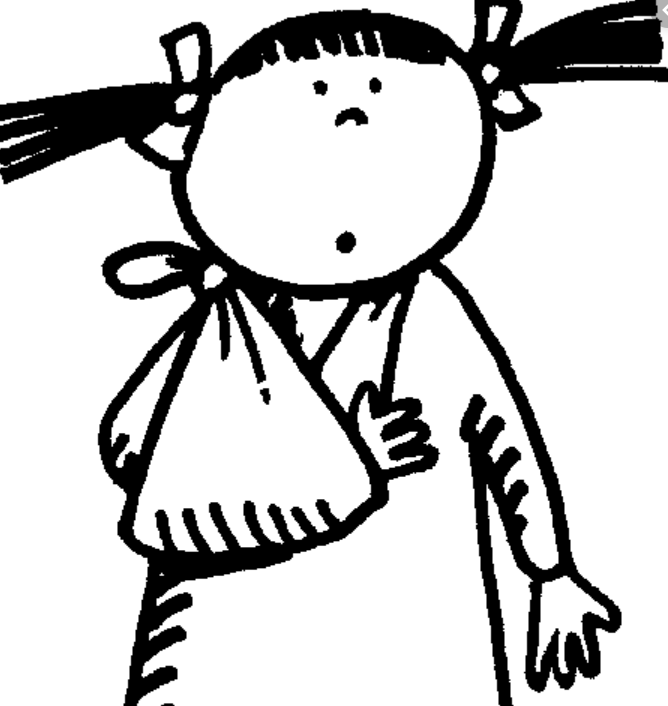
 My right arm and hand, from a few inches below my elbow to my  fingertips, were encased in a hard cast and held by a sling.  My thumb was completely immobilized by the cast. The sling held my hand as if I were saying the pledge of allegiance. Twelve hours earlier, a surgeon had repaired my thumb joint that had been destroyed by arthritis.

My arm felt like a heavy cement log. I looked at my bent fingers and told them to be straight. They didn’t move. I couldn’t move my right hand and arm.  While I appreciate the effects of a nerve block for surgery, I was anxious for my hand to wake up. 

I stretched my left arm, spread my left fingers wide, and made a fist. Rolled my head forward, backward, side to side. Lifted my shoulders and straightened my back. I breathed deeply.  Blew out slowly.

Then I experienced strange feelings. It felt like I stretched my right hand, held my fingers and thumb wide apart, and made a fist. Then my hand opened, palm up. Shocked, I looked down. My arm and hand really were in a cast and sling.  What was this? 

During the next hour, I felt my right thumb tuck under my palm, a position that I’d often used unconsciously to protect my thumb. But my thumb was really in its cast and not near my palm. Another time I was sure my right index finger pointed straight at my waistline, several inches below where my hand was immobile and all my fingers were bent and numb.  

I’d read and heard about phantom pain.Is there such a thing as phantom movement? Is that possible? The next day when I had feeling in my arm and hand, I searched for answers. 

According to the National Institute of Health website, Phantom Limb Syndrome is a condition in which patients experience sensations, whether painful or otherwise, in a limb that does not exist. It’s possible that nerves in parts of the spinal cord and brain “rewire” when they lose signals from the missing limb.

My arm and hand exist, but because they were numb I wonder if my brain worked as if they were amputated. Several times during a two hour period, I felt movements. Seeing my immobile arm and hand in a sling didn’t align with what I felt. These were strange, unsettling sensations.  I’ve heard of pain in an arm or leg after amputation and always wondered if it was real.  How was that possible?

Now, I’m sure phantom pain is real. This experience makes me sympathetic to people who suffer from phantom pain. Imagine feeling severe pain in a leg that had been amputated. Because my brain told me that my fingers and thumb moved when they were in a cast, I know amputated limbs can hurt. 

Our bodies, our brains work in miraculous, mysterious ways.  And I wish my brain would miraculously tell my left hand to hold a pencil and write like my right ha

Coddiwomple and Other Fun Words

An unusual word I saw posted on Facebook, made me think of my paternal grandfather.  Papa was a first-class coddiwompler.  He usually drove to a particular place, but sometimes when I rode in his car with him when I was young, I’d ask where we were going.  He responded that we’d know when we got there, but he could’ve said, “We just going to coddiwomple.” He probably didn’t know that coddiwomple means to travel purposefully toward an as-yet-unknown or vague destination.

            Coddiwomple makes me think of Papa’s Sunday afternoon drives when he took Grandma on rides around Pickett and Overton counties.  He wanted to get Grandma out of the house, but there was never a destination and most often they didn’t stop except at a country market to get a cold drink, a carbonated beverage.

            Before leaving this word, I must share that several people commented on Facebook that coddiwomple is life’s journey. I agree. 

            My Granny often said, “Don’t put it cattywampus.” ‘It’ could have been a dish that she didn’t want me to put on the edge of the counter beside the kitchen sink or a quilt piece that she wanted me to lay on another with the straight edges even. Cattywampus is the similar to catty-corner when something isn’t lined up as need be.

            “You’re a nincompoop!” Oh, the many times I heard and said nincompoop when I was a kid.  Anyone acting silly was nincompoop.  I would never have said someone was stupid, but I’d say he was a nincompoop which meant the same thing.  This word is so fun for kids when the last syllable is shouted loud and long.

            I’m often bumfuzzled.  I’ve spent hours trying to find one piece to put in a jigsaw puzzle and out of frustration, I became flustered.  When someone tells me driving directions that involve more than three turns and landmarks or when I can’t understand what my young Grands say, I’m bumfuzzled.  This word is more fun to say that confused or perplexed because bumfuzzled rolls out of the mouth with a smile.

            Are you a lollygagger?  Do you waste time?  Do you spend time doing something that isn’t serious or useful?  Some procrastinators tend to lollygag, and people who don’t keep up on group hikes lollygag.  A beach or mountain cabin vacation is perfect for lollygagging, but lollygaggers aren’t appreciated when there’s work to be done.

            While searching out fun words, I learned that I suffer from abibliophobia.  Even when I’m reading a book, I want a few others stacked on my bedside table waiting to be read.  What if I decide the book I’m reading isn’t good? Even though my living room bookshelves hold books I’ve read, and Husband always has several interesting magazines, I need a stack (and it can’t be cattywampus) of unread books.  I truly fear running out of something to read.

            Coddiwomple, cattywampus, nincompoop, bumfuzzled, lollygag and abibliophobia – what fun words!  As I write these last words, I’m wabbit.  You probably feel that way too at the end of the day.

Salute to Coaches

How I wish I’d kept a tally of the team sporting events I’ve watched.  Some families go to concerts or movies together; my family takes in spectator sports.  My children played t-ball, volleyball, basketball and swam on swim teams.  There was a time when our family’s weeks were busy with high school and Tennessee Tech basketball games.  We were there to watch the players and cheer on our team, but I watch the coaches too. Some scream and pace sidelines. Some stomp. Some yell plays.  Some sit calmly and stand only to call a time out.  Recently, I’ve watched and appreciate three of my Grands’ coaches.

            “Great play! Way to stop the ball!” Lucy’s soccer coach yelled.  Stephen’s words didn’t surprise me, but I was surprised that he was congratulating the opposing team’s goalie who caught the ball Lucy’s teammate had kicked.  Then he yelled to his player, “Great kick! You’ll score next time!”

            As I watched soccer practice one day, Stephen gave all fourteen players, ages 6-8, high-fives when they ran onto the field.  It was a structured practice.  Players ran and kicked balls around the perimeter of the field and Stephen encouraged them when they ran past him.  Then he and two assistant coaches divided players into small groups to practice skills and they ran the field with them, teaching and praising, when the players scrimmaged.  There were smiles, high fives, and one-on-one instruction.

            At the last game of the season, Stephen talked to each player.  He knelt to Lucy’s eye level and put his hand on her shoulder.  “Lucy, you work hard in practice.  You’re learning to be a great goalie.  I’m really glad you were on my team and when we play in the Spring, I want you on my team.”  He said more and then he placed a participation medal around her neck. Lucy held her head high and grinned; I wiped tears.

            Janet walked on the YMCA swimming pool deck as middle-school age students, including two of my Grands, swam during practice.  I couldn’t hear what Janet said, but I saw her wide smile and thumbs up when all finished swimming laps.  Several times each week, Janet holds practice and she schedules meets. Her smiles and encouragement are contagious. I’ve watched Elsie’s and Annabel’s confidence grow during this past year, and I give credit to Janet for providing this opportunity for them to use their natural abilities and love of swimming.

            Travis bent low to look up to his players, young teenage boys, as they huddled around him on the sideline of the basketball court.  He could’ve towered above them, but he looked up to hold his players’ attention.  During games, he’s calm and gives instructions.  “Cut across, Samuel,” he yelled to my Grand.  When a player threw the ball away, Travis grimaced and then quickly motioned with open palms toward the player to stay in control. 

            I salute Stephen, Janet, and Travis who are volunteer coaches.  Thank you for giving your time and your efforts to teach, and more importantly, to also model character.