• Recent Posts

  • Archives

  • Categories

  • Meta

Go and Learn

Most Americans know about Paul Revere’s midnight ride to warn residents that the British were coming, but few remember William Dawes. Both Revere and Dawes, members of the patriotic Sons of Liberty, were sent on horseback from Boston to Lexington and Concord on April 18, 1775. While visiting Boston recently, my college girlfriends and I heard the story three times. By a tour guide and a waiter. And after a man sitting close by in a restaurant talked about several Boston landmarks, he asked, “Do you know about William Dawes?” I smiled and nodded. “And you know Samuel Prescott, right?” I frowned. He wanted to set the story straight.

Revere and Dawes rode different directions from Boston and met at a house in Lexington where Samuel Adams and John Hancock were staying. After telling Adams and Hancock to leave Lexington, Revere and Dawes rode on and hooked up with Dr. Samuel Prescott, who they recognized as a High Son of Liberty.

Just a few miles from Lexington, the three were stopped by British patrol. Dawes escaped quickly. The British herded Revere and Prescott into a meadow and Prescott also got away. Revere was held, questioned, and eventually released, but his horse was confiscated. So while Revere walked back to Lexington, Dawes continued the ride, but it was Prescott who first reached Concord to warn citizens of a British invasion.

Dawes was sent from Boston as a midnight rider, too. But they didn’t really leave at midnight and Prescott got to Concord first, I learned. And all these years, my knowledge of April 1775, was based on Henry Wadsworth Longfellow’s poem, Paul Revere’s Ride, written in 1860.

Bostonians are proud of their town, its history and are helpful to tourists. While visiting Boston, my friends and I were offered assistance three times during a short walk. After seeing us study a map, a woman walked a half a block to guide us to our destination. As we stood waiting to cross a street, I pointed toward a building. A man said, “Can I answer any questions for you?” I asked about the tall tower in the distance, and he briefly explained the history of old Custom House, Boston’s first skyscraper.

A bike rider stopped beside us at the next intersection and greeted us, “Welcome to Boston. Hope your day’s going well. Can I help with directions?” We said that we’d just arrived that day and he was the third person to offer help in ten minutes. Unlike other places we’ve visited.

“We’re proud of our town,” he said. “We aren’t like other big cities. There’s a lot of history here. I think of visitors as guests in our house and we want everyone to feel welcomed and comfortable. We want people to like Boston and learn what’s here. Hope you have a good week.”

We girlfriends had a great visit with each other and saw many Boston sights, but the strongest impression was the people. People eager to share to share their town, their home.

####

Travel. New Experiences. Family.

“So, Gran, what are ya’ going to write about this week?” Lou, age 10, asked.

“You mean for the paper?” I said.

“Yeah.”

“Hmmm. I’m not sure. Do you have any ideas?”

“Well, yeah. About our trip!” My Grand raised her eyebrows and tilted her head, emphasizing that surely this week’s topic would be her trip with Husband and me to visit Son and family. Lou’s uncle, aunt, and three young cousins, ages 5, 3, and 1, who live 1300 miles away.

“How about you write this week’s column?” I said.

“Gran, I wrote one for you. The one about the big yellow duck, remember? You do this one.”

Weeks after returning home, Lou is still reveling in the experience of flying and being the big cousin whom little cousins wanted to sit beside at the supper table. Of being the first of her family to spend the night at her uncle’s and aunt’s home. (Her dad and brother visited, but not overnight.) Watched a St. Patrick’s Day Parade. Traipsed a rocky path and skipped rocks in a branch of the Poudre River and kept a smooth egg-shaped rock for a souvenir.   Spotted a herd of mule deer at Rocky Mountain National Park. Coached cousins turning backward somersaults. Read bedtime stories and kissed goodnight. Ate a bakery chocolate chip, cream-filled, cookie sandwich. Pretended to gobble one-year old cousin’s meal of plastic carrots and fried eggs.

Last week, Lou looked at me with a somber, serious expression. “Gran, thanks for taking me.” Those five heartfelt simple words brought tears to my eyes. She appreciated. She had fun. She recognized an once-in-a-lifetime gift. Never again would boarding an airplane and flying be the experience it was this first time. Never would visiting her uncle and aunt and cousins be as exciting. And, next time, the snowcapped Rocky Mountains won’t look so tall, so huge.

I’d be lying if I said that taking Lou to visit Son and family was fun just for her. I loved it. Even the ninety-nine million questions she asked before and during. Is security (at the airport) scary? What does it feel like when the plane starts? Is it loud? When will we get there? What will we do there?

When she sensed that she was reaching her question limit as we flew over Missouri, she suggested a game of hangman. (I would guess her message by naming letters to replace blank lines, much like Wheel of Fortune.) Her messages were questions. What time will I have to go to bed? What will we eat for breakfast? Will Dean (her 5 year-old cousin) have to go to school?

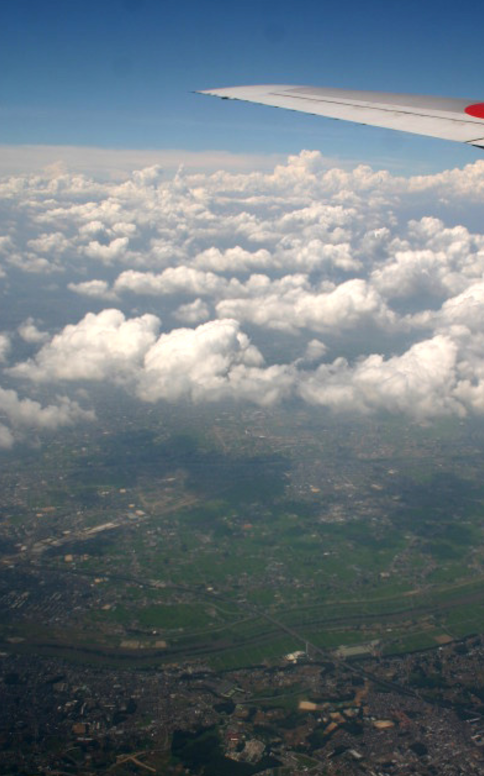
Lou made me laugh. She wiggled her 65-pound body into her airplane seat and declared, “I’m squished!” She sat with eyes glued to the airplane window. “Look! Those little, tiny things are cars.” “Can you see that? Another plane! Right there.” “So that’s what the top of clouds look like.”

Travel. New experiences. Family. Yes, Lou, that’s a column.


From Our House to Son’s

screen-shot-2016-09-29-at-6-17-54-amWhen Son said, “This is the house our children will grow up in,” it was time to take him all his stuff. Son moved away from home more that twenty years ago. Went off to college and then moved into a 900 square foot house when he took his first real job. He married, he and Daughter-in-Law had three children, and they moved three times. And everything collected and saved from Son’s birth through college years has been safely stored at Husband’s and my house.

Now, Son’s family has settled into their forever home. So Husband and I started gathering stuff and making plans to drive 1295 miles to deliver treasures. We’d take the back seats out of my van and fill it full.

Would Son want everything that has been saved? Some things were going for sure: a cedar chest and a toy chest and toddler-size rocking chair that my dad made for him many years ago. High school yearbooks and a letter jacket. College fraternity scrapbooks. All the picture albums with his name on the spine. A purple and gold basketball from Tennessee Tech basketball camp. Quilts that he and his family had chosen from those my granny made.

I was surprised when we opened Son’s cedar chest. Forgotten treasures lay inside. A never used quilt, pillowcases cross-stitched by another great-grandmother, three stuffed Benjis – one so loved that its fur was flattened and matted. A cookbook, including Husband’s grandmother’s recipes, published by her Home Demonstration Club. Small treasures from his grandparents’ homes. Things that Son chose when he was young. A vintage white chicken candy dish. A small wooden black bear with a note tied to it. My mom had written, “Papa and I got this when we went to the Smokies for our honeymoon in 1939.” Would these things mean anything to Son at this stage of his life?

Then there was a pile of questionable stuff. Should we take a leather belt with a big western buckle? A guitar that Son strummed for a few weeks when he was 14 and bored and snow storms closed school for a month? Cassette tapes? A blanket he bought at a flea market when he went to camp one summer? A collection of twenty-year-old Sports Illustrated magazines? Rifles – the 22 he learned to shoot as his grandfather stood over his shoulder? A Civil War rifle passed down through generations? His first B B gun? A Santa Claus cookie jar? And so much more.

Son and I talked using Face Time. I held my phone camera in front of items. Yes, the belt. Yes, the guitar. “Does it still play?” he asked. No, cassette tapes. Yes, to everything else, including all three Benjis. “Unless you don’t have room and I’ll get some stuff another time.” There’d be room. Husband and I were determined.

Daughter-in-Law’s parents brought treasures. Her great-grandmother’s desk with fragile curved legs and a mirror and jars of her grandmother’s homemade blackberry jelly.

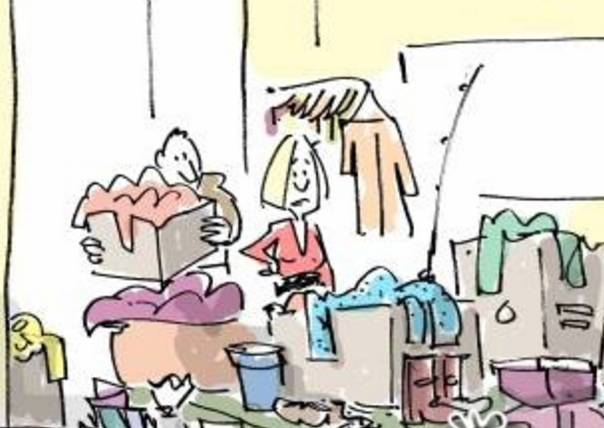
Loading the van was like putting together a jigsaw puzzle with pieces that didn’t fit. Husband measured and wrapped and taped. We wedged and padded and filled every possible space. After three hours, we declared that everything would travel securely and not rattle during our journey. Husband drove around the block just to make sure.

How would Son and Daughter-in-Law and their three young children react when they see all this stuff? Stuff that’s theirs. Mostly stuff that has been in the house where Son grew up.

Stranded in the Everglades

Screen Shot 2016-01-21 at 8.32.42 AM“It’s not a big problem. It’s okay. The starter just went out,” said Johnny, the tour guide. Because the airboat’s starter went out, the tour boat I was on was stranded in the Everglades National Park on a cool January morning.

Johnny picked up his two-way radio. “I’ll call the office. They’ll send another boat to get you and bring a starter so I can fix this one. It’s a five-minute repair.” The other three paying passengers and I assured Johnny that we weren’t on tight schedules and in no hurry to get back to dock.

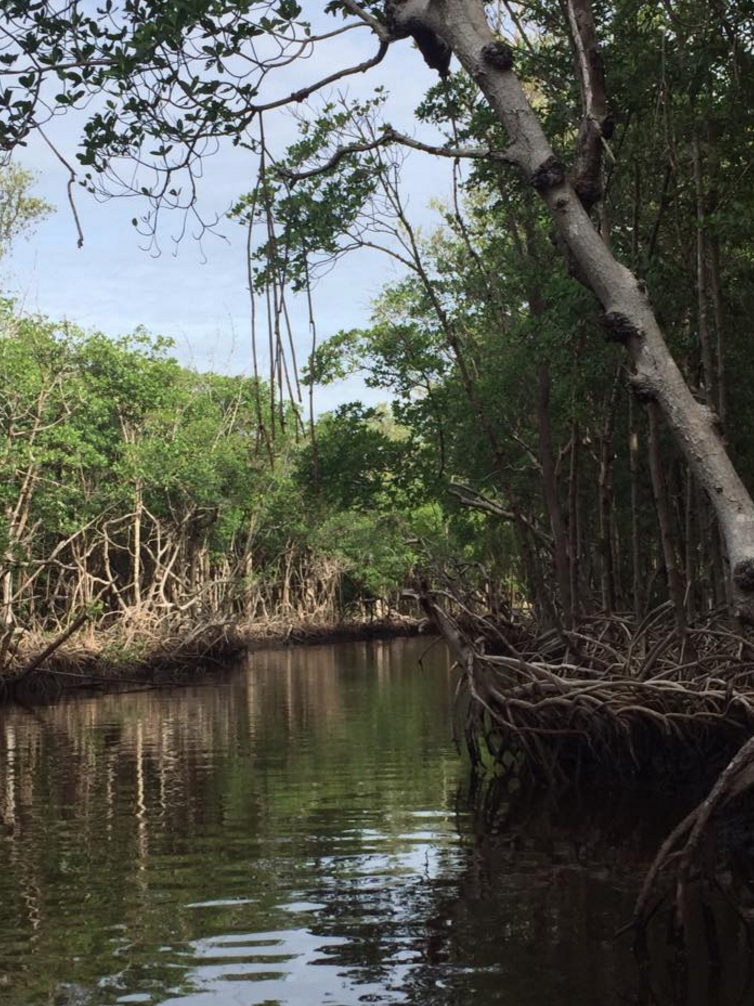
“Johnny to headquarters,” Johnny repeated over and over into his radio. We heard conversations between other employees, but obviously no one heard Johnny. Using my cell phone, I snapped pictures of the mangrove trees. “Looks like my radio is out, too, and my phone is charging at the office. Can I use yours?” our tour guide asked.

Johnny punched numbers. No answer. “Ah, gees. They aren’t answering. This is the employees’ line – not the public one. I bet they see your number and think it’s a wrong number. I don’t know any other numbers. I’ll keep trying. Surely, they’ll answer. ”

We passengers chuckled. “So do you have paddles?” I asked. Johnny shook his head. “How far are we from the office dock?” About three miles by water.

Finally, on the fifth call, someone answered. “They’re sending a new starter,” Johnny said. “I’ll switch it out and take you back.”

Johnny had guided the airboat slowly through the Everglades canals, and later he explained why he sped up and did a couple of 360s in pond-size water. “When I went faster, one of you gave a thumbs up and nobody grabbed the seat bars. When it’s too cold for wildlife, going fast makes this tour more interesting.” The airboat swerved quickly through narrow canals shaded by mangrove canopies, until we came into open water and Johnny turned off the motor.

“This is called the Honey Hole,” Johnny had said. “It’s a good place to stop and talk about the Everglades. You’re in the middle of a mangrove forest. Mangroves lose their leaves a few at a time. Those yellow leaves are called sacrificial leaves. You can see the bottom here – it’s only about six inches deep – the water is clear because not many leaves fall in the middle of the pond.” Acid from decomposed leaves turns the water dark.

Sacrificial mangrove leaves drop and decay in the swamp to provide food for insects that are part of the food chain leading to alligators. The leaves are thick and waxy, like those of mountain laurels in the Smokey Mountains, and only about two inches long and the branches are thin and crooked, like a huge shrub. Native Americans called a mangrove a walking tree. Like curved legs, the tangled roots, some above water, anchor the trees in the swampy peat soil.

Stranded in the Everglades when the sun is shining and the temperature is 60 – a great way to spend an hour on a winter morning. No mosquitoes or alligators. Too cold for both. No danger of drowning. Silence in the middle of a mangrove swamp. The smell of unspoiled nature and the rich aroma of peat. One lone white ibis egret flew overhead. A fish, probably a gar, splashed.

Johnny was right. He changed out the starter and drove back to dock. Speeding and swerving all the way. And, if anyone needs it, I have the employees’ number for Captain Jack’s Airboats in Everglade City, Florida.

Ogham Stones

DSC03966The tour bus sped along a narrow paved road in Ireland. John, the bus driver, manhandled the long 40-passenger bus as if it were a Volkswagen beetle. Over bumps, around curves. I hoped there wouldn’t be a vehicle from the opposite direction. The road, with no marked lines, was as narrow as the country roads I learned to drive on in Pickett County.

I leaned close to the Gordon, the tour guide, and asked, “Is there a reason we’re travelling on this back road?” Gordon didn’t understand. I tried again. “Why are we on this narrow road? Isn’t there a better road to get wherever we’re going?”

“Oh, yeah, but we’re driving by some Ogham (OH-ehm) stones,” Gordon said. I frowned. “They were used to communicate before Christianity. It’s markings on rocks that were stuck in the ground.” And with a simple explanation, I was hooked. “We’ll stop, but not get off the bus,” he said. I stared out the bus window and watched Ireland fields of green flash by. Herds of cattle. Flocks of sheep.

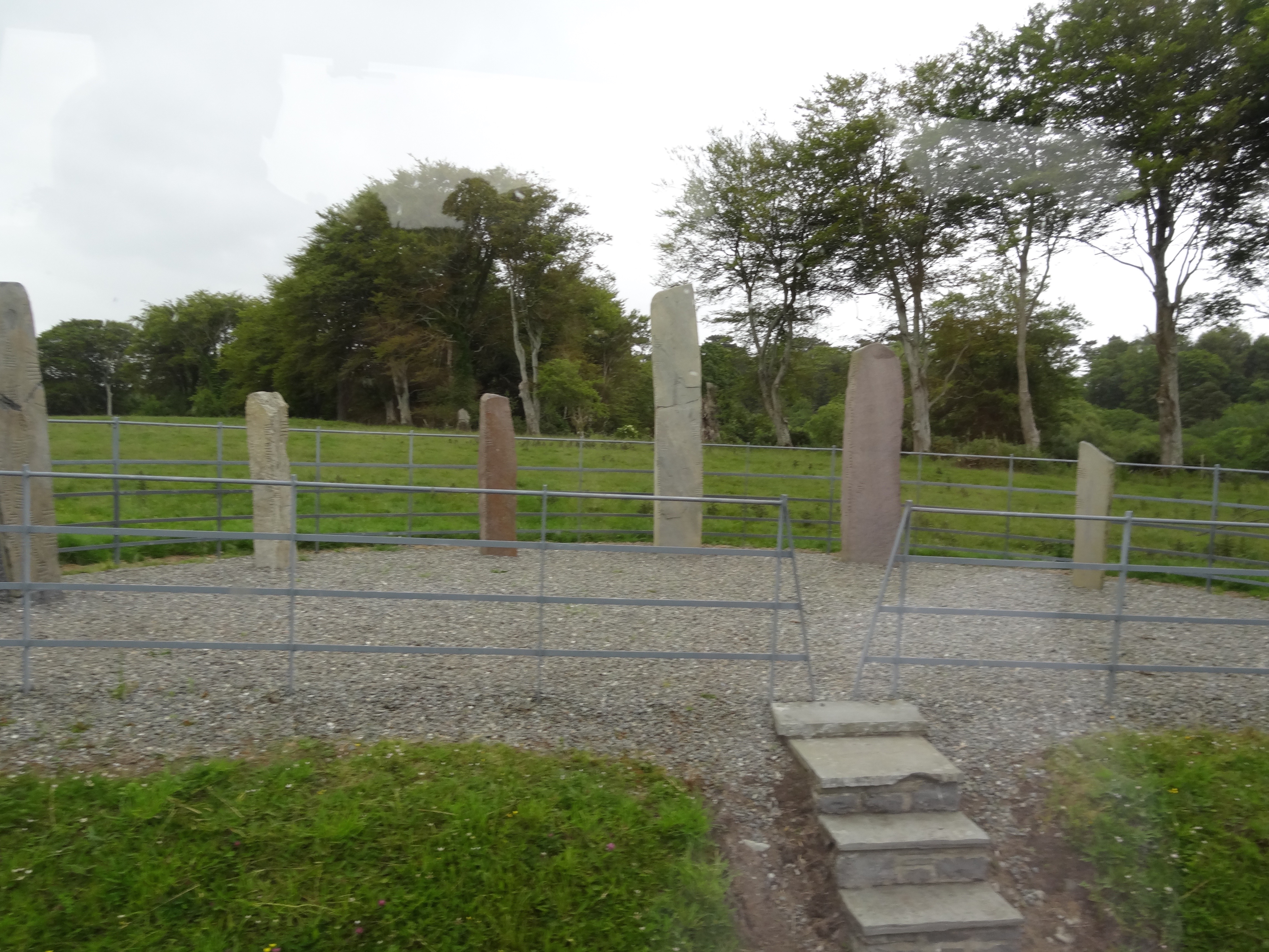
Finally, John slowed the bus and announced, “Ogham stones on the right. Get your cameras ready! One of the best collections of Oghams in this part (the southwest) of Ireland.” Six stones, the tallest about eight feet tall; the shortest, three feet. Twelve to twenty-four inches wide. With short carved lines around the perimeter. No letters I recognized. Just lines along the sides and the top of stones, which looked like tombstones. Lines like a Tennessee black bear scratches into the bark of an oak tree.

“So what do those lines say?” I asked. Neither John nor Gordon, both well-educated Irishmen, knew. “Probably someone’s name or maybe directions to somewhere,” Gordon suggested. “The writing usually started at the bottom left side and went across the top and down the right side.” Left to right – like we write.

Those stone tablets had been positioned in the ground close to the road for people, such as my twenty-one American travelling companions and me, to see. Located on private property near the Gap of Dunloe close to Killarney, these stones show the earliest form of Irish writing by the Celts and date back to third century AD. Because they were originally the roof of an underground passage that collapsed at the end of the last century, they were protected from exposure and are well preserved. (http://www.destinationkillarney.ie/dunloe-ogham-stones)

Those letters, formed only with straight lines, were carved centuries ago. Each of the twenty main letters of the Ogham alphabet, used for about 500 years, was also the name of a tree. The letters consist of one to five perpendicular or angled strokes, meeting or crossing a centerline. The number, position, and direction of the lines identify the consonants and vowels, and the vowels can also be written as dots. The origin of the Ogham alphabet isn’t known; it may have been adapted from sign language.

Seeing the Ogham Stones was a three-minute stop on a weeklong Ireland tour. They impressed me as much as the miles and miles of rock fences dividing pastures, flocks of Blackface Mountain sheep, the 700 foot high Cliffs of Mohr, Calla Lily gardens in tropical Ring of Kerry, and even Blarney Castle.

Here was a written language used by early Irish people. Simple lines carved on standing stones. If John hadn’t driven the long way around on the back roads, I wouldn’t have learned about the Ogham alphabet. And my trip to Ireland wouldn’t have been complete.

An Encounter with Marie and Luna

searchThe SkyWest Airlines gates are a half-day’s hike from the Denver airport terminal. I was tempted to stop for food and noticed every restaurant and vending machine. Determined to eat only the peanut butter and crackers that I’d packed, I passed up ice cream, hamburgers, tacos, pizza, even a plastic container of baby carrots, cucumber slices, and celery sticks. Who would buy vegetables for $6.00 from a vending machine?

Finally, I arrived at my gate an hour before my flight. I purposely chose a seat next to a young woman, somewhere between 18- 33, an age that I can never identify, who had obviously bought vending machine vegetables. She held a pet carrier on her lap. “She’ll eat her veggies and talk to her dog, but not me,” I thought as I reached from my book.

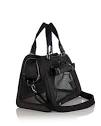
I could see thick white fur through the mesh of the canvas pet carrier. The woman unzipped the top of the carrier and held a carrot in her hand. “Are you hungry?” she said. I saw two ears pop up above the zipper – two long furry ears. Rabbit ears. And he was hungry. He held the carrot between his front paws and nibbled it.

“Tell me about your rabbit,” I said. This was more interesting than my book.

“He’s 1 ½ years old and his name is Luna.” I thought, “And you’re taking him with you on a three-hour plane flight? Really? A rabbit. He must be special.” I wanted to know more and Marie was glad to share. She was moving from Colorado to Murfreesboro to live with Marie’s boyfriend and his family. “When we talked about me to moving to Tennessee, he knew that we’re a package. Where I go, Luna goes.”

Luna runs around the house like a cat. He’s pretty much trained to use a litter box, just like a cat. He sleeps and is happy in a big two-story crate with lots of room for him to hop. (It had been shipped to Tennessee earlier.) Marie’s only concern about the flight was that Luna would get hot. “I meant to get a small fan to hold beside him or freeze a bottle of water to put in his carrier, but I got too busy getting everything packed and forgot,” Marie said as she gently massaged Luna’s neck. “A rabbit is the perfect pet.”

The whole time, Marie talked I thought, “Incredible. It’s a rabbit – not a dog. How much does it cost to fly with a pet? Can all animals fly on commercial planes?” I booked my flight through United Airlines and according to its website, domesticated cats, dogs, rabbits and birds can travel accompanied in the aircraft cabin on most U. S. flights. An in-cabin pet may be carried, in addition to a carry-on bag, and is subject to a $125 service charge.  There’s a long form to complete and submit along with the fee. Then a PetSafe® representative contacts you to discuss your booking request.

Because I boarded the plane before Marie, I didn’t see where she sat and I couldn’t find her after the flight. I assume that Luna made the flight well, and I’m glad that Marie loves Luna and could bring him to Tennessee with her.

But the very idea of paying good money to bring a rabbit across country on an airplane, well, that beats all, as Granny used to say. And putting $6.00 in a vending machine for a handful of veggies – that beats all, too.

Flying High

searchWhen is an envelope not stuffed with a letter? A bucket, not filled with water? When the envelope is six stories tall, looks like a gigantic beach ball, and is filled with air heated by a propane burner. When the bucket is a heavy wicker basket and large enough for at least one person to stand inside. To a hot-air balloon pilot – it’s an envelope and bucket. To me – a balloon and basket.

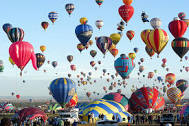
Sometimes I see a hot-air balloon float lazily across the sky. A beautiful, amazing sight. I wanted to see more than one or two fly at the same time and that meant going to a balloon festival. Not just any balloon festival; the one I first read about in a weekly news magazine in the mid 1980’s with my sixth-grade students. The Albuquerque International Balloon Fiesta that is held in October every year. The world’s largest collection of hot-air balloons.

As Husband and I rode on a bus from our Albuquerque hotel to Fiesta Park, our group guide encouraged us to walk to the middle of the park – flat level ground the size of fifty-four football fields! Get as close to the balloons as possible, he’d said. And we did. At 6:15 a.m. before the sun rose in the New Mexico sky, we headed toward an area where a few balloons stood tall on the ground. We were three feet away from a wicker basket and propane flames shot high above our heads into an inflated rainbow colored balloon. I was sure it would would rise any second. It didn’t. Other balloons, stretched out flat on the grass all around us, began to inflate. Soon we were standing in a balloon forest.

Hot-air balloons launch when the temperature is cool and there is very little wind. Had we travelled across country only to see inflated balloons on the ground? Our guide had explained that although launches were planned for every morning of the nine-day fiesta, there’s only one way to know for sure if the balloons will go up. “When you see the bottom of the baskets, you know they’re flying.” A slight breeze on that 45° morning made me pull my jacket hood tighter over my head.

Then two men, wearing black and white striped jackets and called zebras, blew whistles, raised their arms, and shouted, “Move back. Give them space!” Along with others crowded around the rainbow balloon, Husband and I stepped backwards. But only a few steps. And very slowly the balloon lifted into the air. Applause and cheers broke out from those of us on the ground. The pilot and his passenger waved their caps as they flew over us.

A thousand words, not even a hundred thousand words, can describe the sight that morning. As the sun rose so did the hot-air balloons. Mostly round ones, but over 100 special shape balloons. Like a black and white cow that was so huge that the basket where four people stood was minute compared to the cow’s hoof.   Like Mr. Potato Head and a motorcycle and Noah’s Ark, complete with animals – ten times larger that the real animals.

I said to Husband, “Let’s just take a minute to look around and up in the air and try to take it all in. There are over 550 balloons here.” As far as I could see toward the northern horizon, balloons filled the partly cloudy sky and all around us others lay on the ground or stood inflated, preparing to fly. It was all I imagined and more.

Beach Musings

DSC02633I pushed my beach chair directly under an umbrella so I could hide from the hot afternoon sun, and I sat down. I opened the book I’d saved to read during my beach vacation, but first I wanted to soak up the moment, which turned into more than moments, and I never read a single word.

How far to the horizon, where the bright blue sky meets the deep aqua colored water? A few people swam in the ocean; others strolled along the water’s edge; others, wearing ear buds and presumably listening to a favorite playlist, jogged; others sat two and three together. Children rode the gentle waves on boogie boards and ran after the sandpipers and dug holes in the sand that they filled with water. People all around, but it wasn’t the people that entertained me.

How can a sea gull stand on one leg for 5 minutes? His one black leg and webbed foot never wavered, even when the ocean breeze blew forcefully. He stood with frozen body as the feathers on his back ruffled and he turned his head from side to side. He lowered his leg, picked up the other, and stood even longer. After his rest, he flew, joining fellow gulls that soared over my umbrella.

How long do sea gulls live? Do they stay in the same general area throughout their lives? Do they have a particular place along the beach that is home? A place to sleep?

A lone dark gray and black pigeon thinks he’s a sea gull. He hopped, rather timidly, close to my chair and fluttered away when I threw sand toward him. Where’s his home? His flock? Did he get left behind?

Are the dolphins that swim from the west to east the same ones that swam in the opposite direction earlier in the day? How far do they travel each day? A small pod, five or six, must have discovered an early supper. They stirred the water, arching their sleek bodies above it. One dolphin thrilled all of us watching from the shore; he jumped high out of the water and danced on his tail.

A flock of pelicans flew overhead in a V formation. One line of the V was shorter than the other. When the leader at the vertex drops to the back of a line, will it find its place on the shorter side? If the same number of birds fly on each side, does the flock stay together better?

What possible purpose could small black flies have? One lit on my leg and before I could smack it, it bit me. How can something so small cause such an intense pain?

The dragonflies are gone. Not a single one in sight. Yet, two days ago, as the gray rain clouds gathered, dragonflies swarmed around the green shrubs and grass planted outside our rented condo. They lingered for twenty-four hours, some wandering to the beach. Why did they come out in full force when it rained? Where do they hide on warm, sunny days?

I close my eyes. Ah, the beach. A perfect place to nap.


Flying Alone

Screen Shot 2014-09-28 at 2.50.21 PM

V is for Vulnerable. That’s the name of the book I just saw at the airport bookstore and that’s me. Vulnerable. Alone.  Many people walk along the wide corridors of the Nashville airport.  Walk with partners.  With spouses.  Friends.  Children.  I walk alone.

Will someone help me, or better yet, take my carry-on suitcase out of my hands and lift it to the overhead compartment?  I envision an empty overhead bin with the latch open and I heave-ho my forty-pound suitcase two feet above my shoulders.  Who am I kidding? I can barely lift 20 pounds on the shoulder push machine at the YMCA.  I should’ve checked my bag. So what if I wait 20 minutes for it at the Denver airport?

And it’s raining.  I hate flying on stormy days.  The plane ride will be like a racecar on a county gravel road fill with potholes.   What if I throw up?  I never had motion sickness until five years ago.  I hate throwing up. Wonder who will be sitting beside me?   Watch the clock.  Go to bathroom one last time before boarding the plane.  At the water fountain, I refill my water bottle that I bought.  How could I forget to bring a water bottle from home?  $2.61 wasted on a bottle of water.

“’Mam,” a young man stands behind me when I turned from the water fountain.  “Aren’t you from Cookeville?” I nod and smile. “Yes, I am,” I say.

“I’m Joe Bulow and I thought I recognized you,” he says.  I tell him my name and that his mother and I are in a writing group and a book club together.  Joe, his wife, Wendy, and their two young sons were traveling on the same flight to Denver.  They live in Colorado Springs, her hometown.  I’m not alone!  I know someone’s name on the plane and his mother is my friend.

From two boarding gates away, I see that my flight is boarding.  I get to my assigned boarding place just as the line moves toward the person collecting boarding passes. A young couple, with moon eyes only for each other, walks in front of me; a teenage girl behind me.  Not good prospects for lifting my heavy bag.  Surely there’s a strong man on this flight.  I look for an aisle seat- not too far back. I have to carry this heavy bag through the aisle.

Just four rows back, I see a woman sitting by the window, two empty seats beside her and an empty overhead bin. I throw my oversized purse in the aisle seat and began to lift my suitcase.  Did the man offer to help or did I ask for help? He’s not young, older than me.  I hold one end of the bag.  “Just let me do it,” he says.  His reply to my thanks is a big smile, a nod, and “You’re welcome.”

The woman sitting beside me flies often and her daughter is a Tennessee Tech student. We quickly make connections.   The airplane dips and bumps until finally, forty minutes into the flight, it flies smoothly.  No more rain and dips and bumps.

Now I wonder will that same gentleman get my heavy suitcase down for me when it’s time to we get off the plane?   Why fret? Things seem to work out.

JUMP IN!

????????????????????????????????????????????????????????????????????????????????????????????????????????????????????I don’t jump into water.  Not into a swimming pool, nor a lake.  I don’t like water splashing on my face and I don’t like being a six-foot torpedo in depths known or unknown.  I ease down a ladder into water.  As a mother and a Gran, I’ve treaded deep water for as long as my children and grandchildren wanted to jump.  But jumping in water is one thing I’ve told how to do, but never shown. “Just jump.  You’ll come right back up,” I’ve said.  So imagine my apprehension when I was suited up to snorkel in the middle of the Caribbean Sea near Belize, and the guide says, “We’ll jump off the side of the boat.”

I’d been snorkeling before.  In this same location, but on a big boat – big enough that it had a ladder with wide steps so I carefully made my way down while wearing giant-size flippers.  This was a 25-foot dive boat that carried only nine people – a guide and eight paying snorkel guests.

I was excited about seeing water wildlife again and I was comfortable wearing a life jacket, a snorkel mask, and giant flippers.  Chris, the eighteen-year-old guide, stopped the boat at the Hol Chan Marine Reserve in the middle of the sea, but surrounded by many boats.   I could see at least a hundred snorkel tubes sticking out of the aqua clear water.  Chris adjusted my mask and I said, without my fellow snorkelers hearing me,  “I’m nervous about jumping in the water.  I don’t jump in water.”

Chris pulled strands of my hair out from under my mask. “No hair under mask so no water in nose.  The ladder is too narrow to go down.  You could fall and get hurt.  You can jump,” he said. I wasn’t so sure.  He guided me to the side of the boat.  “Sit here.” On the six-inch wide side.  “Now turn and get your legs over the water.  Push off with your hands.”  I could see foot-long silver fish and the ocean bottom, about twelve feet below.  “If you go under, count to 3.  You’ll be back up before you get to 3.”  That’s what he tells the little kids, I thought as I pushed myself off the boat.

I did go under and counted 1, 2 and surfaced.  Before I could focus my eyes I heard, “A turtle in front of you!”  A green turtle, as big as a galvanized steel washtub, swam just inches from my nose.  I felt his back flippers swish on my stomach.  I lay my hand on his shell and pushed to give myself some water space.  The turtle swam away.  I looked around to locate my friends and our guide in the water.

The snorkeling adventure was all I’d hoped for.  Thousands and thousands of brightly colored fish, turtles, anemone, coral, manta rays, even nurse sharks.  I’d do it again.

And now I have another reason to be eager for warm weather.  My Grands will be shocked when I put on my life jacket and jump off a pontoon boat into the lake.  Last summer they said, “Gran, don’t go down the ladder.  Jump in with us!”  I’ll be a nervous and I’ll hold my nose and I’ll count to three.