• Recent Posts

  • Archives

  • Categories

  • Meta

What Comes Next?

Should Husband and I accept an invitation for Friday night take-out pizza at our friends’ house? We were all vaccinated with our second shot two weeks ago.  My mind rambles. Will we hug?  Will we wear masks when we aren’t eating?  Will we sit across the room from each other?

            Uncertainty and hesitation loom. I’m conditioned to staying home and not being in closed spaces with anyone, except Daughter’s family who’ve been in our covid bubble, since March 2020.  Husband and I have set Zoom or FaceTime dates to visit with friends and we’ve talked while looking at a computer screen so crossing boundaries back to in-person visits makes me a bit nervous. But isn’t this type of gathering what we’ve missed most for a year? 

            After reading an article in the New York Times and written by a primary care doctor who is a mental health advocate, I’m a bit consoled.  Lucy McBride wrote, “Month after month, we have been yearning to be done with enforced distancing, social isolation and life in a more virtual reality. Now that the moment has arrived — as millions of Americans have been vaccinated and millions more will soon roll up their sleeves for it — the prospect is oddly disconcerting. Upon reentry, many of us will face something new: FONO, or a Fear Of Normal.”

            I’ve become comfortable in elastic waist pants and loose t-shirts, and I’ve been what I call ‘leisurely busy.’ I am happy reading a book, making a pot of soup, and kneading a loaf of bread.  I’m content with my fingers on a keyboard to write and to play online scrabble with friends. 

            During the coldest, dreariest days of winter I thought how fortunate that Husband and I are retired so we don’t have to go to work and we haven’t had to seek medical care.  The pandemic gave us permission to stay up late to watch television series. Six seasons of Longmire, twelve seasons of Heartland, three of Anne with an E, and forty episodes of The Crown. We’ve kept a jigsaw puzzle spread on a table and I often sat down in the middle of the day to find just a few pieces and then realized I’ve sat there until mid-afternoon.  I’ve watched more television and put together more puzzles in a year than in five years previously.  And I enjoyed it all.

            During this year at home, some people have completed big projects – like my friend who stitched ten quilts.  My only project was to organize my parents’ photographs that have been pushed aside since they’ve been mine for twenty-five years.  Someday I’ll write the stories that go with a few of these photos, but not now.

             As life returns to somewhat normal, it won’t be the same as pre-pandemic. There’s been too much turmoil, too many heartaches, too many loved ones lost.  Dr. McBride wrote, “It’s understandable to experience emotional whiplash, even as trauma recedes.”             

I need to ease into what comes next.

We Remember and We Care

Last year’s calendar reminds me where I was and what I was doing on this date 2020.  Shuttle pick-up at 2:15 p.m. Southwest flight #5743 at 5:00.  On Tuesday, March 3, 2020, Husband and I flew home after a visit with Son and family. 

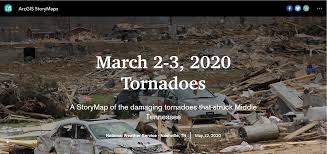
            But I don’t need a calendar to remember what happened that day.  Before daylight in the Mountain Time Zone, Husband and I received phone calls and texts from friends and family members asking if we were okay. We called friends and Daughter here in Cookeville and learned that our house wasn’t damaged and that Daughter’s family and close friends were safe.  Everybody remembers where you were and what you were doing when you learned about the EF-4 tornado whattorethrough our county.  It affected all of us.

            Everyone knows someone who lost loved ones and their homes and the normal life they had lived before March 3.  We must never forget the 19 people who lost their lives.  All who loved them continues to grieve.   Many who lost their homes moved from their former community.  The daily reminders created too much pain.  It’s a year later and the memories resurface.  The ache doesn’t go away.

            I will never forget the pain on my friend’s face after her home was destroyed.  She told me the first things she wished for were her own shoes and clothes and her purse, including her identification and insurance cards.  So many times, before going to bed as I kick off my shoes in my closet, I hesitate.  Should I 

put my shoes and tomorrow’s clothes beside my bed? Should I put my purse within arm’s reach?  And many times just to be sure it works, I’ve turned on the flashlight in my bedside table drawer.

            I’ll never forget the stories of people who lost their homes, their cars, their clothes, and their pictures, and they were thankful.  Thankful they weren’t hurt.  Thankful their children, their parents and grandparents, their spouses weren’t injured.  Their stories reminded us that people are so much more important than things and that we must tell those we love how much we love them. 

            Who can forget the stories of first responders and volunteers?  The first responders did their jobs well.  They rescued. They saved lives.  And they shared stories of heartbreak. They didn’t bask in their heroism.  They bowed in humbleness as did the hundreds of volunteers who carried away destroyed homes and trees.  Volunteers provided shelter, food, water, and clothing – necessities usually taken for granted.

            I recently read a devotion entitled, “Interruptions.” The writer, a minister, quoted a mentor who said, “Interruptions often are the ministry.”  The writer stated that God splatters each of our lives with unheralded, yet opportune moments, that come at us out of nowhere.  I immediately thought of March 3, 2020.             

Let’s reach out to someone who is reliving the pain of a year ago.  Make a phone call and let someone know we remember and we care.

What carried you thru 2020?

One day during the first week of March, 2020, I stood beside my friend at her kitchen sink while we talked.  A tornado had struck Putnam County and many people were grieving the loss of loved ones and homes.  The spread and seriousness of the corona virus had become real.  My friend added her family news of the past two days.  Her dentist had discovered that she needed major dental work.  A close family member was scheduled for a diagnostic medical procedure the next day, and her husband, and others in management positions at his workplace, had been told to work long hours on assembly lines until a strike was settled with employees who normally did those jobs.

            With exasperation, my friend said, “Okay, 2020! What else you got?”  My friend and I hugged and assured each other that somehow all would work out.  Somehow.

            During the past ten months, I have often thought back to that day.  Our physical health, our endurance, our emotions, our faith, even our sense of humor have all been tested.  Last week, I read a question: what carried you through 2020?  My quick one-word answer was HOPE.

            Hope is defined as believing that something good may happen and feelings of expectation and desire for a certain thing to happen.  What gave me hope?  Quiet morning devotion time, including listing blessings.  Meeting with Sunday School class members using Zoom.  Knowing that health care workers gave their best to care for patients. Reports of vaccines to prevent COVID. FaceTime visits with Grands who live far away.  Playing card and board games with Grands who live across town. Text messages to and from friends and family. Jokes – anything that made me laugh.  

            When my normal routines of life, i.e., grocery shopping and club meetings and face-to-face visits with friends, came to a halt I began walking for exercise more often and it occurred to me that the big picture life remains the same.  Daily sunrises and sunsets. Changing seasons.  White blossoms burst open on dogwood tree branches in the spring, leaves in the summer, red berries in the fall, and now the branches are bare.  Mother Nature gives hope.

            There was hope and celebration when my young cousin and his wife welcomed their baby daughter into their family.  When friends married.  When a few family members came together.  When the COVID vaccinations began last week. 

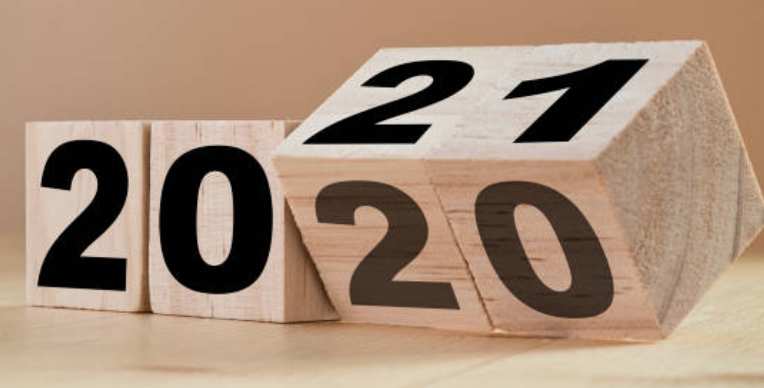
            Some take-aways of 2020 give hope.  A young woman who lost her mother to COVID learned that she’s much stronger than she thought she was or could ever be.  Nurses, doctors, respiratory therapists, and all health care workers are heroes.  Teachers gained more respect as they taught using unprecedented methods.  I’ve become more patient, waiting for deliveries, waiting for quarantines to pass, waiting for vaccines to be available, just waiting.             As 2021 opens its first week, I ask, “Okay, 2021.  What have you got?”  Whatever comes, even amid chaos and pain, there is hope.

Practice Patience

“Adopt the pace of nature: her secret is patience.” The title of a poem, written in 1836, by Ralph Waldo Emerson is printed on a small flip chart entitled Bright Sayings, a collection of quotes, Bible verses, and inspirational thoughts.  Every year, I read Emerson’s words on March 31st and this year those words struck me hard, to my core.

            Even now, writing this poem title, I take a deep breath.  Patience, as defined in the dictionary, is the capacity to accept or tolerate delay, trouble, or suffering without getting angry or upset.  My patience has been stretched during this pandemic.  I’m ready to get on with my normal life: attend church and club meetings, go to monthly hair appointments, eat lunch with friends, take Grands on field trips around town, visit friends, and all the other many things that filled my calendar.

            By nature, I’m not a patient person.  I keep a book to read in my van because I might have to wait somewhere for 10 minutes, and I’ve fallen into the habit of looking at my phone for entertainment to fill even a few moments of idleness.  Last week, I purposely practiced patience. As I sat in the public library parking lot waiting for a library employee to bring me the books I’d requested online, I didn’t reach for my book or phone.  I watched branches sway in tall trees and saw a few people walk in Dogwood Park, at safe distances from each other.

            I’ve practiced patience as a teacher, parent, and grandparent when children learn new skills or complete a task.  A teacher’s greatest pay is when a student reaches that ‘Ah, ha moment’ of understanding or mastery.  I’ve said, “Push your patience button,” to encourage students, who were loud and wiggly, to be calm while standing in line. Recently, when my five-year-old Grand searched for a jigsaw puzzle piece to complete the border of a 100-piece puzzle, I sat on my hands to avoid pointing to the needed piece.  

            Every day there are times that I need to be patient. But, maybe like some of you, I struggle to wait, to accept, to be tolerate for the easing of restrictions, for face-to-face contact with family and friends.  I tell myself if I had a snotty cold or the flu, I’d keep my distance, and now I could carry the COVID19 virus, but not show symptoms.  I don’t want to make anyone sick.

            Emerson’s eight-stanza poem describes the changes of seasons, and I know from experience that each season unfolds in order. Emerson writes, “All this is provided at a sure and steady pace. Nature is perfect, there’s never a need to race.” 

            Often as I wait, I know the sure and steady pace.  With this virus, I don’t.  Is that why being patient is so difficult?  I’m determined to practice patience. To limit close face-to-face contact with other people.

            Emerson begins his poem with these words: “Walking in Mother Nature, God’s natural kingdom with awareness, will bring you insightful wisdom.”  Seems like good advice as I wait.

Write Your Memories

During the past few weeks, I have hoped that other people are writing their experiences and thoughts about Spring 2020.  Those writings are for you, your children, your grandchildren, and your great-grands. 

            While I mulled over these thoughts for a columm, two friends shared the same idea and granted me permission to use their words.  Jennie wrote to a group of us who write and share memories. “I urge you to write about what you’re going through.  Write any way you want:  notebook and pen, word document, cell phone notes app. Your descendants may want first-hand accounts of what life was like in the spring of 2020 (for us, both the tornado and coronavirus.)  Equally important is the cathartic benefits of expressing your emotions in writing.  Don’t hold back.  Don’t self-censor.”

            Lori wrote on Facebook. “This is a tough, confusing time, but admit it, there are some bright spots to the slow-down of crazy busy lives and schedules.  I’ve started a ‘Blessings and Burdens’ journal to note down what I’m sad and anxious about and the inevitable bright spots that appear each day.  I want to remember those as a takeaway for this when it becomes a distant memory. And it will become a distant memory.”

            I can hear you say, “That’s easy for them – they’re writers.  No one wants to read my stuff.  I don’t know where to start.  It’s too late.  I should’ve started weeks ago.” 

            If you ever write anything, you’re a writer.  You write grocery lists and to-do lists so make a list of 5-10 things.  What is different today from January 2020? From March 2019?  What wasn’t on the grocery shelves that is always there?  (I was surprised there were empty shelves where flour and cornmeal are usually stacked.) How are you connecting with friends and family since you can’t visit in person? Who and what are you missing most?  Or follow Lori’s practice of listing daily blessings and burdens.

            I guarantee someone will want to read what you write, but maybe not any time soon.  I treasure my parents’ writings, like the story of how Papa and his two sisters bought a pump organ in the early 1900s.  I didn’t appreciate their stories when I was young, just as my Grands don’t value my writings.  I know they will.

            Start with anything that comes to mind. Your first sentence could be that somebody said I should write so I am.  Or I used a paper towel to hold the gas pump handle.  Or I’d really like to bake cookies with my grandchildren.  Or I wore a mask today.

            It’s never too late.  You might think you’ve forgotten, but when you start writing you’ll remember. Don’t be concerned about sentence structure, punctuation, or spelling. If you haven’t been writing, please pull out a pen and paper or put your fingers on a keyboard and write today, even for a few minutes.  Even a few sentences or a list.

            One last suggestion: date and sign every scribble.  Your children and grands will be glad you did.